
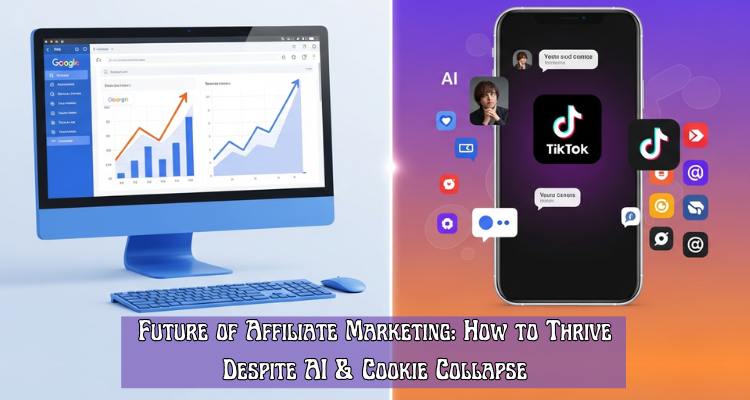
Have you ever watched an entire industry shift so fast that the strategies you trusted for years suddenly stopped working?
That’s exactly what 2025 felt like for most affiliates. Google’s harsh content updates, AI Overviews, AI Mode, and the rise of full AI search engines like ChatGPT and Perplexity hit the ecosystem harder than anyone expected. Traffic evaporated. Rankings collapsed. And a question started circulating everywhere – in forums, on LinkedIn, in private mastermind groups:
Is there really any future for affiliate marketing?
I’ve heard the fear behind that question. I’ve felt it myself. But here’s the truth I keep coming back to – yes, there is a future, and it’s bigger than most people realize.
The numbers prove it:
- US affiliate marketing spend is projected to surpass $11.9 billion in 2025, up from $9.56 billion in 2023, with 65% growth expected between 2023 and 2028.
- Europe is projected to grow from $5.55 billion to $8.63 billion by 2031 – a massive 55% increase.
The industry isn’t collapsing. It’s transforming. And if you understand what’s happening, you can position yourself at the front of this next wave.
In this article, you’ll learn the four strategic pillars that matter most in 2026: Content Authority, Traffic Diversification, Attribution Stability, and Compliance. I’ll show you the exact shifts happening right now, the data behind them, and the practical steps you can take to future-proof your business in a disruptive, AI-driven landscape.
Key Takeaways:
- 2025 was the hardest year the industry has faced, but growth projections remain strong.
- AI-driven search disruption means the old SEO-only model is gone.
- Affiliates who build authority, diversify traffic, strengthen attribution, and follow strict compliance will lead 2026.
DISCLOSURE: WebIncomeJournal is supported by readers like yourself. We may earn an affiliate commission when you purchase through our links, which enables us to offer our content for free. Learn more here.
AI Transformation and the Future of Affiliate Marketing
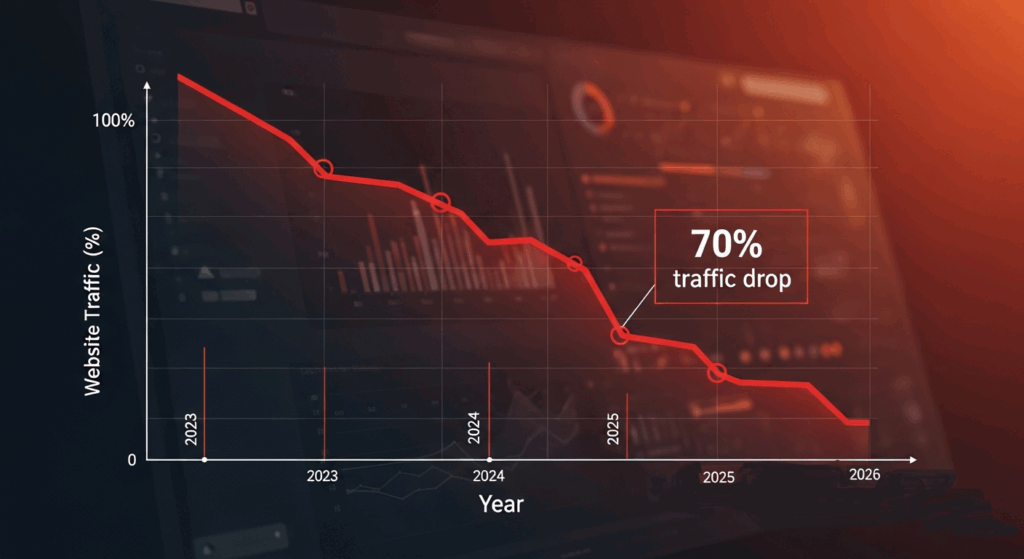
If you’ve been relying on organic search to drive predictable traffic, you’ve already felt the shift. The ground didn’t just move – it dropped. The rise of generative AI in search has created a zero-click environment where Google answers the query before a user ever reaches your site. And the impact is brutal.
Some sites have reported traffic losses of up to 70% after AI Overviews went live. More than 58% of Google searches now end without a click. This isn’t speculation. It’s the statistical reality every affiliate is dealing with in 2025 and heading into 2026.
The truth is, the traditional model of ranking for a keyword and waiting for users to click through is collapsing. AI Overviews scrape, summarize, and deliver the answer instantly. Even if your page ranks, users may never see it. And this change has ended the long-standing, volume-based strategy that used to power affiliate revenue for more than a decade.
But there’s opportunity on the other side of this disruption. The marketers who survive aren’t the ones who cling to outdated SEO tactics. They’re the ones who shift their mindset from earning positions on Google to becoming a trusted data source for AI systems. The channel isn’t dying. It’s evolving. And you have to evolve with it.
Now, let’s break down the strategic pivot.
Strategic Pivot 1 – Generative Engine Optimization (GEO)
The linear marketing funnel is done. Today’s buyer path looks more like a fractal – messy, non-linear, and influenced by dozens of micro-moments across platforms. And in this new pattern, the search engine is no longer the only gatekeeper.
AI assistants are the new choke points.
That means your content’s job changes. You’re not just ranking. You’re training AI models to quote you.
The future of SEO is GEO – Generative Engine Optimization. You create content that provides short, definitive, high-authority answers AI can ingest, summarize, and surface.
Your content must be:
- Short enough for AI to parse
- Definitive enough to rely on
- Structured enough to be extracted
- Authoritative enough to be quoted
Because AI assistants don’t just summarize. They choose sources. And if your article becomes one of those sources, you win visibility even when clicks disappear.
Key Action: Write clear, concise answer blocks within longer content. Think of them as “AI-ready segments” designed for systems like ChatGPT, Perplexity, and Gemini to lift directly. GEO turns your article into a data asset, not just a webpage.
The New Scope of Search – Optimizing Across All Platforms
By 2026, search won’t be limited to Google’s SERPs. The definition of “search” now includes:
- AI assistants
- Vertical engines
- Amazon
- TikTok Search
- YouTube Search
- Even voice-driven queries inside smart devices
Users are no longer typing a query into one box. They’re searching everywhere.
This means, as an affiliate, your SEO strategy must match the new environment. A TikTok video is a search result. A LinkedIn carousel is a search result. An Amazon review is a search result. And AI assistants are the biggest search layer of all.
If you only optimize for Google, you’re invisible everywhere else.
The future belongs to affiliates who treat each platform like an independent search engine with its own ranking signals. You’ll adapt your content format, your keywords, your structure, and your user experience to wherever your audience actually searches.
This is the new era: multi-platform SEO, fueled by content authority, validated by AI systems, and distributed through platforms that don’t rely on blue links.
The Affiliate Marketers’ New Authority Mandate
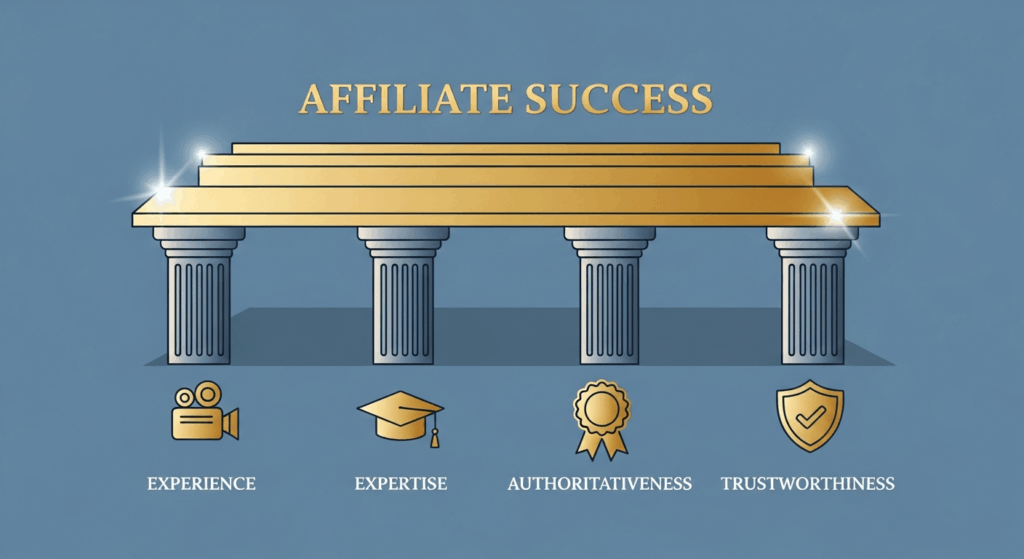
I’ll be honest with you. The biggest shock most affiliates feel right now isn’t that traffic is dropping. It’s that the content that used to be “good enough” is now worthless. The flood of cheap AI articles has forced Google, TikTok, YouTube, and even AI assistants to raise their standards. And the message is clear: only creators with real expertise stand a chance.
This is where E-E-A-T becomes your lifeline.
Experience. Expertise. Authoritativeness. Trustworthiness.
These are no longer “SEO checkboxes.” They’re the barrier that protects you from the collapse of generic content. The future pf affiliate marketing is building a content moat that AI systems cannot easily replicate. That means real testing. Real insights. Real proof. Higher production standards. And a level of transparency that signals credibility across search platforms, social platforms, and generative engines.
If you’ve been producing surface-level articles, the game is over. If you build deep, verifiable content, you will stand out when most of the internet turns into AI noise.
Now let’s break down how to do that.
Prioritizing Verifiable Experience and Human Signals
The truth is, users no longer trust generic recommendations. Platforms don’t either. AI is trained to detect authenticity signals, and Google’s documentation pushes human experience harder than ever. This means you have to be involved. Not pretending. Not summarizing. Actually involved.
This requires:
- Using the products yourself
- Showing results with photos or videos
- Sharing personal opinions backed by real usage
- Explaining what worked and what didn’t
- Adding comparison notes based on direct testing
- Giving clear FTC disclosures to maintain trust
Readers want proof you’ve touched the product. Platforms want it too. The more human signals you embed – voice, imagery, testing logs, long-term use notes – the stronger your content moat becomes.
Well, generic content gets ignored because it has no pulse. No fingerprints. No proof. But involved affiliate marketing gives you an edge that AI cannot fake.
Key Action: Adopt a strict “involved only” approach. If you haven’t used it, you don’t promote it. That single shift will raise your authority more than any keyword strategy ever could.
The Importance of Long-Form, Cluster Content
Short articles used to work. They don’t anymore. Google, TikTok Search, and AI engines prefer depth. And users rely on content that feels complete, not rushed.
Long-form is now the standard.
When you create a 2,000–4,000-word guide supported by real testing, unique data, and strong internal linking, you send a clear signal: you are an expert, not an aggregator. And experts get ranked, summarized, and quoted.
But long-form alone isn’t enough. You need Topic Clusters.
A cluster is a network of pages that cover a subject from every angle. This structure helps you dominate an entire niche in search engines and makes your site easier for AI to understand and quote.
Clusters also boost your chance of earning Position Zero – that top featured snippet slot that AI tends to pull from.
This requires:
- A core pillar article
- 8 to 20 supporting articles
- Clear internal links
- Strong answer blocks for AI extraction
- Visual elements that signal depth (tables, charts, comparisons)
When you build clusters, you create a defensible moat. AI can summarize you, but it can’t replace the depth you bring.
Traffic Diversification for High-Intent Conversions
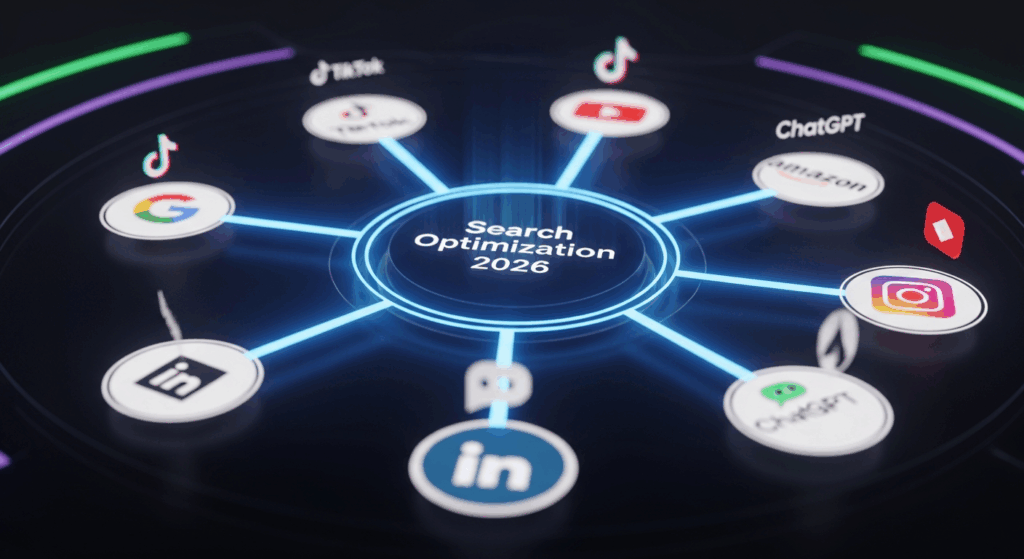
If you’ve relied on one traffic source for years, you’re feeling the pressure right now. Organic search used to be predictable. Not anymore. AI Overviews cut clicks. Algorithms swing without warning. And the brands that once depended on SEO-only funnels are scrambling to stay visible.
The truth is, you can’t afford a single-source strategy in 2026 and going forward. Stability comes from distributing visibility across platforms that give you measurable, high-intent traffic. And every signal points to the same conclusion: the platforms winning right now are mobile-first, video-heavy, and built around rapid consumer action.
This isn’t optional. It’s survival.
Short-form video, social commerce, and B2B-native channels are pulling ahead as the highest ROI pathways. And if you want conversions that don’t collapse when Google flexes, you need to pivot fast.
Let’s break down the two critical shifts.
The Dominance of Short-Form Video and Mobile Commerce
Short-form video isn’t just a trend. It’s the engine of affiliate conversions. TikTok, Reels, and YouTube Shorts are driving 82% higher affiliate conversions than traditional formats. Not because they’re flashy. Because they match how users make decisions now – fast, emotional, visual, and mobile.
More than half of all affiliate clicks already come from smartphones, and that number keeps rising. So the question is simple: does your content actually work on a phone screen?
Successful videos share the same traits:
- Punchy scripting
- On-screen text so the message lands even on mute
- Quick cuts
- A clear emotional hook
- Direct problem-solution flow
- Mobile-friendly captions
- Immediate CTAs
This is the format users trust. It’s also the format algorithms push the hardest.
And here’s the real insight: micro-influencers are outperforming big creators. People with 10k to 100k followers deliver 20% higher conversion rates and engagement in the 3–8% range. Bigger creators bring reach. Micro-creators bring influence.
If you combine short-form video with micro-influencers in narrow niches, you unlock the highest-leverage distribution strategy available right now.
Key Action: Build mobile-first content. Every affiliate link, landing page, and video should load instantly, read clearly, and convert without friction.
Short-form video is no longer a nice-to-have. It’s the new homepage of your business.
Leveraging B2B Channels and Social Commerce Integration
Now, here’s a shift most affiliates overlook: LinkedIn has become a stability channel. It generates 80% of B2B social media leads, and its conversion rates are roughly 3x higher than other platforms. If you promote SaaS, AI tools, or any high-ticket product, this is where you need to be posting daily.
LinkedIn works because the intent is built in. People go there to learn, evaluate tools, and buy. A single carousel or case study can produce more qualified conversions than months of blogging.
But the biggest traffic revolution is happening inside social commerce.
Platforms like:
- TikTok Shop
- Instagram Shopping
- Pinterest Shopping
- YouTube Shopping
…have removed one of the biggest barriers in affiliate marketing – the external click.
Social commerce lets users buy without leaving the platform. No website load time. No extra steps. No drop-off.
And this is how you counter the zero-click threat. If Google won’t send you traffic, you move the conversion to platforms where the entire funnel lives inside one feed.
This is the model driving the fastest growth in 2025–2026. From impulse purchases to high-ticket tools, friction-free buying wins every time.
Key Action: Integrate social commerce features into your content strategy. Tag products. Use native checkout. Build platform-first content flows.
When your conversions happen inside TikTok, Instagram, or YouTube, Google’s zero-click problem stops being your problem.
Navigating the Cookieless Attribution Crisis
If there’s one change that caught even seasoned marketers off guard, it’s the quiet death of third-party cookies. By late 2024, the tracking systems this industry depended on for more than a decade were gone. And for affiliates, that shift didn’t just create inconvenience. It created a direct threat to revenue.
For years, performance-based payouts relied on a simple equation: track the click, track the sale, pay the affiliate. But the removal of third-party cookies created what many call a considerable gap in attribution. Suddenly, clicks didn’t map cleanly to conversions. Traffic didn’t translate. And the confidence behind every commission became shaky.
Here’s the truth. This isn’t a temporary disruption. It’s the new operating environment. The affiliates who stay profitable in 2026 are the ones who treat technical preparedness as a competitive advantage, not an IT problem.
Now let’s break down the two pillars that matter most.
The Rise of First-Party Data and Server-Side Tracking
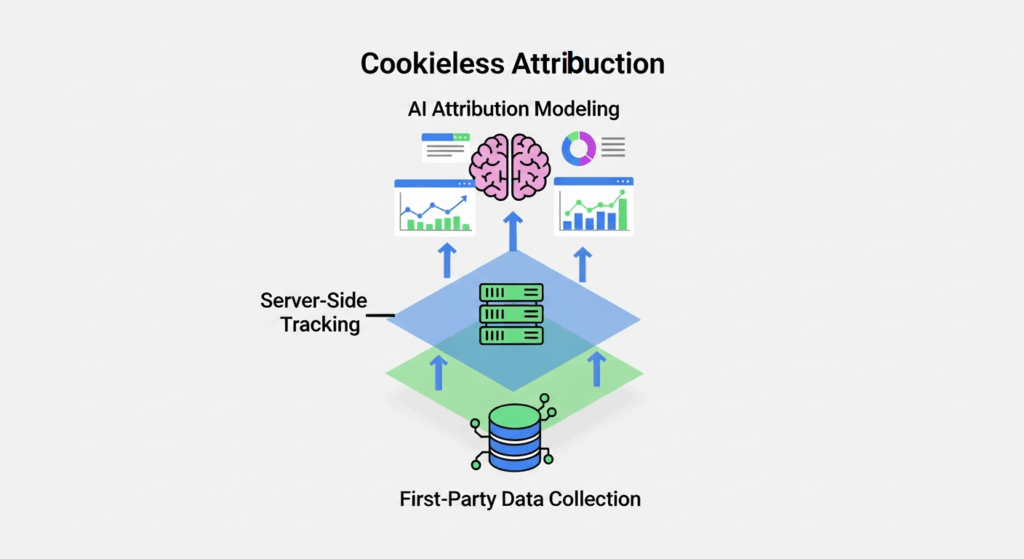
The era of borrowing data from browsers is over. Control has shifted back to brands and publishers who own their tracking systems. That’s why first-party data is now the foundation of attribution. If you can collect and control your own data, you stay visible. If you depend on the browser to track users for you, you disappear.
First-party data ensures:
- Privacy compliance
- Consistent visitor identification
- Stable personalization
- More accurate attribution
- Independence from browser-level blocks
But first-party data alone isn’t enough. You also need server-side tracking. This moves the tracking event away from the browser and into your own server environment, where it can’t be blocked by privacy settings, ad blockers, or cookie limitations.
That means your conversions remain measurable even when traditional tracking fails.
Key Action: Adopt non-cookie identifiers. This includes trackable coupon codes, personalized affiliate links, customer IDs, and account-based tracking flows. These systems tie conversions to affiliates without relying on cookies, giving you clean, reliable attribution even in strict privacy environments.
When you combine server-side events with first-party data, you get a tracking framework that survives every privacy update coming in 2026 and beyond.
The Role of AI in Bridging Attribution Gaps
Now, here’s the surprising part. AI has quietly become the most important tool for attribution accuracy. Platforms like GA4 were built for the cookieless world. They don’t just track. They predict. When direct tracking breaks, AI fills in the gaps using behavior modeling.
This isn’t guesswork. GA4 models user journeys based on patterns from complete data sets, so when cookies fail, the system still reconstructs where your conversions came from. It helps you understand which channels matter, which touchpoints drive action, and how users move through your funnel even when the technical breadcrumbs are missing.
But AI-powered analytics only work if you upgrade your tech stack.
To stay competitive, affiliates and merchants need attribution platforms that support multi-touch models. Single-touch attribution never reflected modern user behavior, and in a fractal customer journey, it becomes even less accurate.
Strategic Requirement: Invest in transparent attribution tools that reward affiliates for their full contribution to the customer journey. That includes clicks, assisted conversions, content influence, top-of-funnel education, and mid-funnel comparison pages.
If you don’t have multi-touch attribution in 2026, you’re underreporting your value. And if you’re underreporting your value, you are guaranteed to be underpaid.
Future-Proofing the Business Model

If you truly want to survive as an affiliate marketer in 2026 and beyond, then you must realize that survival isn’t only about content or traffic. It’s about building a business model that can withstand volatility, higher operating costs, and deeper regulatory scrutiny.
The Cost of Content Production has skyrocketed. Real product testing, long-form authority content, first-party tracking, and multi-platform distribution take time and money. On top of that, global regulators are locking down disclosure requirements with AI-powered enforcement scanning content at scale.
This is why the old low-margin model breaks down. The future belongs to affiliates who protect their income with high-margin offers, stable compensation structures, and strict compliance protocols. If you can’t guarantee stability, you won’t keep top partners. And if you can’t prove authenticity, you won’t keep your audience.
Here are the three critical shifts you must consider right now.
Adopting Hybrid Commission Models
We need to be honest about the new risk in this industry. Traffic volatility has never been higher. Google updates, platform bans, shadow penalties, and algorithm shifts can erase income overnight. Affiliates carry more “creator risk” now than ever before.
This is why hybrid commission models are becoming the standard.
A hybrid model gives affiliates:
- A small guaranteed fee or minimum retainer
- A tiered commission structure
- Performance bonuses for hitting volume or ROI targets
This structure stabilizes income and allows affiliates to plan long-term content investments without fearing that a single algorithm swing will wipe them out.
For merchants, the benefit is simple. They attract and retain stronger affiliate partners. But it only works if the reporting is transparent.
Requirement: Merchants must provide clear, real-time tracking, clean attribution, and transparent reporting dashboards. Top affiliates refuse to work with brands that can’t prove how conversions are assigned.
A hybrid model with opaque reporting is a broken model. Transparency is the currency that keeps both sides invested.
Specializing in High-Ticket Niches
With CCP rising, low-ticket commissions can’t support the level of testing, research, and compliance affiliates now need. That’s why high-ticket niches have taken center stage.
Affiliates promoting SaaS and AI tools routinely earn $500–$1,450 per commission. This margin makes the E-E-A-T investment worth it.
But here’s the strategic edge for smaller or newer entrants: specialization.
The affiliates winning today aren’t generalists. They dominate narrow, emerging niches where authority can be built fast. Examples include:
- AI tools for personal finance
- Crypto-based wealth building systems
- Micro SaaS tools solving one specific workflow
- AI-driven productivity tech
- Niche B2B automation platforms
These niches combine high margin offers with high intent. And when you layer them with deep testing, comparison content, and first-hand reviews, you create a moat that newcomers can’t easily penetrate.
This is how smaller affiliates leapfrog larger competitors.
The Compliance Mandate and Fraud Mitigation
Compliance used to be something you added at the end. Today, it’s the operating system of your business.
Regulators are tightening enforcement. The FTC is expanding disclosure rules to cover short-form video, live streams, and real-time formats. And AI tools are scanning affiliate content across platforms, flagging missing disclosures, exaggerated claims, and brand violations.
The future of compliance is automated. And that means affiliates must be proactive instead of reactive.
Digital ad fraud has also become a serious threat, and generative AI has made fraud “alarmingly effortless.” Fake clicks, spoofed conversions, synthetic traffic, and manipulated attribution are all common.
Key Action: Operate with absolute transparency. Use clear FTC disclosures. Vet merchants for anti-fraud systems. Avoid partners who cannot validate their tracking. And audit your own content regularly to ensure AI scanners won’t flag you.
Compliance is no longer a legal box to check. It is a revenue protection strategy.
Conclusion
If you’ve made it this far, you already see the pattern. Affiliate marketing isn’t ending. It’s evolving into something sharper, more disciplined, and far more rewarding for those who play it strategically. The quick-win, volume-first era is gone. The new standard is built on credibility, investment, and trust.
The future belongs to affiliates who build real authority, diversify their traffic, own their attribution data, and operate with strict compliance. These four pillars aren’t trends. They’re the structural requirements for anyone who wants stability in 2026 and growth far beyond that.
Yes, the landscape is tougher. Yes, AI has changed the rules. But the opportunities are still massive for creators who commit to depth instead of shortcuts. The people who test products instead of paraphrasing them. The ones who publish long-form clusters instead of thin reviews. The ones who see platforms like TikTok, LinkedIn, YouTube, and AI engines as their next distribution channels instead of threats.
You’re stepping into a high-trust, high-capital era. And if you lean into it, you won’t just survive what’s coming. You’ll build an advantage others can’t replicate.
Ready to take action?
If you want to learn more about applying the four pillars to your niche, your site, or your current content strategy, then join the AI Affiliate Insider. We’re committed to helping you map your next steps so you can build a future-proof affiliate business starting today.