
 Chadrack

Did you know that 95% of people who try affiliate marketing quit within their first year?
Did you also know that the people who stick with a proven system are building six-figure businesses while they sleep?
The difference between these two isn't luck, special skills, or some secret algorithm hack. The difference is following a systematic approach instead of chasing every shiny object that promises overnight riches.
You've probably heard the success stories: someone made $10K their first month, another person replaced their corporate salary in 90 days. But here's what they don't tell you in those viral posts—behind every successful affiliate marketer is a structured system they followed consistently, not a collection of random tactics.
The global affiliate marketing industry is worth $18.5 billion in 2025 and projected to reach $31.7 billion by 2031. This isn't happening because of lucky breaks or viral content. It's because affiliate marketing, when done correctly, creates genuine value for everyone involved.
The problem isn't that affiliate marketing doesn't work. The problem is most people approach it backwards—they focus on commissions before building trust, chase high payouts instead of audience relevance, and jump from strategy to strategy instead of mastering one proven system.
This affiliate playbook changes that. Instead of tips and tricks, you'll get a step-by-step process that successful affiliates use to build sustainable businesses. No fluff, no get-rich-quick promises—just a repeatable system that works when you work it.
Key Takeaways:
- Affiliate marketing has a 95% failure rate, but systematic approaches dramatically improve success odds
- The $18.5 billion industry growth proves the model works when executed properly
- Success requires following a proven process rather than random tactics
- Building trust and providing value must come before monetization attempts
- Sustainable affiliate income is achievable but requires treating it as a real business, not a side hustle
DISCLOSURE: WebIncomeJournal is supported by readers like yourself. We may earn an affiliate commission when you purchase through our links, which helps us offer our content for free. Learn more here.
What is a “Playbook” in the Context of Affiliate Marketing?

Think of a playbook like a recipe for your favorite dish. You don't just throw ingredients together and hope for the best—you follow specific steps in a specific order to get consistent results every time.
That's exactly what an affiliate marketing playbook is: a systematic, repeatable process that takes you from zero to profitable affiliate business. It's not a collection of random tips or “hacks” you found on YouTube. It's a structured approach where each step builds on the previous one.
Here's why this matters more than you might think.
Most affiliate marketers fail because they're playing a guessing game. They'll create content randomly, join any affiliate program that pays decent commissions, and wonder why their efforts aren't converting. They're essentially throwing spaghetti at the wall to see what sticks.
A playbook eliminates the guesswork. It gives you a proven framework that successful affiliate marketers use to build sustainable businesses. Instead of chasing every shiny object or new trend, you follow a system that's been tested and refined.
The beauty of a systematic approach? You can replicate your success. Once you've mastered the playbook in one niche, you can apply the same principles to another. You're not just building one income stream—you're learning a skill that can generate multiple revenue sources.
Think of it as your business blueprint. Every successful company has processes and systems. Your affiliate marketing business should be no different.
The 7-Step Ultimate Affiliate Playbook
Step 1: The Foundation – Your Profitable Niche
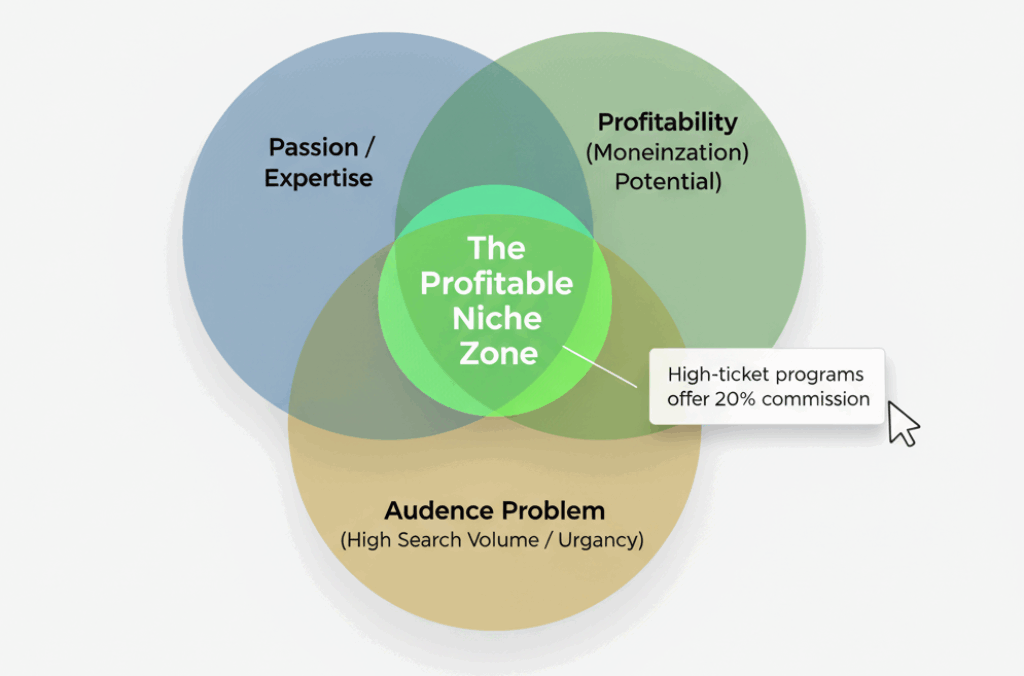
Your niche is the cornerstone of your affiliate business. It's not just a topic; it's a specific audience with a specific problem you can help solve. The best niches combine your passion with a proven market need.
What is a Niche in Affiliate Marketing?
A niche isn't just “fitness” or “technology.” It's much more specific than that. Your niche is the intersection of what you know, what people want to buy, and what problems you can solve. Think “home fitness for busy moms” instead of just “fitness.”
This decision matters more than any other you'll make. Choose wrong, and you'll struggle to create content, connect with your audience, and generate sales. Choose right, and everything else becomes easier.
How to Choose a Profitable Niche: The Three-Point Framework
- Passion & Expertise: Start with what you genuinely care about or have experience with. You'll be creating content about this topic for months, maybe years. If you're not interested in it, your audience will sense that lack of authenticity immediately.
- Profitability: Love doesn't pay the bills. Research if there's actual money in your niche. Look for profitable niches with evergreen markets—topics people consistently spend money on. High-ticket affiliate programs in your niche are a good sign there's serious money flowing.
- Audience Problem: The best niches solve real problems for specific people. Instead of “cooking,” think “quick healthy meals for working parents.” The more specific the problem, the easier it is to create targeted content that converts.
Your sweet spot is where all three circles overlap. That's where sustainable affiliate income lives.
Step 2: The Right Platform – Choosing Where to Build Your Empire
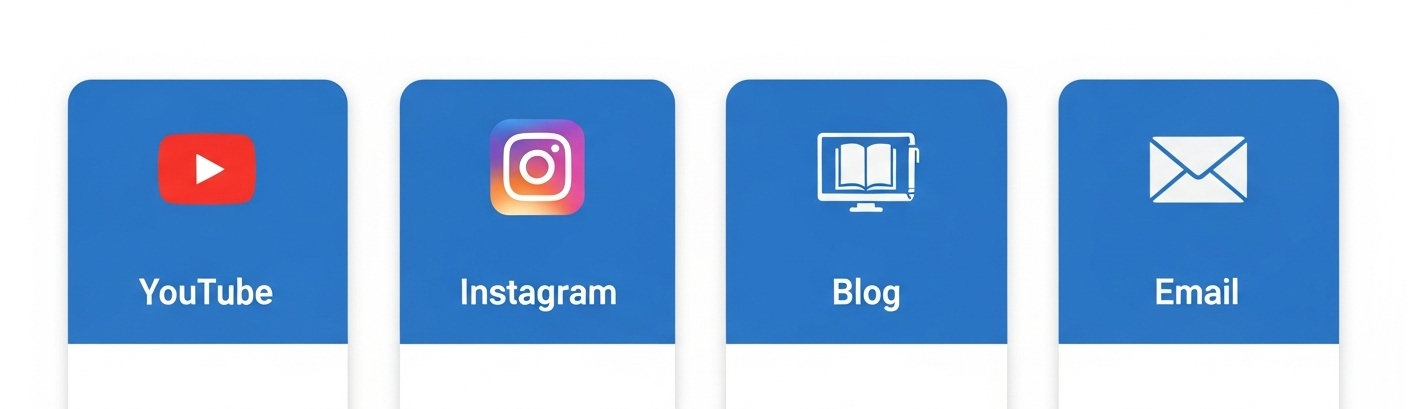
Your platform is your ‘home base', the place where you'll connect with your audience and deliver value. You don't have to be on every channel; start with the one that best suits your strengths and your niche.
Why is Your Platform Important?
Your platform choice dictates everything: your content format, how you interact with your audience, and even which affiliate programs will work best. A YouTube creator approaches affiliate marketing completely differently than a blogger or Instagram influencer.
More importantly, your platform determines how you build long-term relationships with your audience. This isn't about quick sales—it's about becoming a trusted voice in your niche.
Which Platform is Right for You?
- Blogging: Perfect for long-form content, detailed product reviews, and building SEO authority. If you enjoy writing and want to rank on Google for affiliate marketing strategies, blogging is your best bet. You'll need reliable hosting (Bluehost offers excellent WordPress hosting) and a memorable domain name (NameCheap has competitive pricing for domain registration).
- YouTube: Ideal if you're comfortable on camera and your niche benefits from visual demonstrations. Great for tutorials, product unboxings, and building a personal brand. Video content improves affiliate conversions by 49%.
- Social Media (TikTok, Instagram): Best for short-form, engaging content and direct audience connection. Perfect if your niche skews younger or benefits from quick, digestible tips.
- Email Marketing: The ultimate tool for building a loyal, engaged audience you actually own. Unlike social media, you control your email list completely.
Pick one platform initially. Master it, then expand.
Step 3: The Content Strategy – Creating Value Before Asking for a Sale

In the digital age, trust is your most valuable currency. Your goal is not to sell, but to help. By providing high-quality, helpful content, you position yourself as a trusted advisor, not just a marketer.
Why “Value First” is the Only Sustainable Strategy
I get it. You're worried about being too “salesy.” That fear actually serves you well because pushy, aggressive marketing kills affiliate businesses faster than anything else.
Here's what I've learned after years in this game: people can smell desperation from miles away. When you lead with value instead of your wallet, everything changes. Your audience starts seeing you as someone who genuinely cares about solving their problems, not just making a commission.
Building trust takes time, but it's the only way to create sustainable affiliate income. When people trust you, they buy from your recommendations repeatedly. When they don't trust you, they might buy once—if you're lucky.
What Types of Content Drive Affiliate Sales?
- Product Reviews: In-depth, unbiased analysis that covers both pros and cons. Don't just praise everything—acknowledge limitations. Your honesty builds credibility. Tools like our AI Product Review Prompt Generator can help you structure comprehensive reviews that convert.
- Comparison Posts: “Product A vs. Product B” content performs incredibly well. People actively search for comparison guides and best-of lists when they're ready to buy. Focus on helping them make the right choice for their specific situation.
- Tutorials/How-To Guides: Show people how to solve problems using specific products. These work especially well on YouTube and blogs because they provide immediate value while naturally incorporating affiliate recommendations.
- Buyer's Guides: Comprehensive guides that walk people through entire purchase decisions. These longer pieces establish serious topical authority and often rank well for high-intent keywords.
The AI Affiliate Product Review Playbook provides detailed templates for creating each type of content effectively. Download it for free and start creating high-value affiliate content starting now.
Step 4: The SEO Blueprint – Ranking Your Content for Passive Traffic

SEO is the engine of your passive income machine. By optimizing your content, you can attract a continuous stream of qualified visitors who are actively looking for the solutions you offer.
Why SEO is Crucial for Passive Income
Think about it: when someone searches “best running shoes for beginners,” they're not just browsing. They're actively looking to solve a problem, probably with their credit card ready. That's the kind of traffic that converts.
Unlike social media, where your content disappears in a few hours, SEO traffic compounds. A well-optimized blog post can bring you visitors—and commissions—for years. I still get sales from posts I wrote three years ago.
That's the real beauty of SEO organic traffic: it's truly passive once you rank.
The SEO Playbook for Affiliates
- Keyword Research: Focus on long-tail keywords with buyer intent. Instead of competing for “running shoes,” target “best running shoes for flat feet under $100.” These keyword clusters are easier to rank for and convert better because they're more specific.
- Use tools like Google Keyword Planner or Ahrefs to find low-competition, high-intent keywords in your niche.
- On-Page SEO: Structure your content properly with H1, H2, and H3 headings. Write compelling meta descriptions that encourage clicks. Don't forget image alt text—it helps with accessibility and SEO.
- Internal and External Linking: Link between your own posts to keep visitors on your site longer. Link to high-quality external resources to show Google you're providing comprehensive value. This builds topical authority in your niche.
Tools like RankMath SEO and SEOPress make on-page optimization straightforward, even for beginners.
Master these basics, and you'll start seeing organic traffic that converts.
Step 5: The Monetization Plan – Finding and Joining the Right Programs

Not all affiliate programs are created equal. The key is to partner with brands you genuinely trust and whose products you would recommend even without a commission.
How to Find Affiliate Programs
- Affiliate Networks: Start with established networks like CJ Affiliate, ShareASale, and ClickBank. These platforms connect you with hundreds of brands in one place. The application process is usually straightforward, and they handle all the payment processing.
- Individual Brand Programs: Many companies run their own affiliate programs directly. Check the footer of websites in your niche for “affiliate” or “partner” links. These often offer higher commissions since there's no network taking a cut.
- Marketplaces: Amazon Associates remains the most popular starting point, holding 46.21% market share of affiliate networks. While commissions are lower, the conversion rates are higher because people trust Amazon.
Don't overlook emerging opportunities. SaaS affiliate programs offer commissions from 20% to 70%, making them attractive for recurring income streams.
Choosing the Right Programs: Your Evaluation Checklist
- Relevance: Does this product genuinely solve a problem for your audience? If you're in the fitness niche, don't promote random tech gadgets just because they pay well.
- Commission Structure: Look beyond just the percentage. A 5% commission on a $500 product beats 50% on a $10 product. Also check cookie duration—longer is better. Some programs track commissions for 90 days after someone clicks your link.
- Program Reputation: Research the company's track record. Do they pay on time? How's their customer support? Read other affiliates' experiences in forums and Facebook groups.
Quality over quantity. It's better to promote three products you genuinely believe in than thirty you don't.
Step 6: The Link Strategy – Placing and Disclosing Your Links for Trust and Conversions
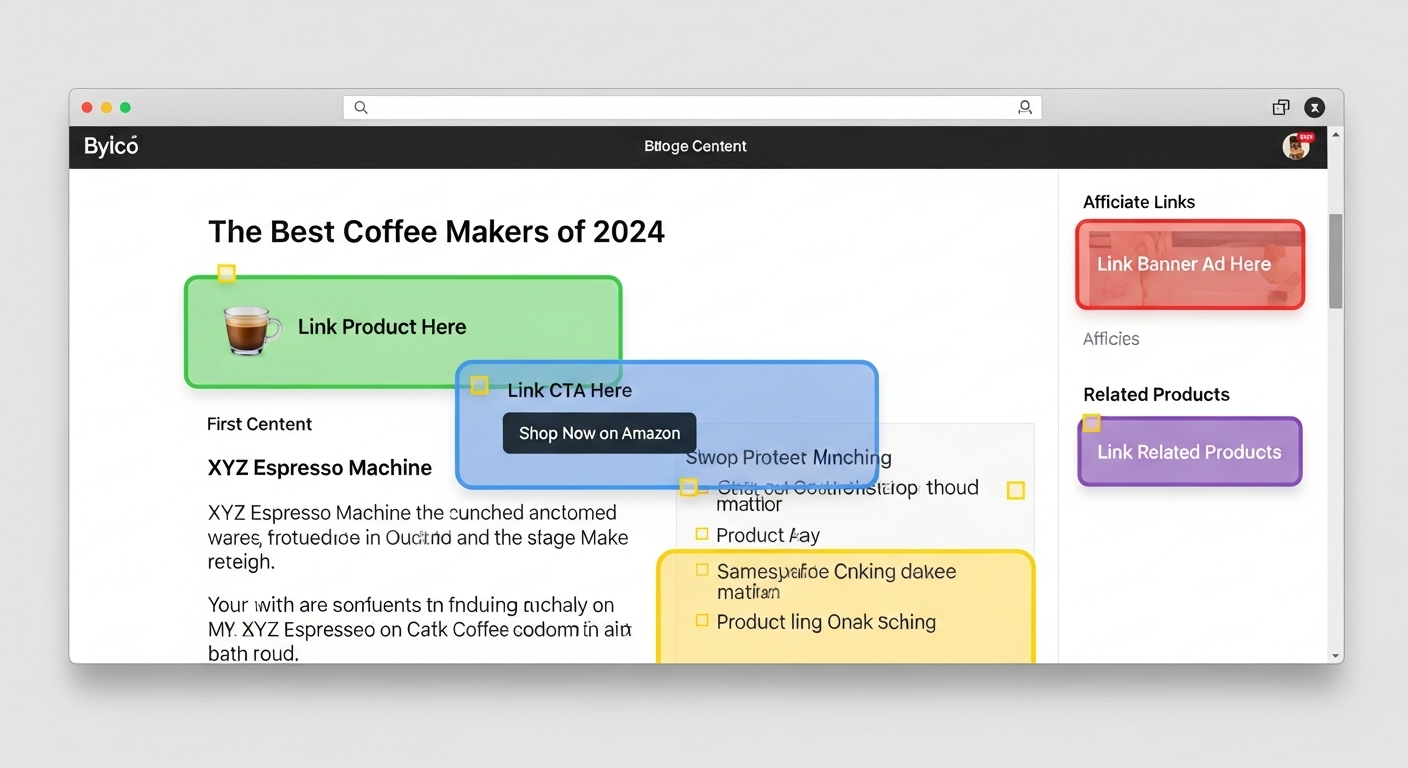
Transparency is key. Always disclose your affiliate relationship clearly and concisely. This not only builds trust with your audience but is also a legal requirement in many places.
Where to Place Your Links
- Within Content: Place links naturally within your content where they add value. In product reviews, link to the product when you first mention it and again in your conclusion. For tutorials, link to tools when you demonstrate how to use them.
- Email Marketing: Your email list is gold for affiliate promotions. These subscribers already trust you, so conversion rates are typically higher than cold traffic.
- Social Media: Most platforms allow affiliate links but check their terms. Instagram Stories and YouTube descriptions work particularly well for affiliate content.
Avoid link stuffing. Too many affiliate links look desperate and hurt conversions.
How to Write High-Converting Call-to-Actions
Forget pushy sales language. Instead, focus on helping:
- “Check current pricing and reviews here”
- “See if this fits your budget”
- “Get full specifications and user reviews”
- “Compare prices across retailers”
The best CTAs feel like natural next steps, not sales pitches.
The FTC Disclosure Requirement
This isn't optional. The FTC requires clear disclosure of affiliate relationships. Use simple language:
“This post contains affiliate links. If you purchase through these links, I may earn a small commission at no extra cost to you.”
Place disclosures prominently—at the beginning of posts, in video descriptions, and in social media captions. It's not just legal compliance; it actually builds trust with your audience.
Tools like LinkWhisper can help you manage and optimize your internal linking strategy, making it easier to place affiliate links naturally within your content ecosystem.
Step 7: The Scale Plan – How to Grow Your Affiliate Income Over Time
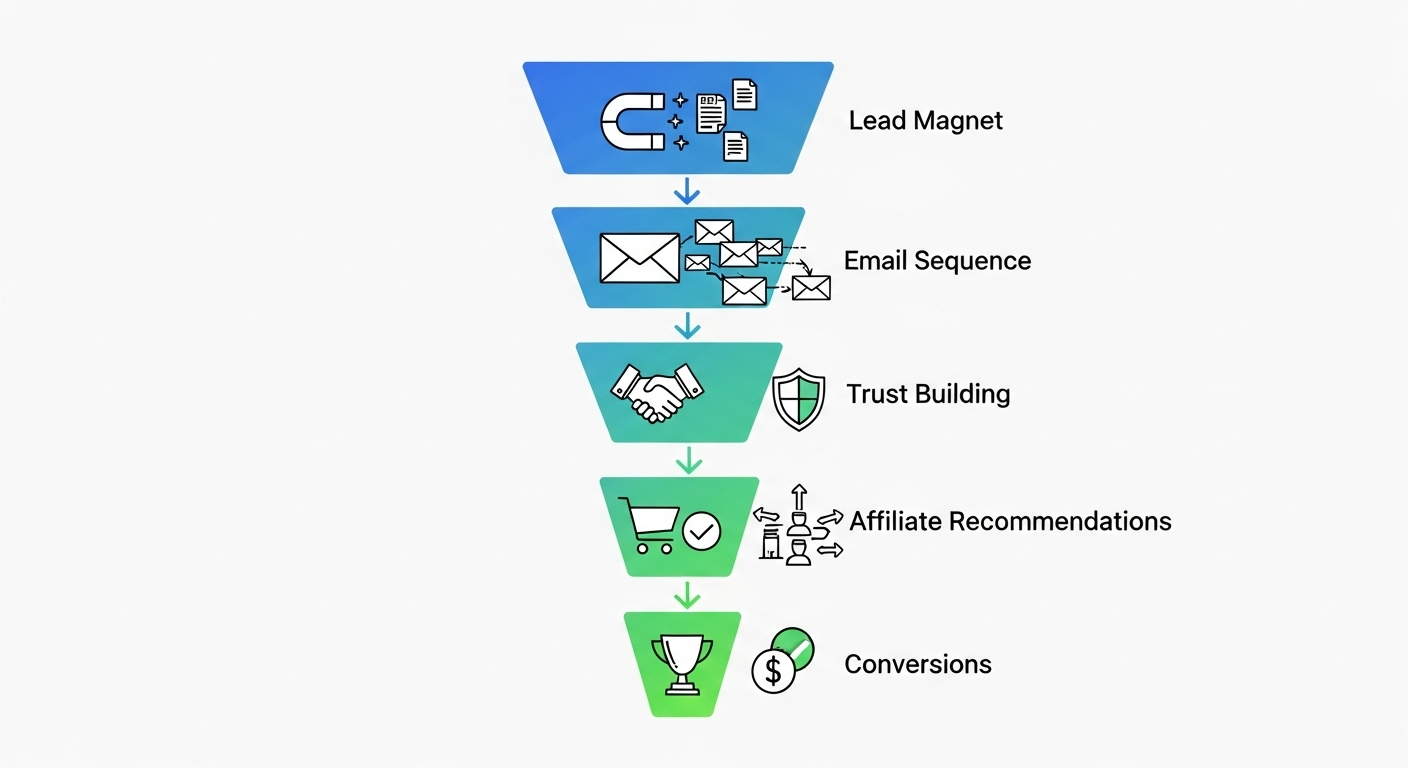
The real ‘passive' part of passive income comes from scaling your efforts. Once you have the core playbook down, you can use these advanced strategies to multiply your income without a linear increase in effort.
Beyond the Blog Post: Advanced Growth Strategies
- Email List Building: This is where the magic happens. Your email list is the only audience you truly own. Social media platforms can change their algorithms or ban your account tomorrow, but your email list stays with you.
Start building from day one. Offer lead magnets—free guides, checklists, or templates—in exchange for email addresses. Then nurture these subscribers with valuable content before introducing affiliate offers. Email subscribers convert at much higher rates because they've already raised their hand showing interest in your niche.
GetResponse offers excellent automation features for beginners, while FluentCRM provides powerful WordPress integration. Our free email marketing resources include templates and sequences to get you started.
- Diversifying Traffic Sources: Don't put all your eggs in Google's basket. Expand to YouTube for video content, leverage social media for community building, and consider paid advertising once you're profitable. Each traffic source reinforces the others.
- Optimizing Conversions: Use data to improve results. Track which content converts best, what CTAs work, and where visitors drop off. A/B test different approaches. Small improvements in conversion rates compound into significant income increases over time.
The key is systematic growth. Add one new strategy at a time, master it, then move to the next.
Common Mistakes & Pitfalls (and How to Avoid Them)
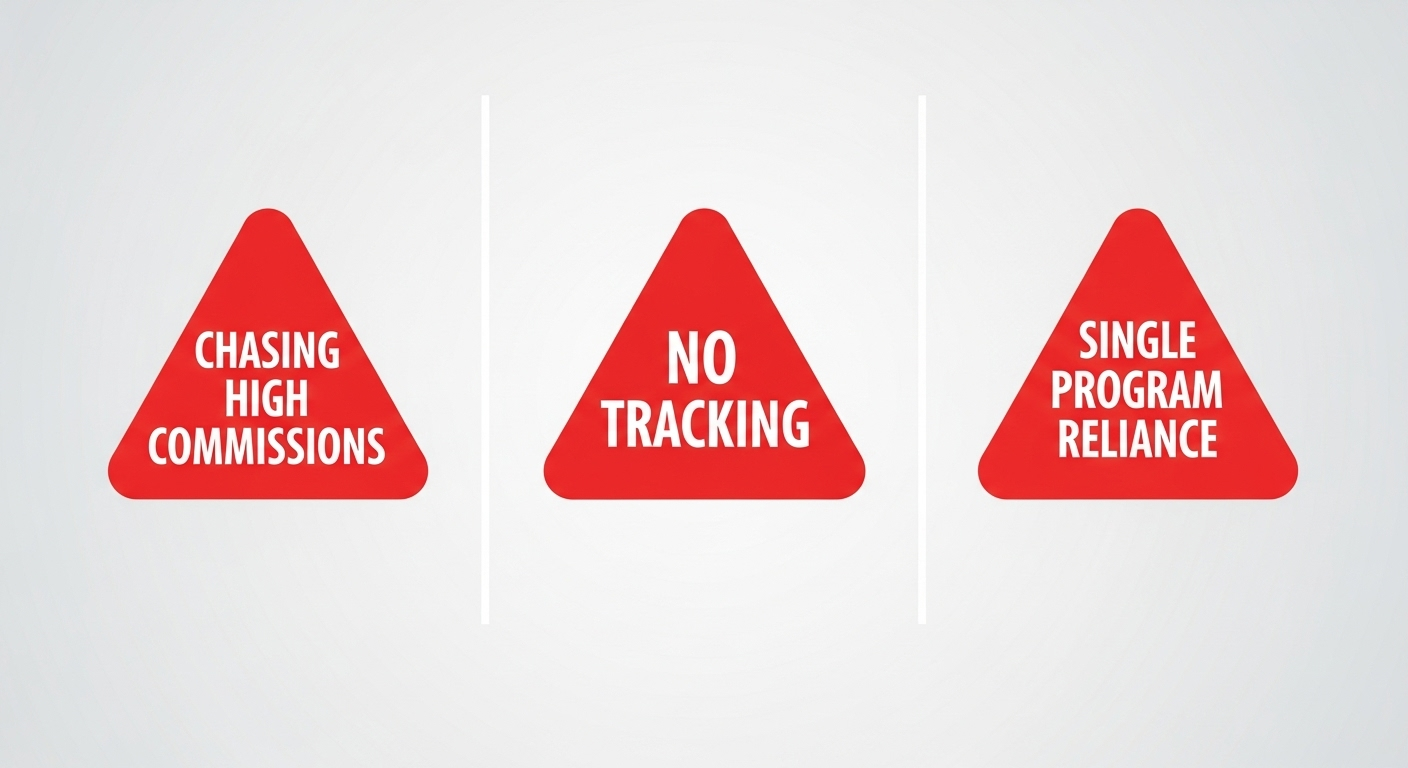
Learning from others' mistakes is cheaper than making them yourself. Here are the biggest traps that kill affiliate marketing businesses before they get started.
Chasing High Commissions but No Traffic Match
That 70% commission looks tempting, but it's worthless if nobody in your audience wants the product. I've seen people promote expensive business coaching to audiences interested in budget travel. The math doesn't work.
Focus on relevance first, commission rates second. A 5% commission on a product your audience actually wants will outperform a 50% commission on something they don't.
Lack of Tracking or Poor Data Discipline
You can't improve what you don't measure. Too many affiliates create content randomly without tracking what works. Use Google Analytics, affiliate network reports, and heat mapping tools to understand your audience behavior.
Track everything: which posts get the most traffic, what content converts best, and which affiliate programs perform well. This data guides your future content strategy.
Over-Relying on One Offer or Affiliate Program
Putting all your income eggs in one basket is risky. Programs get discontinued, commission rates change, or companies go out of business. Diversify your affiliate portfolio across multiple programs and products.
Ignoring Disclosures and Compliance
FTC violations aren't just about fines—they destroy credibility. Always disclose affiliate relationships clearly. Stay updated on platform policies and legal requirements in your country.
Neglecting to Refresh Content
That product review you wrote two years ago might be promoting discontinued products or outdated information. Set calendar reminders to update your top-performing content regularly. Fresh, accurate content ranks better and converts higher.
What Tools and Resources Do You Need to Get Started?

You don't need expensive tools to start affiliate marketing, but the right ones can accelerate your success. Here's what I recommend based on your budget and experience level.
Essential Free Tools
Start here if you're testing the waters or working with a tight budget:
- Google Analytics: Track your website traffic, user behavior, and conversion paths. Essential for understanding what content works and where visitors come from.
- Google Search Console: Monitor your search rankings, identify technical issues, and discover new keyword opportunities. It's like having a direct line to Google's perspective on your site.
- Canva: Create professional-looking graphics, social media posts, and blog images without design experience. Visual content improves engagement across all platforms.
- Google Keyword Planner: Basic keyword research to find search volumes and competition levels. Not as detailed as paid tools, but sufficient for beginners.
- Social Media Platforms: Leverage Facebook groups, Reddit communities, and platform-specific audiences to promote content and engage with your niche.
Recommended Paid Tools
Once you're generating some income, these tools offer significant ROI:
- SEO Tools: Ahrefs or SEMrush for comprehensive keyword research, competitor analysis, and backlink opportunities. Budget option: Ubersuggest offers similar features at lower cost.
- Email Marketing: Start with GetResponse or FluentCRM for automation and list management. Email marketing consistently delivers the highest ROI.
- Content Creation: Jasper AI or similar tools for content ideation and first drafts. Don't rely on them completely, but they speed up the writing process significantly.
- Link Management: LinkWhisper for internal linking optimization and affiliate link management.
Budget Planning for Beginners
Month 1-3: $50-100/month (domain, hosting, basic email tool) Month 4-6: $150-250/month (add SEO tool, upgrade email marketing) Month 7-12: $300-500/month (content tools, paid advertising budget)
ROI Calculation Methods
Track these metrics monthly:
- Revenue per visitor (total affiliate commissions ÷ total visitors)
- Cost per acquisition (marketing spend ÷ number of conversions)
- Lifetime customer value (average commission × repeat purchase rate)
- Content ROI (commission from specific posts ÷ time invested)
Start simple: if you spend $100 on tools and generate $300 in commissions, that's a 200% ROI. As you grow, develop more sophisticated tracking systems.
The key is starting lean and reinvesting profits into tools that demonstrably improve your results.
Conclusion: Your Journey to Passive Income Starts Now
You've made it through the playbook. We've covered everything from finding your niche and creating great content to building an audience and scaling your income. The main thing to remember is that this isn't a get-rich-quick scheme. It's a marathon, not a sprint. You'll face challenges and make mistakes, but with a solid, repeatable system, you can build a sustainable and highly rewarding online business.
This playbook gives you a clear path forward. It breaks a huge, overwhelming topic into seven actionable steps. You now know the importance of a strong foundation, the power of a value-first approach, and the critical role that data and optimization play in your growth. It’s a lot to take in, but the knowledge you've gained is the most important tool you have.
Your journey to passive income starts now. Take the first step, don't let the details overwhelm you. Whether it’s choosing a niche, writing your first blog post, or setting up Google Analytics, just start. The only way to win this game is by showing up and playing. Don't wait for the perfect moment. The perfect moment is right now.
Ready to put this playbook into action? Grab our free AI Affiliate Product Review Playbook now and plan your first profitable post today.
Frequently Asked Questions
What is an affiliate marketing playbook, and why does it matter?
An affiliate marketing playbook is a comprehensive, systematic, and repeatable plan for building a successful affiliate business. It matters because it replaces random tactics with a structured, step-by-step strategy. This approach helps marketers avoid common mistakes, focus on high-value tasks, and ultimately create a stable, predictable source of passive income.
Who is affiliate marketing for?
Affiliate marketing is for anyone who wants to earn money by recommending products or services. Bloggers, YouTubers, social media creators, and even small business owners can use it to add a new income stream.
What kind of content works best in affiliate marketing?
Content that solves problems and helps readers make decisions works best. Product reviews, comparison posts, tutorials, and buyer’s guides convert well because they give clear answers and show real value.
How long until you start seeing income, and what are realistic expectations?
It is realistic to expect income to start between 6 to 12 months after launching consistent, quality content. The process is non-linear. Initial efforts yield minimal returns. However, after the first six months, if you follow the playbook, the content starts ranking and the income curve begins to rise sharply. Realistic expectations require patience; affiliate marketing is a marathon, not a sprint.
How to build long-term passive value?
Publish evergreen content, grow an email list, and update posts regularly. Use SEO to attract continuous traffic and diversify your affiliate programs. These habits create assets that keep earning even when you are not actively working.





![The Rank Math AI Visibility Review You Need to Read [Worth It In 2026?]](https://webincomejournal.com/wp-content/uploads/2026/07/Rank-Math-AI-Visibility-Review-Hero-Image-336x220.png)
