Chadrack

Last week, I posted about how I built five fully functional, professional WordPress sites in under 24 hours.
Not templates. Not demos. Real, production-ready sites with custom designs, working plugins, and zero technical debt.
Three years ago, that should’ve been impossible. Building those sites would've taken me a month minimum—probably longer if clients kept changing their minds halfway through.
That experience changed everything I thought I knew about WordPress development, hence this Vibe for WordPress for agencies post.
As an agency, you must have noticed that right now, agencies are getting squeezed from every direction. Clients want faster turnarounds, lower prices, and the same quality you've always delivered. Meanwhile, your overhead keeps climbing, and your team is already stretched thin.
Walking with traditional page builders like Elementor and Divi is no longer sufficient, as they were designed for an earlier era. They can't keep up with what clients expect in 2025. But AI tools like Vibe for WordPress by 10Web can.
Your clients are already discovering these tools. The question is whether you'll master them first—or scramble to catch up when they start asking why you're not using them.
Key Takeaways:
- Vibe for WordPress is an AI-native site builder built to help agencies design, code, and deploy client websites faster and smarter.
- Unlike traditional drag-and-drop tools, Vibe uses generative AI to handle both the creative and technical layers—automating workflows and drastically reducing turnaround time.
- For WordPress agencies under pressure to scale without compromising quality, Vibe represents a pivotal leap in how modern web projects are executed.
DISCLOSURE: WebIncomeJournal is supported by readers like yourself. We may earn an affiliate commission when you purchase through our links, which helps us offer our content for free. Learn more here.
What Is Vibe for WordPress by 10Web (and Why It Matters for Agencies)
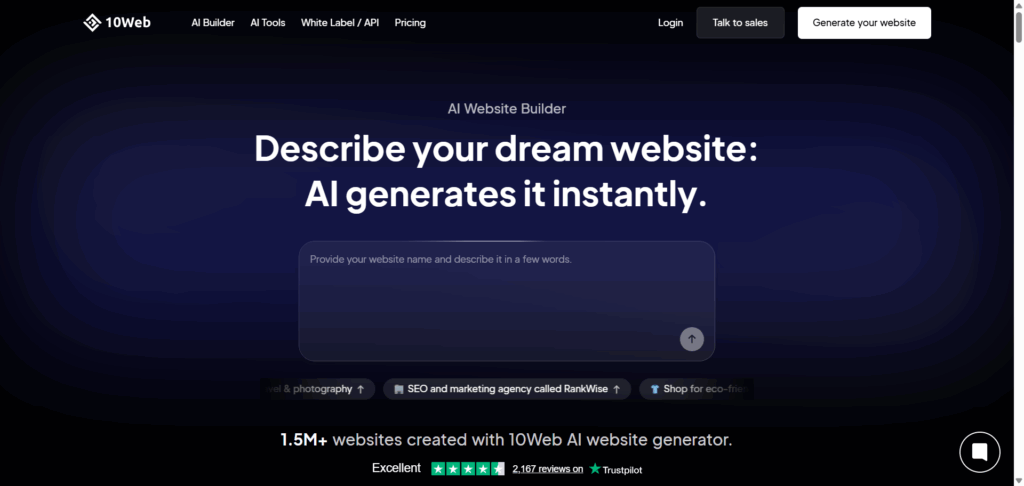
At its core, Vibe for WordPress by 10Web is an AI-native website builder that allows you to create fully functional, editable WordPress sites simply by describing what you want. Instead of manually dragging and dropping elements, you type a prompt — something as straightforward as “Build a modern fitness coaching website with a booking section and testimonials” — and Vibe instantly generates a complete, professional-grade site.
This concept is powered by what 10Web calls “vibe coding.” It’s the next evolution in web development — where AI doesn’t just assist, it actually builds. The system interprets your prompt, designs a layout, writes the necessary code, and delivers a live, editable WordPress site that’s ready for customization. It’s like having a designer, developer, and copywriter working in perfect sync — but in seconds.
The real difference lies in the depth of what it produces. Vibe doesn’t use pre-built templates or rigid themes. Each project is unique, generated dynamically from your input. You’re not starting from a limited framework — you’re starting from possibility.
For agencies, that means the end of repetitive builds and endless revisions. With Vibe, the time between client brief and live prototype collapses from days to minutes, freeing teams to focus on strategy, branding, and conversions instead of technical bottlenecks.
Here’s how it stacks up:
| Feature | Traditional Builder | Vibe for WordPress |
| Build Speed | Manual drag & drop | AI instant generation |
| Workflow | Designer-dependent | Prompt-based AI builder |
| Custom Code | Limited | Editable clean code |
| Output | Visual only | Real WordPress site |
In short, Vibe represents a turning point — one where AI doesn’t replace creativity, it removes the friction that slows it down. That's the difference between an AI toy and an AI tool that actually transforms your agency workflow.
Why Agencies Need to Care Now (Not Later)
So, why do I think WordPress agencies should take this very seriously?
Because your clients are about to discover AI website builders, and when they do, they’ll expect you to be using them already.
We’ve seen this play out before: first with AI content (ChatGPT), then with AI visuals (Midjourney, Canva Magic Studio). Now, it’s hitting web development.
Remember when clients started asking about AI-generated content? Or automated SEO tools? The agencies that dismissed those technologies spent the next year playing defense while competitors who adopted early scaled aggressively.
AI has already reshaped what clients expect from service providers. They've watched ChatGPT write marketing copy in seconds, Midjourney generate stunning visuals instantly, and now they're seeing videos of complete websites being built through simple prompts. Their internal benchmark for “fast turnaround” has fundamentally changed.
Clients who once accepted two-week turnarounds now expect overnight results — and they know AI can deliver it. Very soon, the new client question that every agency will soon hear will be:
“Can you build this faster using AI?”
If the answer is no, that client is one click away from finding someone who can.
Vibe for WordPress gives agencies a fighting edge in this new reality. By integrating AI into the build process, small teams can produce at enterprise scale — without the cost, delays, or burnout. Imagine a three-person agency that can now build and deliver what once took a ten-person team and multiple freelancers. That’s not a productivity boost — that’s a business model transformation.
My experiment with building five live websites last week is a testament to this fact.
The agencies that adapt early will capture more projects per month, deliver better client experiences, and expand their profit margins — all while keeping overhead low.
But here's what really matters—client retention. When you can turn around revisions in hours instead of days, when you can show clients live iterations during meetings, and when you deliver ahead of schedule instead of behind it, you become irreplaceable.
The agencies waiting to see how this plays out? They're the ones who'll be explaining to prospects why their process takes longer and costs more than competitors who've already mastered AI-powered WordPress development.
Early adoption isn't risky anymore. Hesitation is.
5 Ways Agencies Can Use Vibe to Boost Profitability
Let’s now look at the top ways in which agencies are turning Vibe into a profit machine.
1. Rapid Prototyping: Generate demo sites for clients in minutes
Stop losing deals because you can't show prospects something tangible fast enough. With Vibe, you can generate fully functional demo sites during discovery calls. A digital agency I know reduced their sales cycle by half simply because clients could see and interact with their vision immediately instead of waiting weeks for mockups.
2. Template Libraries: Save and reuse project-specific “vibes”
Here's where it gets smart. Once you've built a site structure that works—say, a SaaS landing page or an ecommerce store layout—you can save that entire “vibe” and reuse it. You're essentially building your own library of proven frameworks that deploy in minutes instead of starting from scratch every time.
3. Client Customization: Use AI prompts to adjust sections during live reviews
Imagine this: you're on a Zoom call with a client who wants the hero section “punchier.” Instead of saying “I'll have the designer revise that by Friday,” you type a prompt and regenerate it right there. Client feedback loops that used to take days now happen in real-time.
4. Cost Efficiency: Reduce dependency on front-end developers for small projects
Small client projects that barely cover overhead? Those become profitable again when you're not burning expensive developer hours on basic setup. Project managers and designers can handle straightforward builds themselves, freeing your senior developers for complex custom work that actually justifies their rates.
5. Upsell Power: Offer “AI-enhanced builds” or “Express Site Delivery” packages
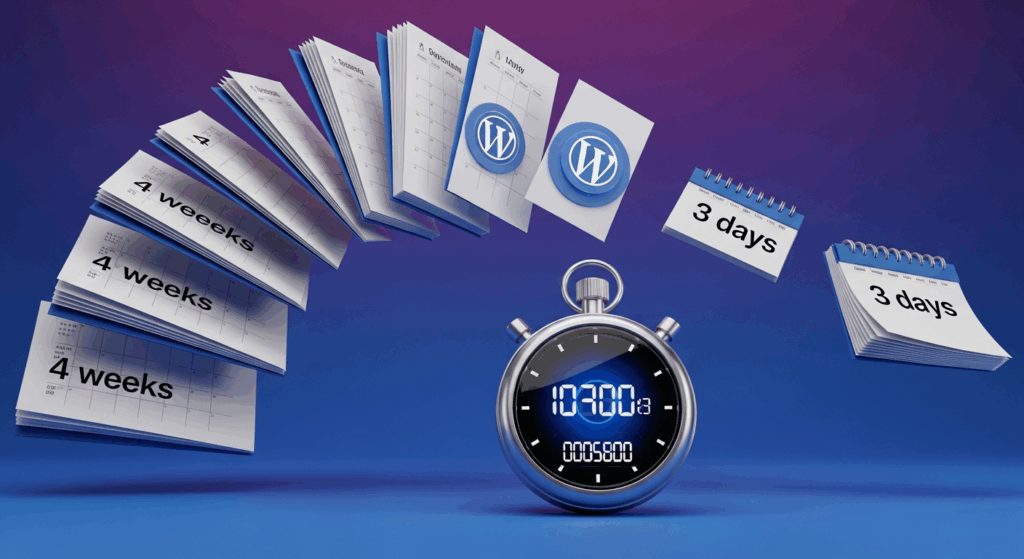
Early adopters are already packaging this as premium service tiers. “Express Site Delivery” commands higher prices because clients pay for speed. You're delivering in three days what competitors quote at three weeks—and you can charge accordingly because the value to the client is enormous.
The agencies making the most money aren't just using Vibe to work faster. They're restructuring their entire service model around what's now possible.
What This Means for Your Workflow (and Your Team)
Adopting Vibe for WordPress doesn’t replace your team — it redefines their strengths. The designer’s role evolves from layout execution to prompt engineering — mastering how to guide the AI’s creative output with precision. Instead of manually dragging elements, designers craft strategic prompts that reflect a client’s brand voice, color palette, and emotional tone.
Developers, on the other hand, shift from building from scratch to refining what AI produces. The generated sites are editable, meaning developers can still enhance structure, performance, and integrations — but now they start with a functional base instead of an empty canvas. That accelerates delivery while preserving quality.
This AI-native approach also improves team synergy. Copywriters, designers, and developers can align around the same language — prompts. For example, a copywriter’s brief (“clean layout with bold CTA section”) can feed directly into Vibe’s build process, ensuring content and design stay in sync.
In a traditional workflow, each department works in isolation: copy first, then design, then development — a relay race full of friction. With Vibe, it becomes a real-time collaboration loop, where each role contributes instantly to a shared creative output.
Visually, the difference is striking:
Traditional Process: Client brief → Designer builds → Developer codes → Revisions → Final review
AI-Native Workflow: Client brief → Prompt → AI builds → Team refines live → Instant delivery
This transformation doesn’t just streamline projects — it redefines what “fast and professional” means in the WordPress world. Agencies embracing this shift will deliver better results with fewer moving parts, unlocking a workflow that’s both smarter and more sustainable.
Real Business Outcomes You Can Expect
The real power of Vibe for WordPress isn’t just in what it builds — it’s in how it transforms your agency’s economics.
1. Faster project turnaround = higher monthly capacity
With traditional builders, agencies often cap out at a few projects per month before timelines start overlapping. Vibe changes that math. By cutting build time from days to hours, agencies can handle two to three times more client projects without hiring extra staff. A small WordPress team that once delivered three client demos a week could now deliver ten or more, reducing delivery costs by nearly 50% while maintaining quality.
2. Happier clients = better referrals and retention
In today’s market, clients don’t just want “great websites” — they want speed, flexibility, and responsiveness. Vibe empowers agencies to respond to feedback instantly, make live changes during calls, and deliver launch-ready sites in record time. That level of agility turns first-time clients into long-term partners. Every fast delivery becomes a case study; every case study becomes a referral.
3. Differentiation = the “AI-ready agency” advantage
Right now, the phrase “AI-powered” still turns heads in proposals. Positioning your agency as an AI-native builder gives you a competitive edge when pitching to modern brands that value innovation. You’re not just offering design; you’re offering next-generation efficiency — an experience traditional builders simply can’t replicate.
Vibe doesn’t just optimize processes — it changes how agencies scale, sell, and sustain growth. The agencies leveraging it early are already moving from service providers to solution partners, redefining what “full-service” truly means in the AI era.
Conclusion – The Smart Agencies Always Move First
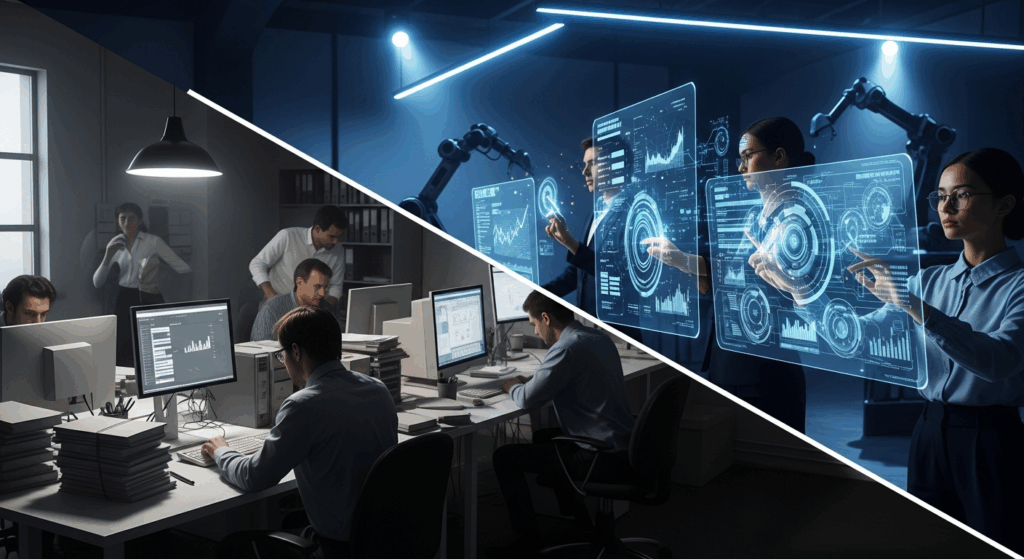
Remember the agencies that dismissed AI content creation back in 2022? They spent 2023 and 2024 scrambling to catch up while competitors who adopted ChatGPT early dominated their markets.
The same thing happened with SEO automation, with marketing analytics, with every significant technological shift in the last decade. The pattern is always identical: early adopters gain momentum while skeptics lose ground they never fully recover.
Vibe for WordPress represents exactly that kind of inflection point—except this time it's your core service at stake.
This isn't speculative anymore. The technology works. The results are documented. Agencies are already using it to deliver faster, charge more, and scale without hiring. The only question is which side of this shift you'll be on.
When your clients start asking, “Can you use Vibe?” or “Why does this take three weeks when I saw someone build something similar in a day?”—it'll already be too late to position yourself as the innovative agency that leads with technology.
The smart agencies aren't waiting to see how this plays out. They're running experiments right now, building competency before their market catches on.
You can be the agency that saw it coming, or the one that got disrupted by someone who did.
Click here now to get started with Vibe for FREE
Frequently Asked Questions
How can Vibe by 10Web speed up WordPress website development?
Vibe uses AI to generate complete WordPress sites from text prompts. You describe what you need, and Vibe builds it instantly. Agencies report 70% faster build times compared to traditional methods. Projects that took 3-4 weeks now finish in 2-3 days. The AI handles repetitive setup tasks like layout creation, plugin configuration, and initial styling. Your team focuses on refinement instead of starting from scratch.
Can agencies fully customize sites built with Vibe for WordPress?
Yes. Vibe gives you complete customization control. The platform generates clean, editable code in PHP and JavaScript. You can modify any element at the code level. Agencies can adjust designs through AI prompts or dive into the backend for custom development. Vibe does not lock you into templates. You maintain unlimited frontend freedom for any UI, animation, or layout you need.
Does Vibe support WooCommerce and e-commerce integration?
Vibe integrates fully with WooCommerce. The platform maintains 100% WordPress backend compatibility. You can add product catalogs, shopping carts, payment gateways, and all standard e-commerce features. Vibe works seamlessly with over 5,000 WordPress plugins. Your e-commerce sites function exactly like traditionally built WordPress stores.
Is Vibe suitable for white-label agency services?
Yes. Vibe offers white-label capabilities for agencies. You can build AI-generated websites under your own brand. Early adopters have launched site packages branded as their proprietary service. The platform allows agencies to scale offerings without increasing headcount. You deliver AI-powered builds while clients see only your agency brand.
How secure and reliable is hosting through Vibe and 10Web?
10Web provides automated security monitoring and backup systems. The hosting infrastructure includes performance optimization built specifically for Vibe sites. Agencies rely on these security layers for client projects. The platform offers deterministic version control and rollback capabilities. Your sites maintain enterprise-level reliability standards.
Can agencies retain full control over design and code with Vibe?
Agencies keep complete control over both design and code. Vibe generates the foundation, but you own everything afterward. You can export sites, modify hosting configurations, and access all WordPress backend systems. The platform provides hybrid control—AI automation for speed plus code-level access for customization. You are never locked into proprietary systems.
What limitations or challenges should agencies be aware of with Vibe?
Vibe requires learning prompt engineering skills. Your team needs time to master effective AI communication. Complex custom functionality still requires traditional development work. The platform works best for standard WordPress projects rather than highly specialized builds. Agencies should test Vibe on smaller projects first before committing to large client work. Budget training time for your team to adapt workflows.