
 Chadrack

SEOWriting.ai is a next-generation AI SEO content writer designed for affiliate marketers, bloggers, and content creators who need to publish high-quality, keyword-optimized articles – fast. It goes far beyond basic AI writing tools. We're talking real-time SERP analysis, smart keyword placement, brand voice integration, AI image generation, and built-in SEO scoring that guides you as you go.
This guide provides a practical, step-by-step process on how to write SEO content using the platform. You'll learn how to:
- Generate SEO content that ranks on Google and AI-powered search engines like ChatGPT, Perplexity, and Google’s AI Overviews
- Automate tedious tasks like keyword optimization and formatting
- Maintain your brand voice while scaling your publishing output
- Strike the right balance between AI efficiency and human creativity
Let’s jump in!
What is SEOWriting.ai and Why Use It in 2025?

SEOWriting.ai represents the next generation of AI content creation tools, specifically designed for bloggers and affiliate marketers who need content that actually ranks. The platform combines advanced language models, such as GPT-4, with integrated SEO optimization features that guide your content creation from keyword selection to final publication.
The platform offers a clean, intuitive interface with everything laid out on the left sidebar. From the One-Click Blog Post tool and Bulk Article Generator to the Humanizer, Brand Voice Builder, and SERP-based optimization, you can start, edit, and finish content all in one space. No switching tabs. No jumping between tools. Everything’s built in.
For affiliate marketers, SEOWriting.ai offers game-changing features that address unique challenges. These include:
- Real-time SEO scoring based on live SERP data
- Keyword and competitor analysis baked into the writing process
- Support for brand voice, tone, and point-of-view settings
- Built-in AI image generation with alt-text for better on-page SEO
- Content structure optimized for Google’s EEAT principles
- Support for content bulk creation and auto-publishing to WordPress
- Custom integration for affiliate marketers: think Amazon product listings SEO
But here’s the big deal in 2025: AI search engines like ChatGPT, Perplexity, and Google’s AI Overviews are rewriting the rules. They don’t just index keywords; they interpret intent, assess content quality, and reward structured, NLP-friendly writing. SEOWriting.ai is engineered with these standards in mind.
Unlike generic AI writers, this tool doesn’t leave SEO to chance. It builds it into the bones of your content. If you’re serious about traffic, rankings, and affiliate revenue, SEOWriting.ai isn’t optional – it’s essential.
Well, you might wonder why bother with SEOWriting.ai when AI search engines, like ChatGPT, Perplexity, and Google’s AI Overviews, are changing how people find information?
The truth is, these developments make tools like SEOWriting.ai more essential, not less. Unlike generic AI writers, this tool doesn’t leave SEO to chance. It builds it into the bones of your content. It helps you create content with the expertise signals, original perspectives, and topical depth that both traditional search algorithms and AI-powered systems prioritize.
How to Write SEO Content with SEOWriting.ai
Creating content with SEOWriting AI is straightforward. You choose your desired options and then click a button to generate your article. However, in this blog post, I’m breaking down the steps that will enable you to generate truly optimized SEO content for your affiliate marketing needs.
Step 1: Choose a Main Keyword

The foundation of any high-ranking piece of content starts with selecting the right keyword. If you get this wrong, no AI tool, no matter how powerful, can save your content from sinking into the search abyss.
It’s important, therefore, that you feed SEOWriting.ai quality keywords if you want it to produce content that ranks. The good news is that there are incredible keyword tools to help with this:
- Mangools (via KWFinder) for uncovering low-competition long-tail keywords
- NeuronWriter for SERP-driven content scoring and keyword insights
- LowFruits to find easy wins based on weak spots in Google’s top 10
- Answer The Public to extract questions your audience is actually asking
Let me point out that while many people believe that keywords do not matter today because of the entrance of AI-powered search engines like ChatGPT, Perplexity, and Google’s AI Overviews, aka answer engines, the truth is that keywords still matter. The focus, however, should be on long-tail keywords. For example, “best waterproof Bluetooth speakers under $50” instead of just “Bluetooth speaker.” Choose a keyword that matches search intent, has manageable competition, and connects directly with your niche. Plug that into SEOWriting.ai, and that’s your launchpad for a high-ranking blog post.
Step 2: Set Your Blog Post Parameters
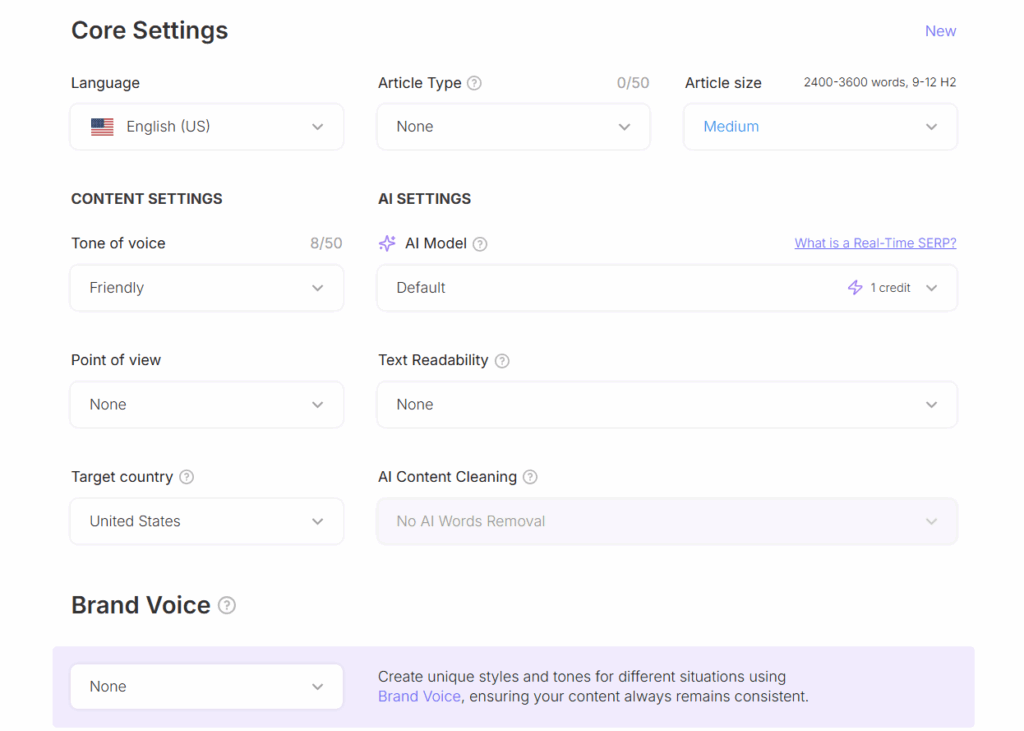
Once you've selected your keyword, it's time to configure the parameters that will shape your content. This step is where SEOWriting.ai truly separates itself from generic AI writing tools.
Start by selecting your language. SEOWriting.ai supports over 25 languages, with the most robust SEO data available for English, Spanish, French, and German. If you're targeting international markets, the platform's multilingual SEO optimization is a major advantage.
Next, choose your tone of voice. This setting fundamentally shapes how your content reads and connects with your audience. SEOWriting.ai offers two approaches:
- Brand Voice: This option lets you select from preset tones like “Professional,” “Conversational,” or “Persuasive.” I typically use “Authoritative but Friendly” for affiliate content as it strikes the right balance between expertise and approachability.
- Custom Tone: For more control, use the custom tone editor to create a unique voice. You can adjust parameters for formality, emotion, and technical complexity, or even upload samples of your writing for the AI to analyze and emulate.
Your point of view selection matters significantly for conversion rates. For product reviews, first-person (“I tested this product”) typically performs better than third-person for establishing authenticity and trust.
When selecting article type, match it precisely to your search intent. If you're targeting a commercial keyword like “best budget laptops,” choose the “Product Roundup” type rather than “How-To Guide.”
Country selection tailors your content to regional search patterns and language preferences. This is particularly important for affiliate marketers targeting location-specific offers or product availability.
Finally, article size should be determined by competitive analysis. SEOWriting.ai shows you the average word count of top-ranking pages for your keyword, so you can meet or slightly exceed that benchmark for optimal results.
Step 3: Customizing Content Parameters
Now let's dig into the more advanced content parameters that will fine-tune your SEO article and make it stand out from AI-generated competitors.
First, let's talk about article size and type in more detail. While SEOWriting.ai offers preset options, Short, Medium, or Long, I've found the most success by looking at the actual data. For example, when writing product reviews, I check what length is ranking (typically 1,800-2,500 words for comprehensive reviews) and match it.
The platform shows you a content length comparison chart for your chosen keyword, making this decision data-driven rather than guesswork.
On Article Type, you have a few options. It’s important you choose the right one because this helps shape the flow of the content. You can choose from:
- How-to guides
- Product reviews
- Listicles
- Or stick with None for freestyle posts
When it comes to AI model selection, you have several options that balance quality against speed and cost:
- Standard: Fastest and most economical, best for simple informational content
- Advanced: Better for product reviews and technical content, with improved fact-checking
- Premium: Powered by GPT-4, this delivers the highest quality output with the most nuanced understanding of your instructions
For most affiliate content, I recommend using the Advanced model at a minimum. The improved understanding of product features and benefits justifies the slightly higher cost.
Text readability settings are crucial for both user experience and SEO. SEOWriting.ai lets you target specific reading levels, from elementary (grade 5-6) to advanced (grade 12+). For most affiliate content, aim for grade 7-9 readability to balance accessibility with substantive information. The platform's real-time readability score keeps you on track.
Content cleaning options come in two flavors:
- Basic cleaning: Removes obvious AI patterns and improves flow
- Advanced cleaning: Adds variation in sentence structure, transitions, and word choice to significantly reduce AI detection
The advanced cleaning option is worth the extra processing time, especially in 2025, when AI content detection has become more sophisticated.
For reducing AI detection, here are my top practices:
- Use SEOWriting.ai’s Humanizer to rewrite awkward phrases
- Add personal experiences with the product or topic
- Include original comparisons not found in other reviews
- Use the “Inject Personal Opinion” feature at key points in your article
- Vary paragraph lengths more than the AI naturally would
- Include specific, verifiable details and statistics from your research
This not only improves quality, it satisfies Google’s E-E-A-T principles, helping you stay out of the AI spam bucket.
Step 4: Adding Personalization and Media
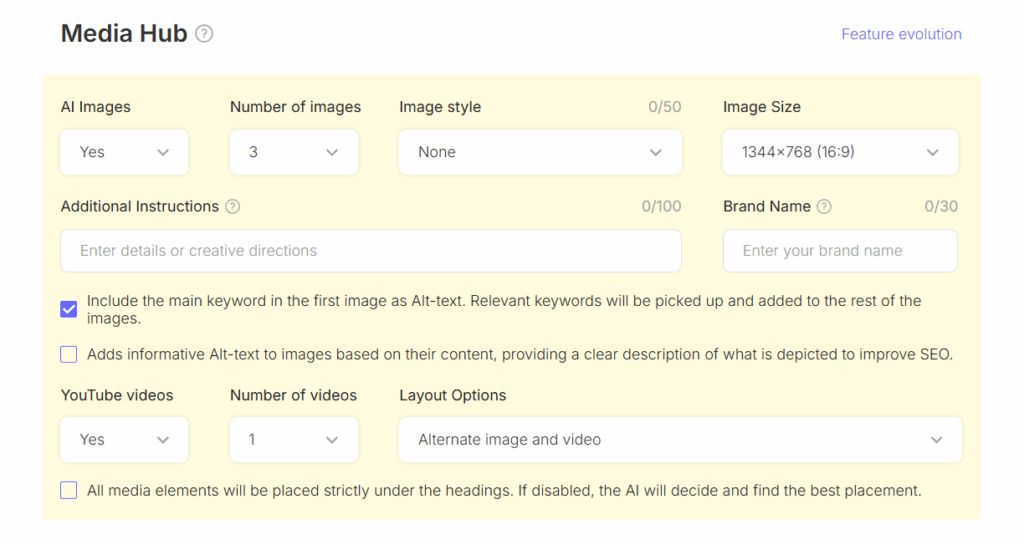
Personalization is what transforms generic AI content into an article that connects with readers and signals expertise to search engines. SEOWriting.ai makes this process straightforward with several key features.
You can drop in custom instructions that guide the AI, like including a specific product, call-to-action, or case study. If you’re creating local SEO content, add your business name, phone number, or city references here.
Got a specific topic direction? Add a sentence or two in the details box. It helps SEOWriting.ai follow your vision instead of generating something vague. This helps SEOWriting.ai follow your vision instead of generating something vague. For example, instead of saying “Write about budget laptops,” enter something like: “Include personal experience testing the Acer Aspire 5, mention battery life limitations, and compare trackpad quality to the HP Pavilion line.”
SEOWriting.ai's image generation capability integrates AI image creation directly into your workflow. You can generate custom images with specific prompts tied to your content, complete with auto-generated alt text optimized for your keywords. This is a huge time-saver compared to sourcing stock photos separately.
For product reviews, the YouTube video insertion feature is particularly valuable. The platform can automatically search for and embed relevant product demonstration videos, increasing time-on-page metrics and providing visual content that complements your written review.
One of my favorite features is the advanced outline editing capability. Before the AI writes a single word, you can review and modify the proposed structure. This is where you can:
- Rearrange sections for better flow
- Add custom H2 and H3 headings with keyword variations
- Insert specific points you want covered in each section
- Remove irrelevant sections that don't match search intent
Taking 5-10 minutes to perfect your outline before generation typically saves hours of editing afterward and results in content that better matches user expectations.
Step 5: Leverage SEO Features Built Into SEOWriting.ai
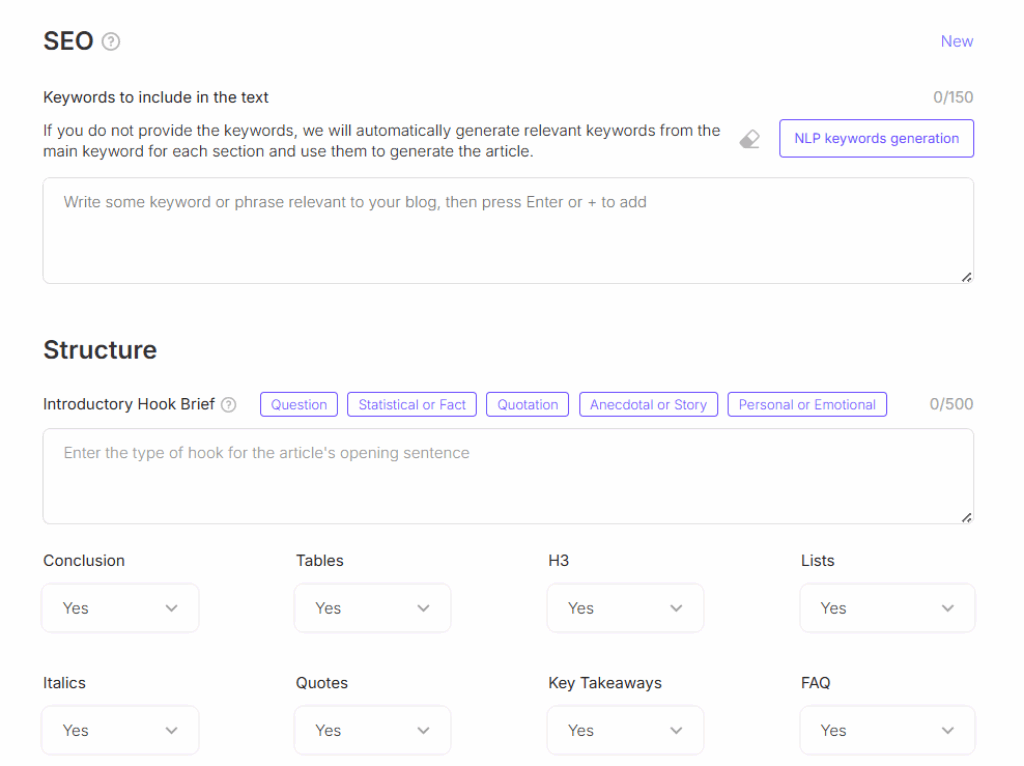
The real power of SEOWriting.ai becomes apparent when you tap into its integrated SEO features. These tools elevate your content from well-written to truly optimized for search visibility.
The real-time SERP integration tool helps the platform analyze top-ranking pages for your target keyword and provide live suggestions. You'll see content gaps, recommended word counts for each section, and semantic terms that you should include. By including these, you’ll be able to cover the topic comprehensively, which signals relevance to search algorithms.
The internal and external linking automation saves hours of manual work. SEOWriting.ai scans your website (if connected) and suggests relevant internal links to include in your new content. For external links, it recommends authoritative sources based on your topic, helping you build a natural link profile that enhances E-E-A-T signals.
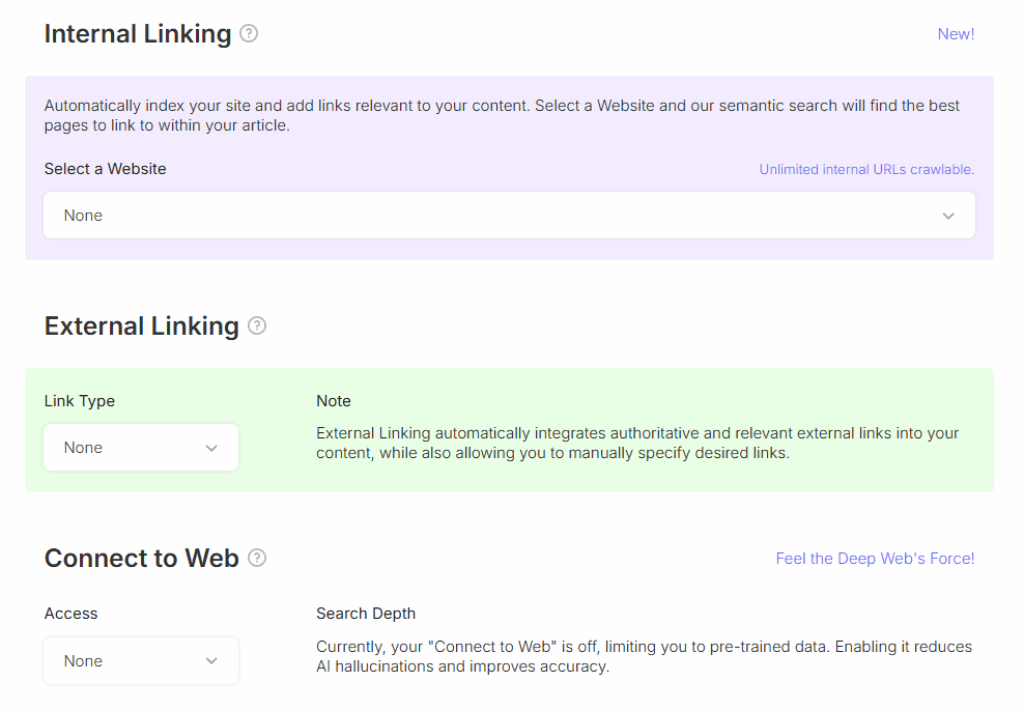
For image SEO, the platform goes beyond basic alt-text. Each image gets:
- Keyword-optimized alt text without over-optimization
- Properly structured file names
- Compressed file sizes for better page speed
- Schema markup for enhanced visibility in image search
Web connectivity benefits are substantial when you connect your website to SEOWriting.ai. The platform analyzes your existing content to understand your site structure, identifies internal linking opportunities, and ensures consistent terminology across your articles.
Source link integration helps establish credibility with both readers and search engines. The platform can automatically cite authoritative sources for claims and statistics, creating properly formatted references that improve your content's trustworthiness. This addresses a common weakness in AI-generated content, the lack of proper attribution, and strengthens your E-E-A-T signals considerably.
Step 6: Editing and Optimizing the Draft
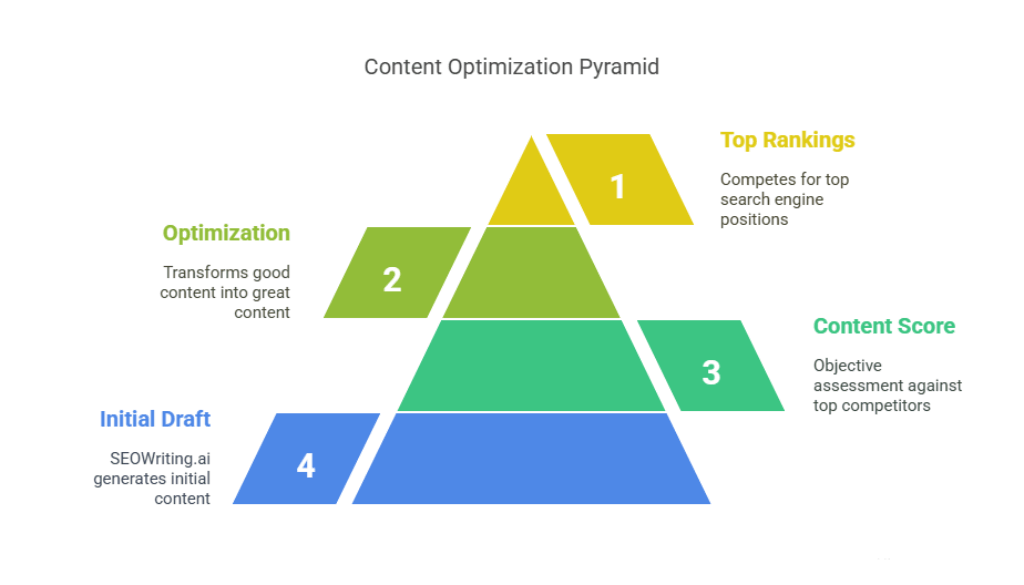
Once SEOWriting.ai generates your initial draft, the real work of optimization begins. This crucial step transforms good content into great content that genuinely competes for top rankings.
As I’ve mentioned above, the content score feature provides an objective assessment of your draft against top-ranking competitors. This score considers factors like:
- Keyword density and placement
- Topic comprehensiveness
- Readability metrics
- Semantic relevance to search intent
Once the system has generated the draft, spend a few minutes to optimize it base on the suggested scores. Don't stop until you achieve a content score of at least 85/100. Below this threshold, I've found ranking potential drops significantly in competitive niches.
SEOWriting.ai's built-in editing tools streamline the optimization process:
- Rewrite: Refreshes sections that sound too generic or match competitor content too closely
- Shorten: Tightens wordy paragraphs without losing key information
- Change tone: Adjusts specific sections to be more persuasive, technical, or conversational as needed
- Table conversion: Transforms text comparisons into structured, scannable tables that users and search engines love
Avoiding duplicate AI content requires deliberate effort. The truth is, many AI tools trained on similar data produce strikingly similar outputs. Here's how I make my content unique:
- Insert personal anecdotes about using the products or implementing the strategies
- Add original insights based on your specific experience in the niche
- Include unique comparisons or analogies not found in competitor content
- Challenge conventional wisdom with contrarian but well-supported viewpoints
Fact-checking is non-negotiable with AI-generated content. Even advanced models like GPT-4 can confidently present incorrect information. I recommend:
- Verifying all statistics, prices, and specifications
- Cross-checking product features against manufacturer websites
- Confirming that linked sources actually support the claims made, and
- Paying special attention to “facts” about release dates, compatibility, or technical limitations
Taking 30-45 minutes to thoroughly fact-check can prevent embarrassing errors that undermine your credibility with both readers and search engines.
Common Mistakes to Avoid
I think this article will not be complete if I don’t let you know some of the mistakes that can sabotage your efforts. You see, even with a powerful AI tool like SEOWriting.ai, not avoiding these pitfalls can undermine your success:
1. Skipping Human Editing
Skipping human editing is by far the most costly error. Even with advanced cleaning options, SEOWriting.ai’s generated content requires human refinement to truly excel. Without your human input, your content lacks originality, depth, and credibility.
Set aside at least 30 minutes per 1,000 words for editing, focusing on adding genuine insights and removing AI patterns.
2. Not Verifying AI-Generated Facts
Not verifying AI-generated facts can destroy your credibility overnight. In a recent case study, a site lost 62% of its traffic after publishing AI content with multiple factual errors about product specifications. SEOWriting.ai has better fact-checking than most tools, but still makes confident assertions that aren't always accurate. Create a verification checklist for names, dates, prices, technical specs, and causality claims.
3. Using Generic Outlines Without Customization
Using generic outlines without customization is a missed opportunity. The default outlines in SEOWriting.ai are solid starting points, but they're based on common patterns. Take 10 minutes to review and customize your outline before generation. Add unique section angles, remove irrelevant subtopics, and ensure your structure matches the specific search intent of your keyword. This simple step often makes the difference between page 1 and page 3 rankings.
The bottom line? AI speeds up content creation, but it doesn’t replace your strategic brain. Use it as a tool, not a crutch.
Conclusion
SEOWriting.ai has fundamentally changed how affiliate marketers and bloggers approach content creation in 2025. As search engines and AI systems become more sophisticated in recognizing quality content, having a tool that combines advanced language models with real-time SEO optimization has become essential rather than optional.
If you're an affiliate marketer, blogger, or content creator who wants to stay competitive in the age of AI-powered search, SEOWriting.ai is no longer optional—it’s your new secret weapon. It bridges the gap between efficiency and excellence, allowing you to produce more content without compromising on the depth, accuracy, and originality that both search engines and readers demand.
Click here to start using SEOWriting.ai for free. And when you’re ready to upgrade, you get a 25% discount applied automatically.
Can I use SEOWriting.ai without NeuronWriter or Surfer SEO?
Yes, you can use SEOWriting.ai independently without NeuronWriter or Surfer SEO. While these tools can enhance on-page optimization, SEOWriting.ai includes built-in SEO features like keyword suggestions, SERP analysis, and content scoring. It’s fully functional on its own, making it ideal for bloggers who want a streamlined content creation workflow.
What’s the best AI model for beginner bloggers?
For beginner bloggers, GPT-4 or Claude by Anthropic are excellent choices due to their balanced outputs and natural writing style. However, SEOWriting.ai is built on top of advanced AI models and optimized specifically for SEO blogging. It’s beginner-friendly, offers structured templates, and automates keyword integration, making it one of the best options for new bloggers.
Is content generated with SEOWriting.ai Google-compliant?
Yes, SEOWriting.ai is designed to help you create Google-compliant content. It follows best practices for E-E-A-T (Experience, Expertise, Authoritativeness, Trustworthiness), avoids keyword stuffing, and encourages natural language writing. However, adding human insight, accurate sources, and original value will further increase compliance and ranking potential.
How often should I fact-check AI-generated posts?
You should fact-check every AI-generated post before publishing. While SEOWriting.ai uses reliable language models, factual accuracy can vary, especially for recent data or niche topics. Double-check stats, names, and claims using trusted sources to maintain credibility and avoid misinformation.
Can ChatGPT write SEO content?
Yes, ChatGPT can write SEO content when guided with the right prompts and keyword strategy. However, SEOWriting.ai offers specialized tools for keyword placement, SERP analysis, and competitor benchmarking that go beyond ChatGPT’s general capabilities. Using both tools together can produce even stronger SEO-optimized articles.






A good perspective on this issue. I hadn’t considered it from this angle before. Thank you for the insight.
The pleasure is mine!