Mapping the “Query Fan-out”: The New Blueprint for Affiliate Keyword Research

For decades, affiliate success followed a simple formula: match one keyword to one landing page, rank in Google, capture the click. In 2026, that one-keyword model is dead.
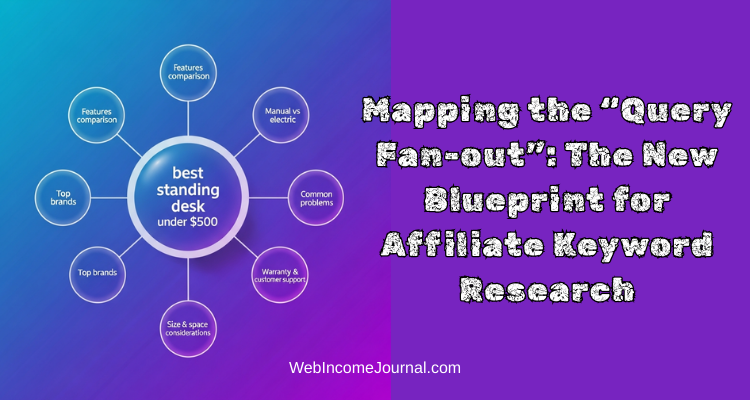
Today, when someone searches for something like “best standing desk under $500,” Google’s AI Overviews, ChatGPT Search, Gemini, and Perplexity do not just answer that question. They silently expand it into a bundle of follow-up questions and answer them all in one AI-generated response.
The scary part is that even if your content is used in that AI-generated answer, the user may never see your site. No click. No brand exposure. No affiliate commission. This is the zero-click squeeze, and it is already cutting 30–60% of informational traffic from many affiliate sites.
This fundamental shift changes everything about keyword research for affiliate marketers. Traditional SEO focused on ranking for specific terms. Query fan-out keyword research focuses on becoming the authoritative source that AI systems cite when answering entire question clusters.
In this blog post, you’ll learn exactly how to map these query fan-outs, structure your content around entity relationships instead of keyword strings, and create informational depth that AI systems can't summarize away.
Let's get into it.
Key Takeaways
- Query fan-out means one search now triggers many hidden follow-up questions inside AI systems.
- Google AI Overviews, ChatGPT Search, Gemini, and Perplexity already answer these bundles in one response.
- This breaks the old “one keyword = one page” SEO model.
- Even if your site is “used” by AI, you may get zero clicks.
- Query fan-out keyword research focuses on mapping the full decision journey, not just the head term.
- The new goal is not just ranking. It is becoming the source AI systems cite for an entire topic.
The Death of Linear Keyword Research
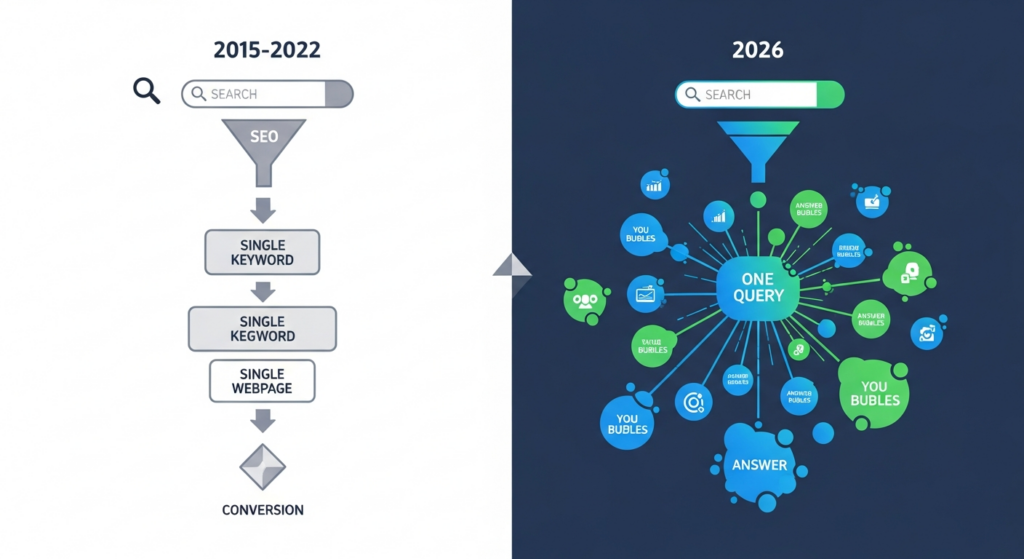
How Affiliate SEO Used to Work
Let me take you back to the golden era of affiliate marketing—roughly 2015 to 2022. The playbook was beautifully simple:
You'd fire up your keyword research tool, hunt for a high-volume, low-competition gem like “best protein powder for weight loss,” then write a comprehensive 2,000-word review optimized for that exact phrase. Build some backlinks, wait a few months for Google to work its magic, and watch the affiliate commissions roll in.
I must confess that I built multiple income-producing affiliate sites using this exact formula. And, it worked so well back then because of one fundamental truth: buyers needed to visit 5-10 different pages to complete their research journey. Think about someone shopping for running shoes. Their search path looked like this:
- Page 1: “best running shoes for flat feet”
- Page 2: “how to choose running shoes”
- Page 3: “Nike vs Asics comparison”
- Page 4: “running shoe sizing guide”
Each search was a separate session, a new opportunity for discovery, another chance to earn their click. You didn't need to answer everything—you just needed to answer one thing better than your competitors.
That fragmented buyer journey was our entire business model.
The AI Disruption That Changed Everything
Then generative AI showed up and obliterated the fundamentals.
What changed? AI now provides all those answers in a single, comprehensive response.
Search “best budget laptops” today, and you'll see an AI Overview that includes specs comparisons, price ranges across retailers, brand reliability ratings, and direct purchase links—all synthesized from multiple sources without requiring a single click.
And the effect is brutal. According to data from Wellows and SurferSEO's study of 10,000 keywords, traditional affiliate sites are seeing 30-60% fewer sessions from informational queries. The queries are still happening—people are still researching purchases—but AI is satisfying their intent directly on the search page.
This is what's driving affiliate marketers crazy right now. Their content is getting cited in those AI responses, their site is being mentioned in the sources, and they are getting a small attribution link buried at the bottom, but readers never actually visit.
What all of these mean is that you're doing the work of creating comprehensive reviews, but AI is harvesting your insights and serving them without sending you the traffic.
This is the visibility paradox. You influence the answer. You do not get the traffic.
The Query Fan-out Phenomenon Explained
Under the hood, what we have just described is called query fan-out. What this means is that when someone types a single search query, AI doesn't just answer that one question. Rather, it automatically anticipates and answers 3-7 related follow-up questions in the same response.
For example, the query “best standing desk under $500” quietly fans out into:
- What features matter most in a standing desk?
- How do manual versus electric mechanisms compare?
- What are the top-rated brands in this price range?
- What common problems should buyers avoid?
- How difficult is assembly typically?
- What warranty considerations exist?
The reality of this is that if your content does not answer the full fan-out, AI will build the answer from competitors who do. You might rank #1 for the main keyword, but get zero citations in AI responses because you only answered the surface question.
The Query Fan-Out Keyword Research Framework
Now that we have laid that foundation, let's get into the practical methodology. Here’s my exact three-step process for identifying fan-out opportunities and structuring affiliate content that earns AI citations while maintaining genuine value for human readers.
Step 1: Map the Follow-Up Journey (Not Just Keywords)
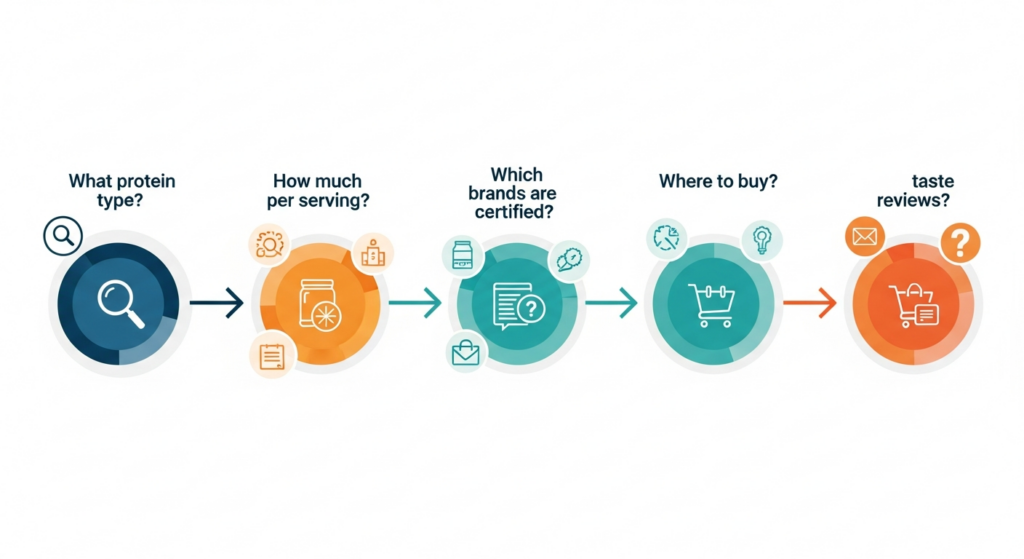
Start with Buyer Intent Analysis
The traditional approach had you targeting a single phrase like “best protein powder for weight loss” and optimizing everything around those exact words.
The fan-out approach requires mapping the complete decision-making sequence a buyer actually goes through:
- What protein type is best for fat loss? (whey, casein, plant-based)
- How much protein per serving do I actually need?
- When should I take it for maximum results?
- Which brands are third-party tested and certified clean?
- How does it actually taste? (because nobody sticks with chalk-flavored supplements)
- What's a reasonable budget for quality protein?
Notice these aren't just keyword variations; they're the actual mental journey someone takes from initial interest to purchase decision. When you map this out, you're identifying the questions AI will answer, whether you provide the content or your competitors do.
Use “People Also Ask” as Your Blueprint
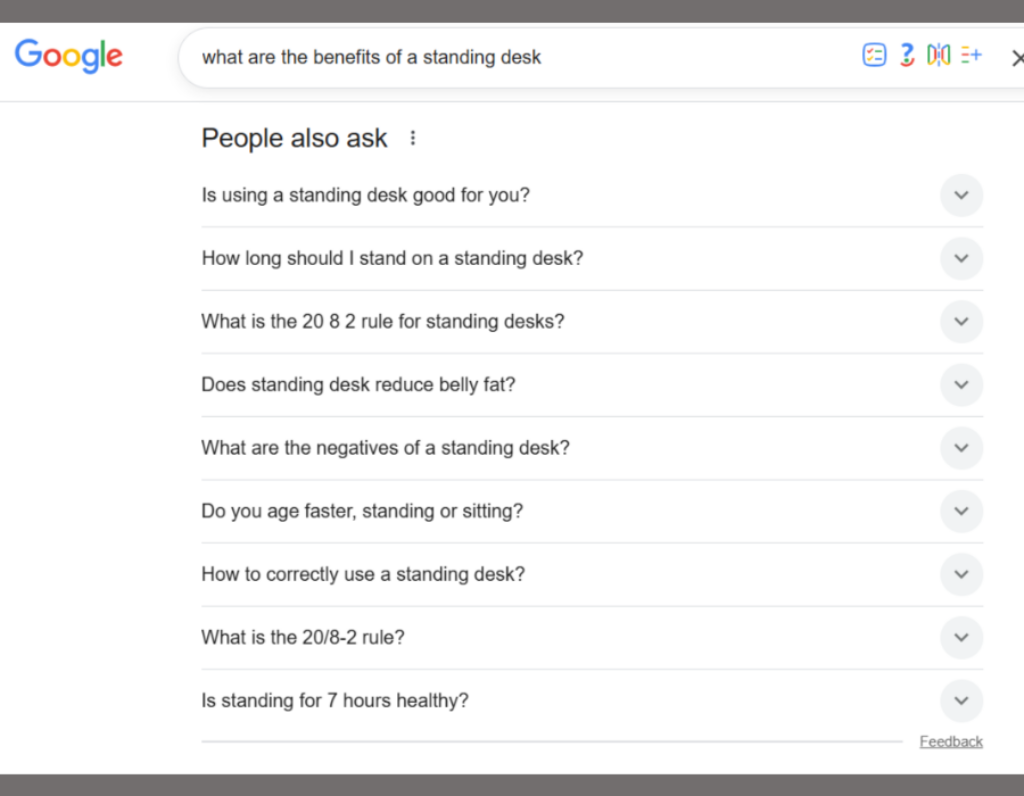
Google's “People Also Ask” boxes are essentially showing you the query fan-out in real-time. Here's my tactical process:
Enter your seed keyword in Google and start clicking. Expand all the PAA boxes—don't stop at the first 5 or 6. Click through 20-30 questions because each expansion reveals new related queries that Google's algorithm connects to your topic.
Export these using tools like AlsoAsked.com, SEMrush's Question Analyzer, or take manual screenshots if you're bootstrapping. Then organize them into question clusters:
- Comparison questions: “X vs Y,” “which is better,” “difference between.”
- Usage questions: “how to use,” “when to take,” “how much”
- Problem-solving: “why isn't this working?” “common mistakes,” “troubleshooting.”
- Alternative exploration: “instead of X,” “similar to,” “better options”
These clusters reveal the semantic variations and search intent types that branch from your core topic.
Mine AI Platforms for Query Patterns
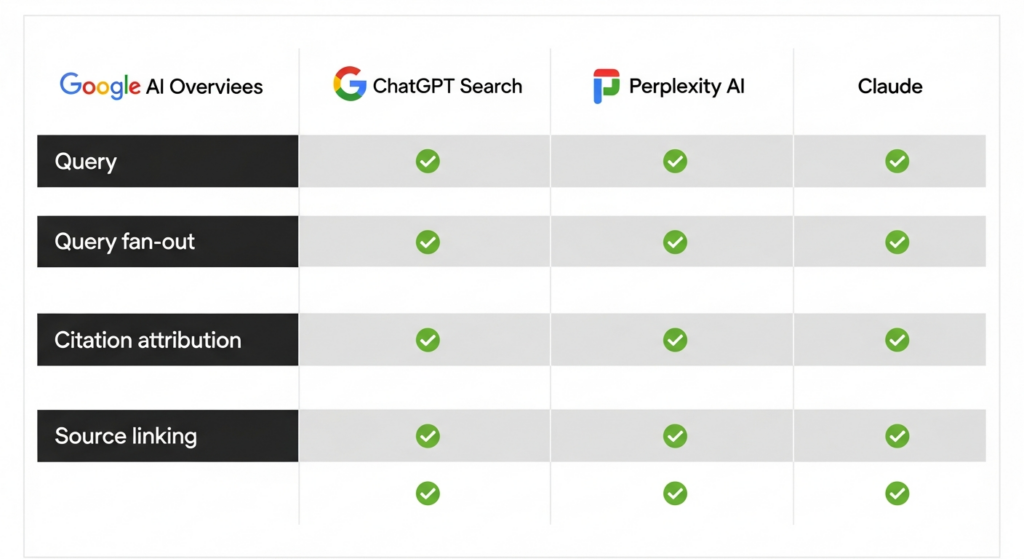
Here's where it gets interesting. AI platforms like ChatGPT, Perplexity, and Claude already understand query fan-out—they're built to anticipate follow-up questions.
For ChatGPT, use this prompt: “I'm researching [your product/topic]. What are the 10 most important follow-up questions a buyer would ask before making a purchase decision?”
Analyze the response structure. ChatGPT will typically organize questions by decision stage (awareness, consideration, decision), revealing the natural progression buyers follow.
In Perplexity, search your target topic and pay attention to two things: which sources it cites most frequently (these are your authority competitors), and what related questions it auto-generates at the bottom of responses. Those auto-generated questions are the fan-out queries you need to address.
With Claude Projects, you can build a research project by feeding it competitor content and asking it to identify gap questions—queries that are logically related to your topic but aren't comprehensively covered by existing top-ranking content.
Competitor Content Gap Analysis
This is where you find your opportunity.
Identify the top 5 ranking pages for your target keyword. Use tools like Clearscope, Surfer SEO, or Frase to extract every subtopic and question these competitors cover. Create a master spreadsheet listing all questions addressed across all five pieces.
Now here's your goldmine: Find the 3-5 questions that nobody comprehensively answers. Maybe everyone mentions “warranty considerations” in passing, but no one actually explains what to look for in a warranty or compares warranty terms across brands. That gap is your citation opportunity.
According to Wellows' analysis using their Query Fan-Out Generator, comprehensive fan-out coverage can boost AI citations by 161% compared to content that only addresses the main query. The research from 173,000+ URLs shows that ranking for fan-out queries—even without ranking for the main keyword—makes you 49% more likely to get AI citations.
Step 2: Shift from Strings to Things (Entity-Based Optimization)
Understanding Entity SEO
Google's Knowledge Graph doesn't think in keywords anymore; it thinks in entities. Entities are people, places, products, brands, and concepts that have defined relationships with each other.
Why does this matter for query fan-out? Because AI answers pull from entity relationships, not keyword density. When someone asks about standing desks, AI connects the product entity to attribute entities (height range, motor type), comparison entities (manual vs. electric), brand entities (Uplift, Jarvis, FlexiSpot), and problem entities (wobble, noise, assembly complexity).
If your content doesn't establish these entity relationships clearly, AI systems struggle to extract and cite you accurately.
Build Your Entity Map
For every topic, identify four categories of core entities:
- Product entities: Specific models, brands, product lines you're covering
- Attribute entities: Features, specifications, and use cases that define quality
- Comparison entities: Alternatives, competitors, category distinctions
- Problem entities: Pain points, solutions, common objections
Let me show you a real example for the keyword, “best espresso machines”:
- Products: Breville Barista Express, Gaggia Classic Pro, De'Longhi Dedica, Rancilio Silvia
- Attributes: Bar pressure (9-15 bar), portafilter size (54mm vs 58mm), steam wand type, built-in grinder integration
- Comparisons: Manual vs. automatic operation, pod-based vs. ground coffee, single boiler vs. dual boiler vs. heat exchanger
- Problems: Cleaning difficulty and maintenance requirements, learning curve for beginners, counter space constraints, noise levels
These entities form the semantic skeleton of your content. When you structure around them, you're speaking the language AI systems understand.
Structure Content Around Entity Relationships
Implement schema markup strategically:
- Product schema for each recommended item (name, model, price, availability)
- HowTo schema for setup and usage guides (step-by-step processes)
- FAQ schema for common questions (those fan-out queries you identified)
- Review schema with aggregate ratings (builds trust signals)
Your internal linking strategy should connect entity pages logically. Link your brand deep-dive article to your product comparison guide, which links to your problem-solving and troubleshooting content. These connections help AI understand the topical ecosystem you've built.
Leverage Wikipedia's Entity Model
Here's a quick research hack: Find your topic's Wikipedia page and examine three sections:
- Categories (bottom of the page) – These show how Wikipedia classifies your topic
- “See Also” sections – Related entities Wikipedia connects to your topic
- Infobox attributes – The structured data points Wikipedia considers essential
These are the exact entities Google's Knowledge Graph associates with your topic. Incorporate them naturally throughout your content, and you're aligning with how search engines already understand your subject matter.
Step 3: Create Informational Depth That Defeats AI Summarization
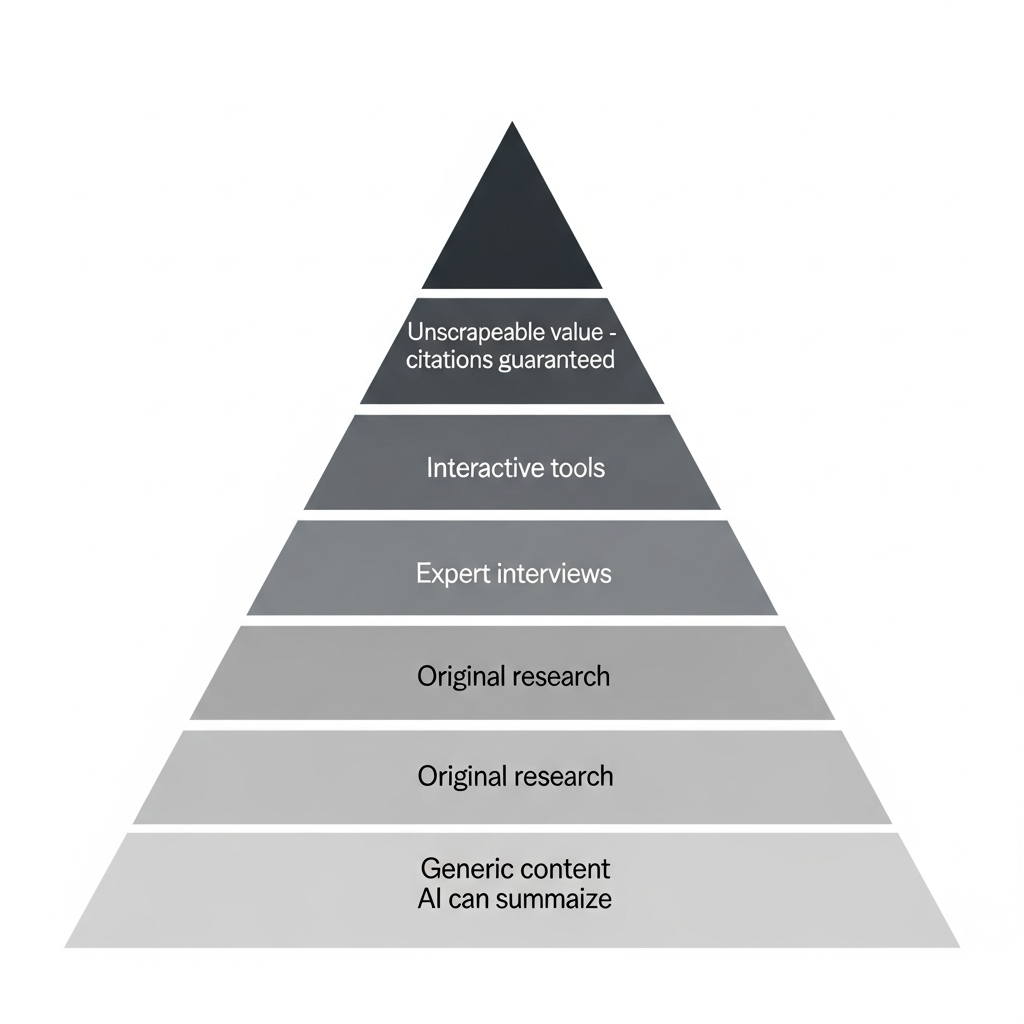
The “Unscrapeable Value” Principle
Here's the problem: AI can easily summarize surface-level content. Generic buying guides, rehashed spec comparisons, rewritten manufacturer descriptions—all easily compressed into AI responses without attribution.
The solution? Create depth that requires your original context to make sense. Information that loses its value when stripped from your article.
Tactical Depth Strategies
A. Original Research & Data
Conduct user surveys: “We asked 500 standing desk owners about their biggest regrets after purchase.” Now you've got proprietary data AI must cite because it doesn't exist anywhere else.
Run product testing with specific metrics. Don't just say “the motor is quiet,” measure decibel levels at different heights. Track price fluctuations over 6-12 months. Mine Amazon reviews to calculate actual failure rates by brand and model.
This is data AI platforms can't generate themselves and must reference if they want to provide complete answers.
B. Expert Perspectives & Insider Knowledge
Interview manufacturers about production quality differences between budget and premium lines. Talk to repair technicians about which models they see in their shop most often. Survey long-time users about issues that don't show up until year two or three.
These insider perspectives add context and credibility that generic content can't match.
C. Interactive Tools & Calculators
Build comparison matrices that users can filter and sort by their priorities. Create total cost of ownership calculators that factor in maintenance, replacement parts, and energy consumption. Develop recommendation quizzes that match users to products based on their specific use cases.
Interactive tools can't be summarized—they require users to visit your site to get value. That's exactly the kind of “unscrapeable” content you need.
D. Multimedia Evidence
Take original photos showing specific features up close—not stock images, not manufacturer photos. Record video demonstrations of key differentiators that matter in real-world use. Document before/after comparisons. Post teardown images showing internal build quality.
Visual evidence adds authority and gives AI something concrete to reference beyond text.
E. Comprehensive Edge Case Coverage
Most competitors focus on the 90% use case. You win by addressing the 10% scenarios they ignore:
“What if you have limited space and need a compact desk?” “What if you're left-handed and need reversed cable management?” “What about apartments with noise restrictions where motor volume matters?”
These edge cases are exactly the kind of fan-out queries AI generates, and if you're the only one answering them comprehensively, you get the citation.
The “Citation Bait” Technique
Create quotable, unique insights that AI systems must attribute to you:
- Coined terminology: Name your framework or methodology something specific
- Proprietary scoring systems: “We developed a 5-factor durability score based on…”
- Contrarian positions: Challenge conventional wisdom with evidence
- Definitive statistics: Be the original source for data points in your niche
Format these insights for easy extraction. Use clear, standalone statements. Create boxed callouts or highlighted sections. Build table summaries that directly answer questions without requiring surrounding context.
When your insights are quotable, specific, and properly formatted, AI systems can extract and cite them accurately—and they're motivated to do so because you're providing unique value that their users want.
This is how you transition from optimization-as-warfare to substance-first discoverability. You're not gaming AI systems—you're becoming genuinely authoritative in ways both humans and algorithms recognize.
Common Pitfalls & How to Avoid Them
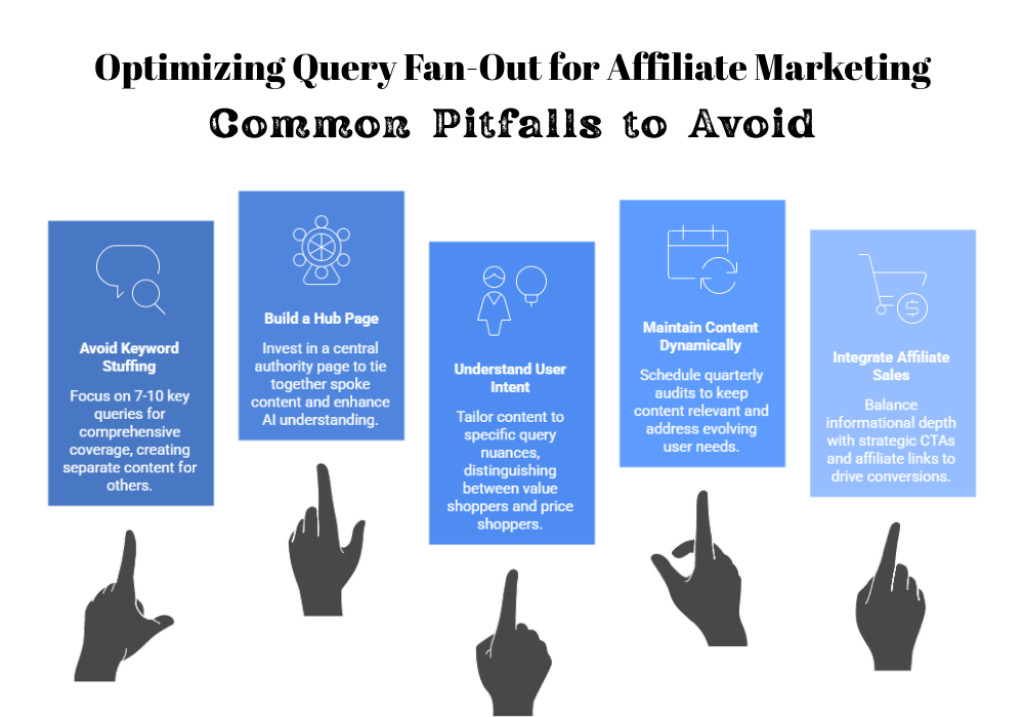
Let me save you from the mistakes I see affiliate marketers making as they rush to adapt to query fan-out optimization.
Pitfall 1: “Keyword Stuffing” the Fan-out
The mistake: You identify 30 related fan-out questions and try to cram every single one into a single 5,000-word monster article that reads like a disorganized FAQ.
I've seen this too many times. The result is unfocused content that serves nobody well—AI can't parse your structure clearly, and human readers get lost in the chaos.
The solution: Prioritize ruthlessly. Identify the 7-10 most important fan-out queries that directly support your main topic and cover those comprehensively in your core article. Create separate, focused content for the remaining questions and link them strategically. Quality over quantity wins citations.
Pitfall 2: Neglecting the Hub Page
The mistake: You create excellent spoke content addressing individual fan-out queries—detailed guides on “standing desk assembly,” “desk wobble solutions,” “cable management tips,” but you never build a comprehensive pillar page that ties everything together.
Without that central authority hub, AI systems struggle to understand your topical expertise. They see disconnected articles, not a coherent knowledge ecosystem.
The solution: Your hub page is your authority signal. Invest 60% of your effort here first. Make it the definitive resource on your topic—the page that addresses the main query plus the most critical fan-out questions at a summary level, then links to deeper dives. This hub-and-spoke model is what earns consistent AI citations.
Pitfall 3: Ignoring User Intent Nuances
The mistake: Treating “best budget laptops” and “cheap laptops under $500” as identical queries because they share a similar semantic meaning.
They're not identical. “Budget laptops” attracts conscious value-shoppers who want quality at a reasonable price. “Cheap laptops under $500” often indicates desperate price shopping, where any functioning laptop will do.
The solution: Map the subtle intent differences in query fan-outs. The first query fans out to questions about build quality, warranty, and brand reliability. The second fans to questions about refurbished options, financing, and absolute minimum specs needed. Tailor your content accordingly.
Pitfall 4: Static Content in a Dynamic Landscape
The mistake: Publishing your comprehensive fan-out content once, celebrating your thoroughness, and never touching it again.
Query fan-outs aren't static—they evolve as products change, new concerns emerge, and buyer priorities shift. What people asked about standing desks in 2024 isn't identical to what they're asking in 2026.
The solution: Schedule quarterly content audits. Review your fan-out coverage, identify new questions emerging in People Also Ask boxes, check which competitors are gaining citations you're losing, and refresh accordingly. Semrush's experiment showed that maintaining fan-out relevance requires ongoing optimization, not one-time effort.
Pitfall 5: Forgetting the Affiliate Sale
The mistake: You get so obsessed with informational depth and AI citations that you forget you're running an affiliate business. Your content becomes a comprehensive encyclopedia without clear conversion paths.
I get it—the shift to authority-building feels very different from traditional affiliate marketing. But citations without conversions don't pay the bills.
The solution: Balance depth with strategic persuasion. After answering each major fan-out question, include a contextual CTA. “Now that you understand motor noise levels, here are our top 3 quiet standing desk recommendations →” Place affiliate links naturally where they solve the specific problem you just addressed. Use comparison tables with direct buy buttons after explaining what features matter.
Your content can be both comprehensively helpful and commercially effective. Those aren't competing goals; they're complementary when executed thoughtfully.
Conclusion: Building A Future-Proof Topical Ecosystem
The shift from linear keyword research to query fan-out optimization is not a temporary trend. It is the new foundation of affiliate SEO in the AI search era.
Success in query fan-out keyword research comes down to one principle: become the most helpful, credible, and well-organized resource for your audience. When you map complete decision-making journeys, structure content around entity relationships, and create informational depth that AI cannot easily summarize, you build genuine authority that both humans and algorithms recognize.
The data proves this approach works. Sites with comprehensive fan-out coverage see 161% more AI citations. Content ranking for fan-out queries alone is 49% more likely to get referenced than content ranking only for the main keyword. Semrush's targeted optimization experiment delivered 150% citation increases despite broader algorithmic challenges affecting other brands.
Your competitive edge in 2026 comes from embracing both Generative Engine Optimization (GEO) and Answer Engine Optimization (AEO) together. GEO earns you citations in AI-generated responses. AEO captures featured snippets and quick wins. Combined, they build compounding topical authority that protects your revenue as search continues evolving.
The old playbook of one keyword, one page, one ranking is dead. The new playbook requires building topical ecosystems where your brand becomes the primary expert citation AI systems cannot avoid.
Start today: Take your best-performing article and use our Query Fan-Out Generator to identify 20 related queries. Select the 7 most important questions your content doesn't answer comprehensively. Update your article this week with those answers using clear subheadings, original insights, and citation-worthy statements. Track your AI citations over 90 days. That proof of concept will show you exactly why query fan-out research is the future of affiliate marketing.
Frequently Asked Questions
What is query fan-out?
Query fan-out is when AI search engines automatically expand one user search into multiple related questions. Instead of answering just your original query, AI responds to 3-7 additional follow-up questions simultaneously. For example, searching “best standing desk” triggers automatic answers about price ranges, features, brand comparisons, and common problems—all without you asking those follow-up questions.
How does query fan-out work?
AI search engines analyze your query and predict what related questions you'll likely ask next based on billions of previous searches. The system then pulls information from multiple sources to answer your original question plus these predicted follow-ups in one comprehensive response. SurferSEO's analysis of 10,000 keywords shows each query generates an average of 3.3 related fan-out questions with 0.75-0.95 similarity to the original search term.
How does query fan-out affect search results?
Query fan-out changes which content gets visibility in AI search results. Your page can rank #1 for a keyword but receive zero AI citations if you only answer the surface question. AI systems prioritize sources that address multiple related queries comprehensively. Research analyzing 173,000+ URLs shows that comprehensive fan-out coverage boosts AI citations by 161%, while traditional affiliate sites see 30-60% fewer sessions because AI answers questions directly on the search page without requiring clicks.
Why is query fan-out important for SEO?
Query fan-out determines whether AI systems cite your content. With 76% of queries now triggering AI Overviews according to SurferSEO's study, traditional keyword rankings alone no longer guarantee traffic. Content optimized for fan-out queries is 49% more likely to earn AI citations even without ranking for the main keyword. Ignoring query fan-out means losing visibility to competitors who address complete question clusters, directly impacting your affiliate revenue and long-term topical authority.