AI Affiliate Marketing Content Strategy That Ranks in AI Search Engines (2025 Tested)

In early 2025, I watched a hard-earned affiliate income evaporate overnight. Not because my niche dried up, but because the foundation beneath search changed. I wasn’t alone. Bloggers and affiliate publishers around the world felt the same shock. What used to work—keyword stuffing, generic reviews, mass publishing—no longer protected traffic or conversions.
That shift didn’t happen by accident. Over the last few years, Google’s algorithm has evolved dramatically toward helpful, original content and away from passive, templated pages. The March 2024 Core Update, paired with new spam policies targeting scaled content abuse and site reputation abuse, directly punished low-value affiliate pages and mass-produced posts that exist solely for rankings, not real answers.
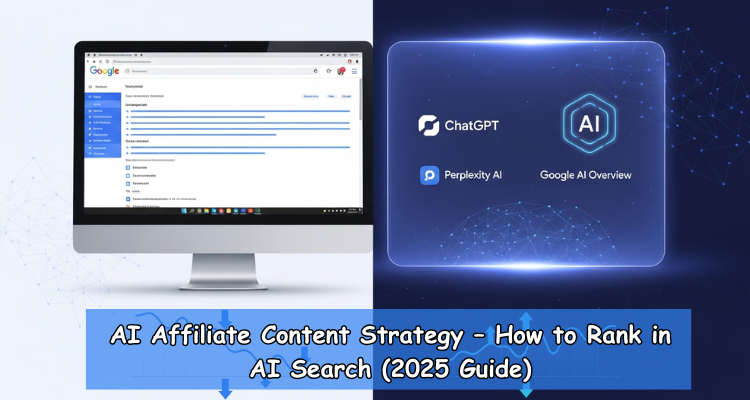
At the same time, AI Overviews now appear in roughly 60% of search results, capturing clicks before humans ever see traditional blue links. If your content cannot be understood and extracted by AI systems, your affiliate strategy is invisible.
This fundamental shift made many declare affiliate marketing dead. But that's far from the truth. The reality? You need a new AI affiliate marketing content strategy.
In this guide, you’ll discover a new AI Affiliate Content Strategy that blends traditional SEO with Generative Engine Optimization (GEO), content designed to rank for both people and AI systems. This is a system that I’ve tested throughout 2025 and can say will work in 2026 and beyond.
Key Takeaways:
- The Problem: Traditional affiliate content (keyword density, generic reviews) is losing clicks to AI Overviews.
- The Solution: Master Generative Engine Optimization (GEO), a strategy focused on clarity, structure, and definitive answers that AI models can quote verbatim.
- The Promise: This content strategy will future-proof your business by establishing your Expertise, Experience, Authoritativeness, and Trustworthiness (E-E-A-T) and driving high-intent affiliate conversions.
DISCLOSURE: WebIncomeJournal is supported by readers like yourself. We may earn an affiliate commission when you purchase through our links, which enables us to offer our content for free. Learn more here.
What Is the Fundamental Difference Between Traditional SEO and AI Search Optimization (GEO)?
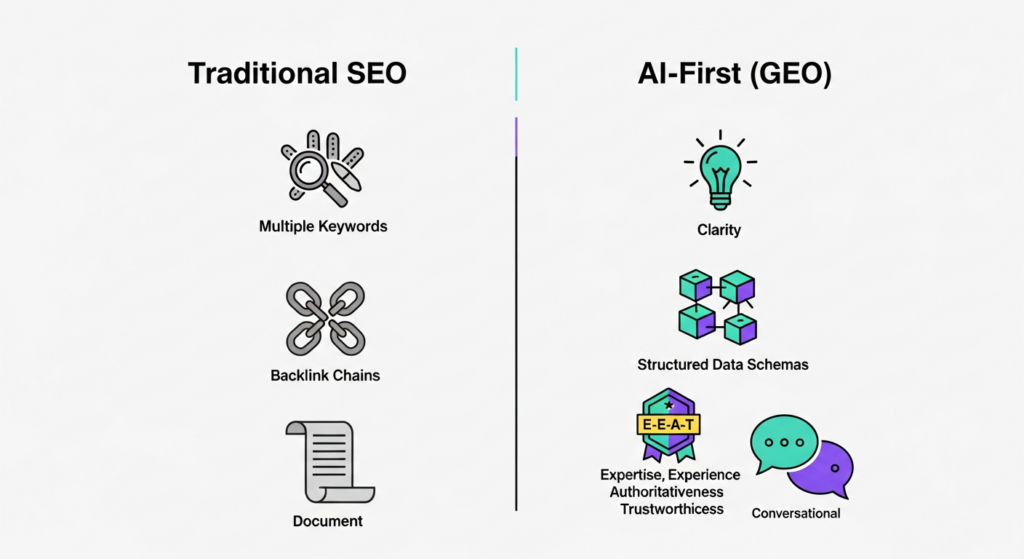
The game has fundamentally changed, and if you treat AI search the same way you treat traditional Google, you will lose. The core difference comes down to the goal.
Traditional SEO was about optimizing for the “blue links”3. Your focus was on achieving high keyword density, getting a lot of backlinks, and ensuring content length exceeded your competitor's. This approach sought to signal to the search engine that your page was a relevant source for a short-tail keyword.
AI Search Optimization, or Generative Engine Optimization (GEO), is different. GEO means optimizing for the AI Overviews and the large language model (LLM) summaries. The AI doesn't care how many times you repeated your keyword. It wants one thing: a direct, clear answer it can confidently quote.
We are firmly in the era of Conversational SEO. Queries are shifting from short, simple keywords (like “best affiliate software”) to long, complex, conversational questions (like “What is the most effective AI tool for generating personalized recommendations in an email sequence, and how much does it cost?”). The AI model must answer accurately, and it needs structured, hyper-specific content to do that.
Traditional vs. AI-First Content
| Feature | Traditional SEO Focus | AI-First Content (GEO) Focus |
| Primary Goal | Rank for the “blue links” | Be cited verbatim in AI Overviews/Snippets |
| Keyword Strategy | Keyword density, volume | Semantic keywords, long-tail problem-solvers |
| Structure | Length, H-tags for visual break-up | Clarity, direct answers in first sentence, structured data |
| Quality Signal | Backlinks | E-E-A-T signals (Trustworthiness, Experience) |
The shift? Stop optimizing for Google's crawler. Start optimizing for AI's comprehension.
When you prioritize clarity, direct answers, structured data, and topical depth over just volume and backlinks, you are building stuff that ranks in AI search engines.
Why Is E-E-A-T the New Conversion Rate for AI Affiliate Content?
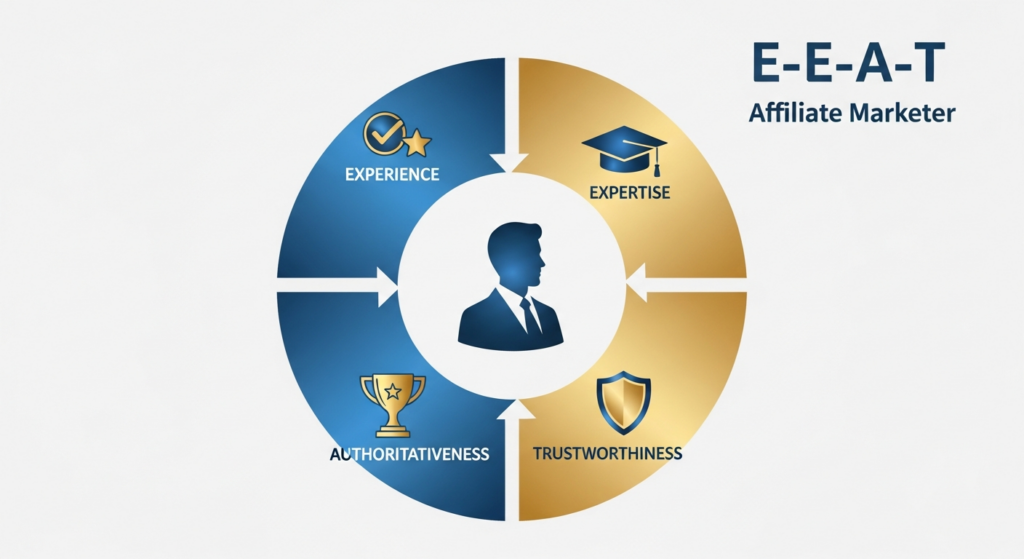
If you promote high-ticket SaaS or AI Tools, you are operating in a “Your Money or Your Life” (YMYL) niche. That means Google's emphasis on E-E-A-T (Experience, Expertise, Authoritativeness, and Trustworthiness) is not just a ranking factor—it’s the ultimate filter for AI-driven results.
Why? Because the AI models know that generic, rehashed content is everywhere, thanks to AI content generation. When you're trying to earn a high-value affiliate commission from a tool like Scalenut or CustomGPT.ai, the AI assistant needs to know you are a real expert who has actually used the product.
E-E-A-T is your unique value proposition. It’s what no other tool, no matter how powerful, can replicate.
How Do You Demonstrate E-E-A-T in Affiliate Content?
- Experience (E): Show, Don’t Tell. You cannot just summarize features. You must include original screenshots, personal use-case videos, and unique data from your hands-on testing of the AI tools. I constantly share my personal experience to illustrate points. For instance, I might show the exact settings I use in RankMath SEO before handing the brief off to ChatGPT or Claude for a draft.
- Trustworthiness (T): Be Transparent. This is non-negotiable, especially for high-intent review posts. Include clear Affiliate disclosures (FTC guidelines). Don't only list benefits; you must have clear pros/cons sections that acknowledge the tool's weaknesses. An e-commerce affiliate hit a 40% conversion jump by using machine learning on user behavior. Trust signals matter.
Actionable Tip: Use a “Tested by” Strategy. Use the “Tested by [Author Name] byline or schema markup where appropriate. This is a simple yet powerful way to signal to Google’s algorithm and its AI that a real human expert with verifiable experience stands behind the review.
How Should You Structure Content to Be Featured in AI Overviews and Snippets?
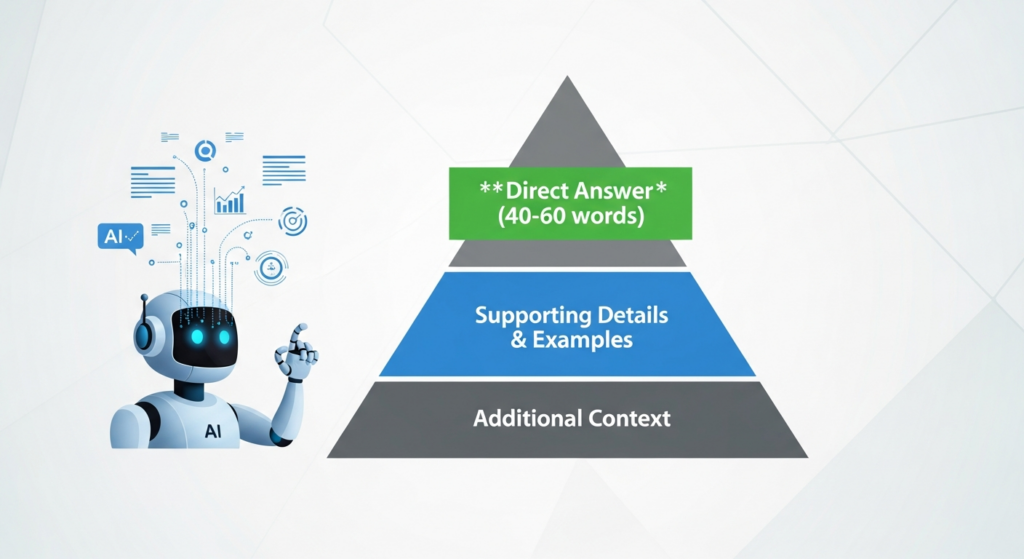
To rank well in AI search, your goal is to “feed” the AI the answers it is looking for. AI Overviews extract information primarily from pages that are clearly structured and immediately answer the user's query. We must prioritize clarity and simplicity in structure.
Forget the old-school approach of burying the answer deep in the third paragraph. We need to implement the Inverted Pyramid for SEO. Start every H2 with the direct, concise answer in the first 40–60 words, before expanding on the details. This allows the AI to immediately identify and quote your definitive statement. For example:
Bad structure: “There are many factors to consider when choosing between Jasper and Copy.ai. First, let's look at the history…”
Good structure: “Jasper excels at long-form content like blog posts, while Copy.ai is better for short-form ad copy and social media. Here's why that matters for your workflow…”
Leveraging Structured Data for Affiliates

Structured data is a powerful tool for Generative Engine Optimization (GEO). It helps the AI understand the core information on your page. As an affiliate ensure to always implement these schemas:
- Review/Product Schema: This is critical for high-intent review posts. It helps the AI understand the core product and your expert rating.
- How-To Schema: Use this for guides on setting up or using the affiliate product, such as “How to use Jasper AI's Boss Mode.
- FAQ Schema: Turn your People Also Ask (PAA) research into structured FAQs on the page. This directly targets conversational queries and is a format AI models love to pull from.
You can easily implement these schemas in your post by using a tool like RankMath SEO.
The Power of Clarity cannot be overstated. Use bulleted lists, numbered steps, and comparison tables. These formats are highly NLP-friendly and easy for AI to summarize. I've found that breaking down complex topics this way drastically improves our chances of earning citations in tools like Perplexity and ChatGPT.
Which High-Intent Content Formats Drive the Most AI Affiliate Conversions?
Not all content types are created equal for affiliate marketing in the AI era. The current SERP is saturated with “what to promote” listicles. To drive high-value conversions, you need to focus on commercial-intent searches.
Not all content is created equal. Listicles and generic “best of” posts are dying. High-intent formats—content targeting buyers ready to make decisions—are where conversions live in 2025 and going forward.
I've tested dozens of formats. Two consistently crush it for AI affiliate content: comparison posts and problem-solver guides. Both target commercial investigation intent, the sweet spot where readers are researching specific solutions and ready to buy.
The ‘X vs. Y' Comparison Post Strategy
This is perhaps the highest-intent format you can create. Users searching for “X vs. Y” (e.g., “SEOWriting AI vs. Koala AI“) are moments away from buying.
Here is how you optimize this for GEO:
- Comparison Table First: Use a clear comparison table summarizing features, pricing, and ideal use-case right in the first scroll. This is a format the AI loves to summarize.
- Definitive Verdict: Offer a clear verdict: “Choose X if [use case], Choose Y if [use case]”. This provides the specific, definitive answer AI models seek. The AI can confidently pull this concise recommendation.
The Long-Tail Problem-Solver Strategy
This format focuses on the informational-to-commercial funnel. Instead of just reviewing a product, target the problems the AI tool solves.
For example, target “How to write cold emails at scale” and then promote an AI copywriter. This taps into high-value Affiliate SEO optimization. Use LSI keywords naturally. Cover semantically related terms like “content automation,” “email outreach,” and “copywriting software”. By covering these semantic keywords in depth, you build topical authority and capture long-tail traffic nobody else chases.
What Are the Best AI Tools and Tactics for Scaling Your Affiliate Content?
If you think AI content generation means replacing yourself with a bot, you are fundamentally wrong. AI should be an augmentation tool, not a replacement for original thought and, crucially, your E-E-A-T. Using AI to cut campaign time to one-fifth and lift conversions up to 35% is possible, but only when you maintain quality control.
AI for Content Scaling
- AI for Research and Ideation: Use large language models (LLMs) like ChatGPT to brainstorm Content Gaps and Pain Point clusters that competitors missed. For instance, ask it for “long-tail keywords nobody chases, like ‘best AI tool for affiliate email personalization 2026′”.
- AI for Drafts and Structure: You can speed up your outline and initial draft process using tools like SEOWriting AI. However, this is where your human expertise takes over. You must always inject original data, testing results, and E-E-A-T.
- The “Information Gain” Warning: Never, ever publish raw AI output. You must add “Information Gain”, the unique value the AI cannot generate. This includes your screenshots, proprietary test data, and expert commentary. If you don't add this unique edge, the AI search engine won't cite you.
AI for Topical Authority
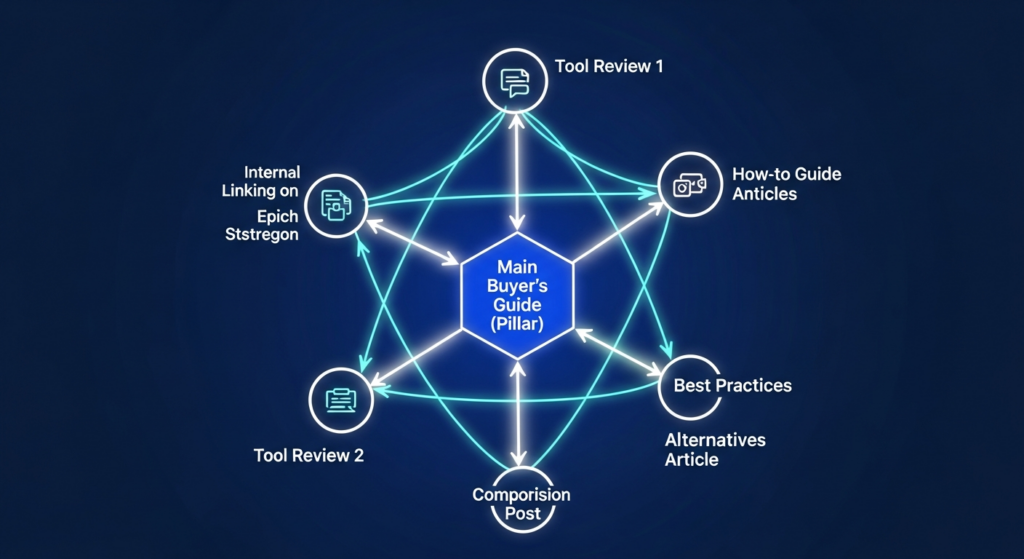
Use AI/SEO tools like Scalenut to map out a Topic Cluster strategy. You link your individual affiliate reviews (the spoke content) back to a main Buyer's Guide (the pillar content) to build authority. This stacks topical authority and makes your entire site a trusted resource for a specific niche.
How Can You Future-Proof Your AI Affiliate Strategy Against Algorithm Updates?
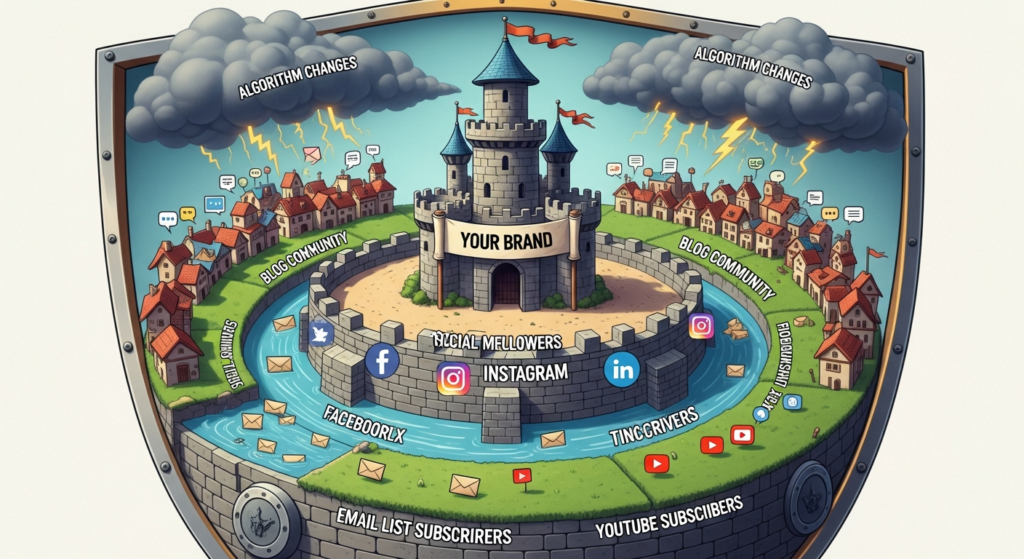
Algorithm updates will keep coming. Google's AI Overviews will evolve. New AI search engines will emerge. You can't predict the changes, but you can build a strategy that survives them.
The key? Stop relying entirely on search engine traffic. Own your audience and build a brand AI engines want to cite as authoritative.
Multi-Modal Content is Key (Beyond Text)
The next step is to master content beyond simple text. This is critical for Generative Engine Optimization (GEO).
- The Video-in-SERP Advantage: Embed original review videos and tutorials from YouTube. This allows you to rank in Google's video carousels and drastically improves dwell time. A single optimized video drove huge affiliate engagement for one content creator.
- Image Optimization: Use high-quality, unique images, specifically original product interface screenshots. Make sure they have descriptive filenames and alt text. This contributes to your Experience signal.
Build the Moat: Own Your Audience
Your content strategy must include a way to capture your audience.
- Collect Emails: Don't let valuable traffic leave without connecting. If you’re in the content writing niche, you can collect emails via an AI-focused lead magnet, such as “Top 5 ChatGPT Prompts for Affiliate Success”. This builds an owned asset you contro4.
- Outbound Linking Strategy: Signal trustworthiness and depth to both users and algorithms. Link to high-authority, non-competitor resources, such as Google's E-E-A-T documentation or official tool documentation. This is a simple move that signals to the AI that you are a serious, reliable source.
Conclusion: Your Next Steps in AI Affiliate Marketing
The era of generic affiliate content is definitively over. You now have the advanced strategy to win in the new search environment. We've established that the winning approach—the truly profitable AI Affiliate Content Strategy—blends the best of traditional SEO with Generative Engine Optimization (GEO).
Your focus must be on building content that the AI can confidently cite. This means prioritizing E-E-A-T (Experience, Expertise, Authoritativeness, and Trustworthiness) through unique data and personal testing. It means leveraging Structured Data and the Inverted Pyramid to deliver direct, clear answers in high-intent formats like X vs. Y comparisons.
Most importantly, stop chasing volume. One well-optimized, experience-driven post outperforms ten generic AI-generated reviews.
So, start your content audit today. Don't create more content; create better, smarter, AI-optimized content. The time is now to future-proof your business by making the shift.
If you are serious about implementing this strategy and scaling your affiliate revenue quickly, start by using the tools I personally rely on:
- SEOWriting AI: For speeding up outlines and initial drafts.
- CustomGPT.ai: For personalized, conversion-driven copy and interactive affiliate recommendations.