Chadrack
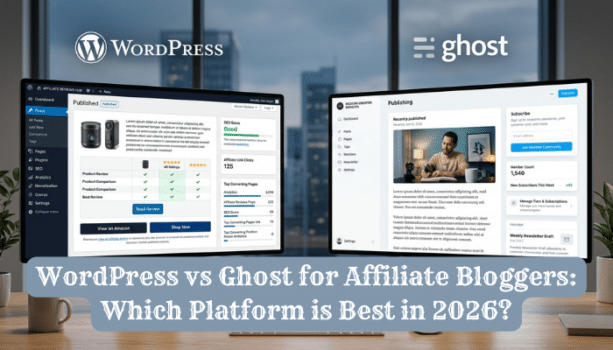
WordPress vs. Ghost for affiliate bloggers is ultimately a business-model decision, not simply a blogging platform comparison. Both platforms can publish affiliate content, attract organic traffic, and generate revenue, but they support different approaches to building that business.
Self-hosted WordPress.org gives affiliate bloggers extensive control through themes, plugins, SEO tools, affiliate-link management systems, comparison tables, review layouts, advertising integrations, email marketing tools, and ecommerce options. Ghost takes a more focused approach, combining professional publishing with built-in newsletters, memberships, and subscriptions.
This article answers the one question most affiliate bloggers are asking right now: which of these two should you choose to build your affiliate business? And so, in this comparison we’ll focus on what actually affects an affiliate business – traffic, conversions, monetization, maintenance, scalability, and the tools required to manage commercial content at scale.
By the end, you'll know which platform fits your specific monetization model, which affiliate tools each one supports natively versus which ones require custom work, and where the compliance and ad-network implications land for your choice. This comparison uses self-hosted WordPress.org, not WordPress.com, and it evaluates every feature against one standard: does it help you earn more from affiliate links?
Key Takeaways
- WordPress is the best overall platform for most affiliate bloggers in 2026. Its ecosystem provides more control over SEO, affiliate links, reviews, comparison content, advertising, and monetization.
- Ghost is better for publisher-first businesses. Its strongest advantages are built-in newsletters, memberships, subscriptions, and a simpler publishing experience.
- The right choice depends on your revenue model. Choose WordPress when affiliate revenue and search traffic drive the business; consider Ghost when paid subscriptions and email are central to the business.
- Platform speed alone should not determine the decision. Affiliate sites add tracking scripts, comparison tables, images, ads, and other monetization features, so the ability to maintain performance as the site grows matters more.
- Your platform choice affects future flexibility. WordPress requires more configuration and maintenance, but gives you more ways to expand the business as traffic, content, and revenue grow.
What Is the Difference Between WordPress and Ghost for Affiliate Bloggers?
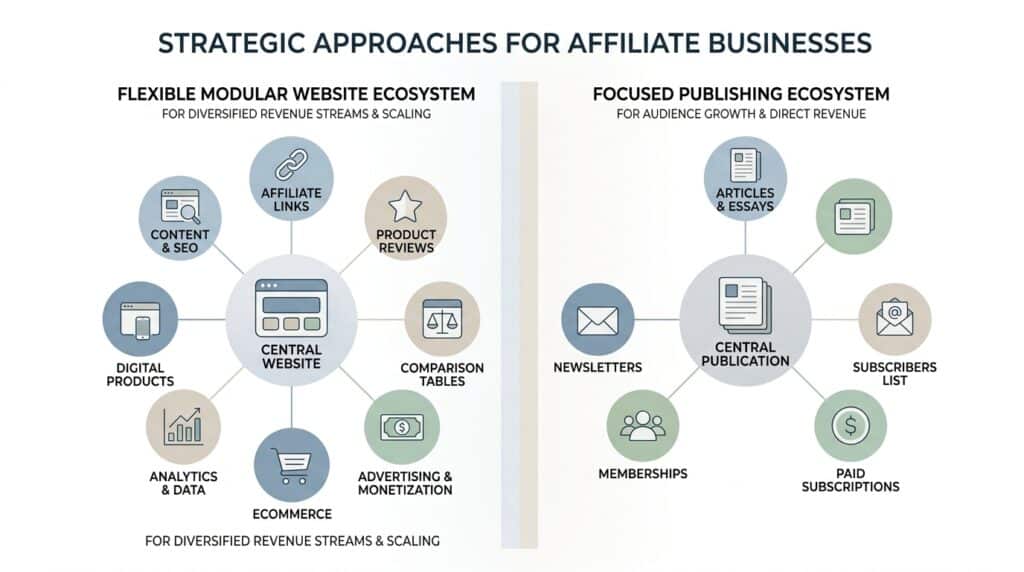
WordPress and Ghost take fundamentally different approaches to building a content business. WordPress is a general-purpose CMS that gives affiliate bloggers extensive control over content, SEO, monetization, and site functionality, while Ghost is a publishing-first platform built around writing, newsletters, memberships, and subscriptions.
For affiliate bloggers, that distinction matters because the platform must support more than publishing articles. A commercial site may need product reviews, comparison tables, affiliate-link management, analytics, conversion tools, email capture, advertising, and e-commerce as it grows.
The simplest way to frame the difference is this:
WordPress lets you build an affiliate business around content. Ghost lets you build a publishing business around content and add affiliate monetization to it.
What Is WordPress.org?
WordPress.org is an open-source, self-hosted CMS that can be extended through themes and plugins. Its large ecosystem gives affiliate bloggers specialized options for SEO, affiliate links, product reviews, comparison tables, digital products, memberships, and e-commerce.
The extension ecosystem is substantial. The official WordPress Plugin Directory currently lists more than 69,000 free plugins, providing a useful illustration of how extensively WordPress can be extended.
For an affiliate site, that flexibility has practical value. Tools such as Rank Math, Yoast SEO, SEOPress, ThirstyAffiliates, Pretty Links, WooCommerce, and MemberPress can add functions that would otherwise require custom development or external services.
What Is Ghost?
Ghost is an open-source publishing platform built around professional content publishing and audience growth. It uses a Node.js technology stack and is available through managed Ghost(Pro) hosting or self-hosted installations.
Ghost's publishing philosophy is deliberately focused. Its core platform combines website publishing, email newsletters, memberships, and paid subscriptions, allowing creators to build a publication without assembling those functions from multiple plugins.
That simplicity is Ghost's major advantage. Its extension model is more limited than WordPress, but the trade-off is a cleaner publishing workflow with native audience and subscription features.
Why Does This Difference Matter for Affiliate Marketing?
The distinction becomes important once an affiliate blog moves beyond publishing articles. A site with hundreds of commercial-intent pages needs efficient systems for product presentation, link management, SEO, conversion optimization, and multiple revenue streams.
WordPress is therefore the stronger fit when affiliate marketing is the primary business model. Ghost becomes more compelling when the business centers on publishing, email, memberships, and recurring subscriptions, with affiliate commissions serving as one revenue stream among several.
Recommended Reading: How I Monetize My Affiliate Blogs with AI Products (2026 Guide)
How Do WordPress and Ghost Compare for Affiliate Marketing in 2026?
WordPress generally wins when affiliate marketing is the primary revenue model because it provides a broader ecosystem for affiliate links, product reviews, comparison tables, SEO, analytics, conversion tools, advertising, and e-commerce. Ghost can publish effective affiliate content, but its strongest native capabilities are newsletters, memberships, and subscriptions rather than complex affiliate-site workflows.
| Feature | WordPress | Ghost | Better for Affiliate Bloggers |
| SEO control | Extensive | Strong built-in basics | WordPress |
| Affiliate links | Extensive tools | Basic/manual/integration-based | WordPress |
| Product comparison tables | Excellent | More limited | WordPress |
| Product reviews | Extensive ecosystem | Possible but less specialized | WordPress |
| Affiliate link management | Excellent | Limited | WordPress |
| Email newsletters | Requires integration/plugin | Native | Ghost |
| Paid memberships | Plugin-based | Native | Ghost |
| Display advertising | Excellent | Possible but less focused | WordPress |
| Digital products | Excellent | Good | WordPress |
| Design flexibility | Excellent | Good | WordPress |
| Performance out of the box | Requires optimization | Strong | Ghost |
| Plugin ecosystem | Massive | Limited | WordPress |
| Maintenance simplicity | Moderate | Strong | Ghost |
| Scalability | Excellent | Strong for publishing | WordPress |
| Affiliate-business flexibility | Excellent | Moderate | WordPress |
Affiliate Business Fit Score
- WordPress: 9/10 for affiliate business fit. It supports high-volume commercial content, link management at scale, and multiple revenue streams running side by side.
- Ghost: 7/10 for affiliate business fit. It handles a smaller catalog of affiliate content well, especially alongside a newsletter, but it was not built to manage hundreds of monetized review pages.
Now, the scores don't mean Ghost is a poor platform. They mean it's a poor match for a business built primarily on affiliate commissions, and a strong match for one built primarily on subscribers.
WordPress vs Ghost: Which Platform is Better for SEO and AI Search Visibility?
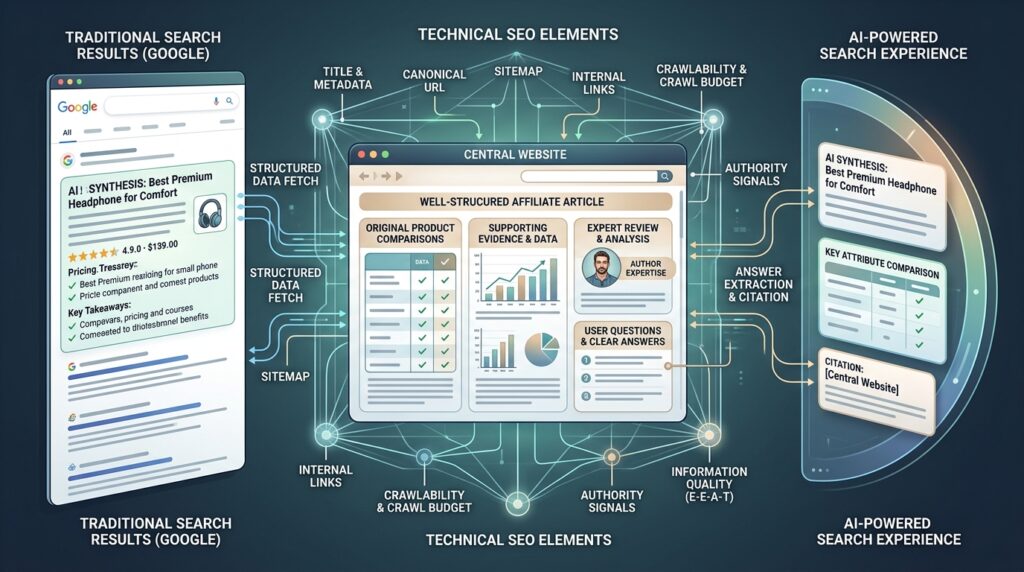
WordPress is the stronger choice for affiliate sites that need extensive SEO control, while Ghost provides strong SEO fundamentals with less configuration. Both platforms can support organic search visibility, but WordPress gives affiliate bloggers more control over the technical and content systems that matter when competing across hundreds of commercial keywords.
Which Platform Gives Affiliate Bloggers More SEO Control?
WordPress provides broader control over the SEO elements of an affiliate website. With WordPress, you can manage title tags, meta descriptions, canonical URLs, XML sitemaps, robots controls, redirects, schema, breadcrumbs, internal links, and content optimization through native settings, themes, plugins, or custom development.
Its SEO ecosystem also includes Yoast SEO, Rank Math, and SEOPress, giving publishers specialized workflows for technical SEO and content optimization. The official WordPress SEO plugin directory illustrates the range of available tools.
This matters for affiliate sites because commercial content often requires ongoing optimization. You may need to change redirects, restructure internal links, update schema, improve product pages, or connect Google Search Console to monitor search performance.
Does Ghost Have Good SEO Without Plugins?
Yes. Ghost provides strong SEO fundamentals without requiring a large plugin stack. It supports clean URLs, metadata, canonical URLs, XML sitemaps, structured data, and performance-focused publishing.
That approach reduces configuration. For a publisher primarily concerned with writing and distributing content, Ghost can provide a clean technical foundation without adding multiple SEO plugins.
The trade-off is control. WordPress gives affiliate operators more specialized options when their SEO strategy becomes more demanding.
Which Platform Is Better for Google AI Overviews and AI Search?
Neither platform gets a special advantage here. Google's own search documentation states that its generative AI search features continue to rely on established SEO fundamentals, and it emphasizes helpful, original, non-commodity content over any specific CMS.
What actually earns citation in AI Overviews and AI search results is the same regardless of platform:
- Clear, direct answers.
- First-hand experience.
- Original product comparisons.
- Structured information.
- Clear entities and relationships.
- Demonstrable author expertise.
- Supporting evidence.
- Crawlable content.
- Strong internal linking.
- High-quality product reviews.
This means the content and information architecture matter more than choosing WordPress over Ghost. WordPress simply gives affiliate publishers more tools for implementing and maintaining those systems.
Let me quickly correct one wrong impression here. Google's official documentation confirms that FAQ rich results are no longer shown in Search. So, adding FAQ schema purely to chase a rich result snippet no longer accomplishes anything. However, you can use FAQ sections because they answer real reader questions, not because you're targeting a SERP feature that doesn't exist anymore.
Recommended: AI Affiliate Marketing Content Strategy That Ranks in AI Search Engines (2025 Tested)
Which Platform Is Better for Publishing Affiliate Reviews and Comparison Articles?
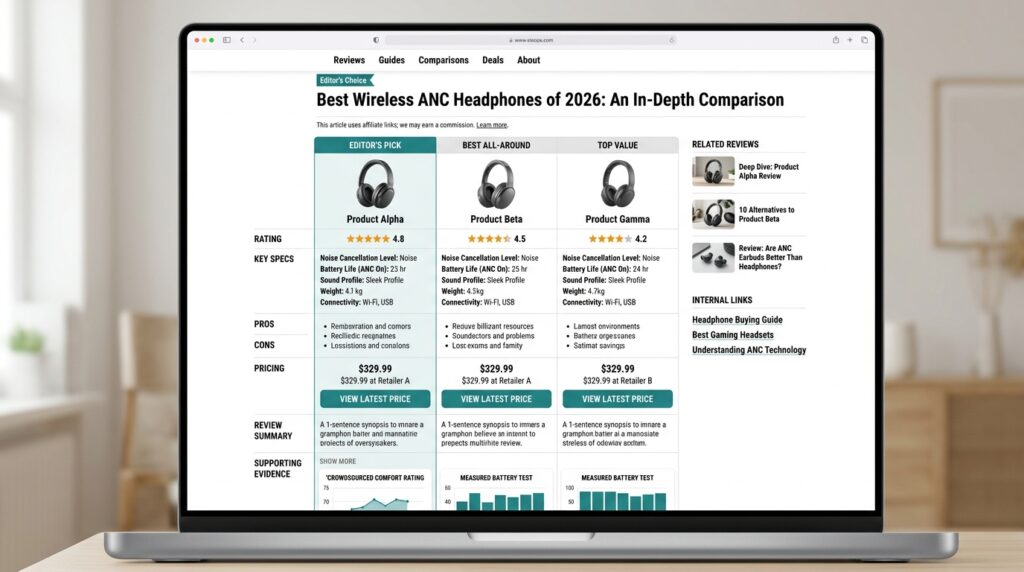
WordPress is the better platform for affiliate reviews and comparison articles because its ecosystem supports the specialized content components these pages require. An affiliate review is rarely just a block of text. A competitive commercial page may need product boxes, comparison tables, ratings, pros and cons, affiliate buttons, disclosures, screenshots, structured data, and reusable conversion elements.
That distinction becomes more important as the site grows. Building five comparison pages manually is manageable, but maintaining consistent product presentation across 50, 100, or 500 commercial-intent articles creates a very different operational problem.
Affiliate content needs more than a text editor. It needs comparison tables, product boxes, pros-and-cons sections, review templates, CTA buttons, disclosure blocks, screenshots, star ratings, and layouts built to convert a reader into a click. WordPress has the broader ecosystem for all of it.
How Does WordPress Handle Affiliate Product Reviews?
WordPress supports dedicated review templates through both themes and plugins, so you can standardize pros-and-cons boxes, star ratings, and verdict sections across hundreds of posts. Product comparison tables and affiliate buttons come from purpose-built plugins, and link management tools like ThirstyAffiliates centralize every outbound link in one place.
Product blocks, custom fields, and reusable blocks let you update a price or a CTA once and push that change across every post using it. Dynamic content, pulled from a central product database instead of retyped into every article, is what makes a 300-post affiliate site maintainable instead of a maintenance nightmare.
Can You Build Affiliate Comparison Tables on Ghost?
Yes, but not natively. Ghost's editor doesn't include a built-in comparison-table block or review-template system the way WordPress plugins do. You build these using custom HTML embedded in posts, a custom theme designed for the purpose, or a third-party embed tool.
That's workable for a handful of well-crafted reviews. It becomes a real bottleneck once you're maintaining pricing, ratings, and product data across a large catalog, since Ghost has no centralized field system to update that data in one place.
Which Platform Is Better for Amazon Affiliate Sites?
WordPress is the stronger fit. Amazon affiliate sites depend on consistent product data, comparison tables, and product images across every post, along with reliable link management and Amazon Associates compliance. WordPress plugins handle all of this natively, including geographic link localization so a reader in a different country land on the correct Amazon storefront.
Ghost can technically host Amazon affiliate content, but it lacks the plugin layer that automates product data updates, image syncing, and multi-region link swaps. Without an equivalent to WordPress's API and plugin integrations, keeping data accurate across a growing catalog becomes a manual job.
Publishing 5 affiliate reviews is a different job than publishing 50, 100, or 500. At that volume, WordPress's centralized link management, reusable blocks, and dynamic product data aren't conveniences, they're the difference between a site you can maintain and one that collapses under its own content. Ghost was never built to solve that problem, because Ghost was never built to be an affiliate product catalog.
Recommended: How to Use AI to Write Affiliate Product Reviews that Sell [2025 Guide]
How Do WordPress and Ghost Compare for Affiliate Link Management?
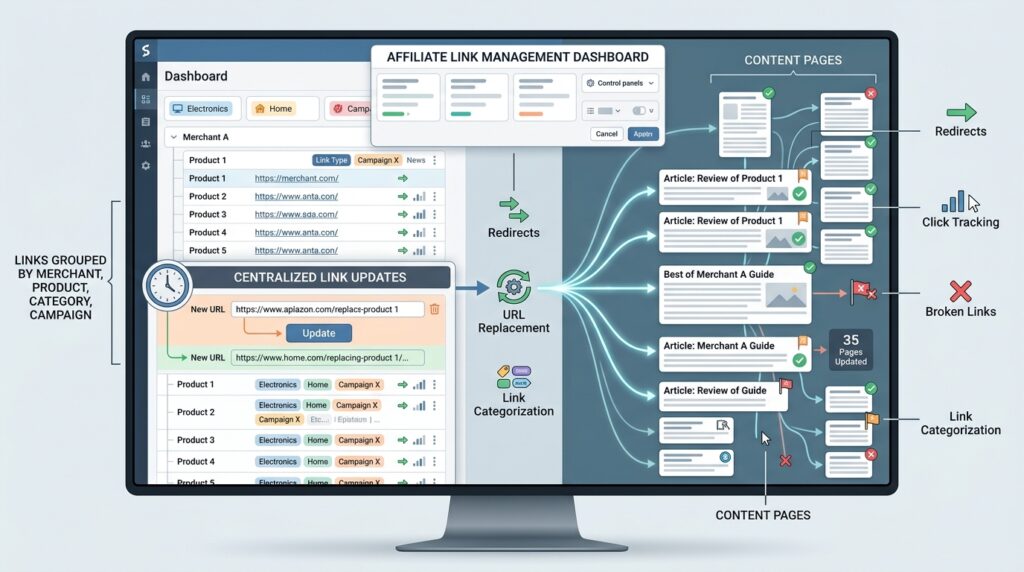
Link management deserves its own evaluation, separate from general publishing features. WordPress has dedicated plugins for organizing, redirecting, categorizing, and tracking outbound affiliate links. Ghost has no equivalent plugin ecosystem for this job.
What Can WordPress Affiliate Link Plugins Do?
WordPress affiliate link plugins, conceptually similar to ThirstyAffiliates or Pretty Links, centralize every outbound link in one dashboard instead of scattering raw URLs across hundreds of posts. From there, you get:
- Redirects that let you change a destination URL without editing a single post.
- Link categorization by merchant, program, or niche, so you can audit performance by group.
- Broken-link replacement, catching dead affiliate links before they cost you commissions.
- Short URLs that look cleaner and cloak the raw affiliate tracking string.
- Click tracking, showing which links and which posts actually drive conversions.
- Automatic keyword linking, inserting affiliate links into matching keywords across your site without manual editing.
- Global affiliate-link updates, changing one link in the dashboard and updating it everywhere it appears.
What Is the Limitation of Managing Affiliate Links on Ghost?
Ghost requires manual link insertion. You paste the raw affiliate URL directly into each post, and there's no centralized dashboard tracking where that link lives across your site. Centralized management, redirects, and click tracking require external tools or custom integrations layered on top of the platform, since Ghost's core doesn't include them.
This gap creates what's rarely discussed directly: affiliate-link maintenance cost. When a merchant changes a URL, discontinues a product, or updates a pricing page, you need to update every post referencing that link. On WordPress, a global link update plugin turns this into a five-minute fix. On Ghost, it means manually finding and editing every post containing that link, one by one. At 20 posts, that's a minor annoyance. At 300 posts, it's a part-time job.
Which Platform Costs Less for an Affiliate Blog in 2026?
The cheapest platform on paper isn't always the cheapest one to run. Advertised monthly pricing tells you almost nothing about what an affiliate blog actually costs. The real comparison is total cost of ownership: hosting, themes, plugins, email tools, performance add-ons, backups, security, and the time you or a developer spend maintaining it.
What Does a WordPress Affiliate Blog Really Cost?
A realistic WordPress affiliate budget breaks down across several recurring line items:
| Cost Category | Typical Range |
| Hosting | $5–$30/month (shared to managed) |
| Domain | $10–$20/year |
| Premium theme | $0–$100 one-time |
| SEO tools (Rank Math Pro, etc.) | $0–$100/year |
| Affiliate-link management | $0–$100/year |
| Performance tools (WP Rocket, caching) | $0–$60/year |
| Email marketing | $0–$50/month, scales with list size |
| Backup/security | $0–$100/year |
| Optional page builder (Elementor) | $0–$60/year |
Most of these tools have functional free tiers, so a beginner can start near the bottom of every range. The costs climb as traffic and post count grow, mainly through hosting upgrades and premium plugin tiers.
What Does Ghost Really Cost?
Ghost splits into two paths. As of August 2026, Ghost(Pro), the managed hosting option, starts at roughly $9/month for a starter plan and scales up based on member count and traffic, with higher tiers unlocking more staff accounts and custom integrations. Self-hosted Ghost is free software, but you're responsible for a VPS, typically $5–$20/month through providers like Hetzner, plus your own maintenance and updates.
Email and newsletter capabilities come built in at every tier, which is where Ghost saves money WordPress users spend on separate email marketing tools. Membership features are also native, removing the cost of a plugin like MemberPress. Third-party integrations for anything outside publishing, newsletters, and memberships, including affiliate-specific tooling, generally cost extra or require custom development.
What Is the Total Cost of Ownership Over Three Years?
Advertised monthly prices flatten out real differences that only show up once you model the full picture. Here's a simplified three-year estimate for three affiliate blogger profiles:
| Profile | WordPress (3-yr est.) | Ghost (3-yr est.) |
| Beginner affiliate blog (shared hosting, free plugins, low traffic) | ~$300–$600 | ~$325–$450 (Ghost Pro Starter) |
| Growing affiliate site (managed hosting, premium SEO tools, link manager, email tool) | ~$1,500–$3,000 | ~$1,000–$2,500 (Ghost Pro mid-tier, fewer add-on tools needed) |
| Professional content business (high-traffic hosting, full plugin stack, developer time for custom affiliate tooling) | ~$4,000–$9,000+ | ~$3,000–$7,000+ (higher Ghost Pro tier, plus custom dev for affiliate features Ghost lacks natively) |
Now, the pattern that emerges: Ghost can look cheaper at low volume, largely because newsletters and memberships come free where WordPress requires paid add-ons. That advantage narrows and often reverses at the professional tier, where an affiliate-heavy site needs custom development to replicate what WordPress plugins already do natively. The platform with the lower sticker price isn't automatically the platform with the lower three-year cost.
WordPress vs Ghost: Which is Faster for Affiliate Websites?
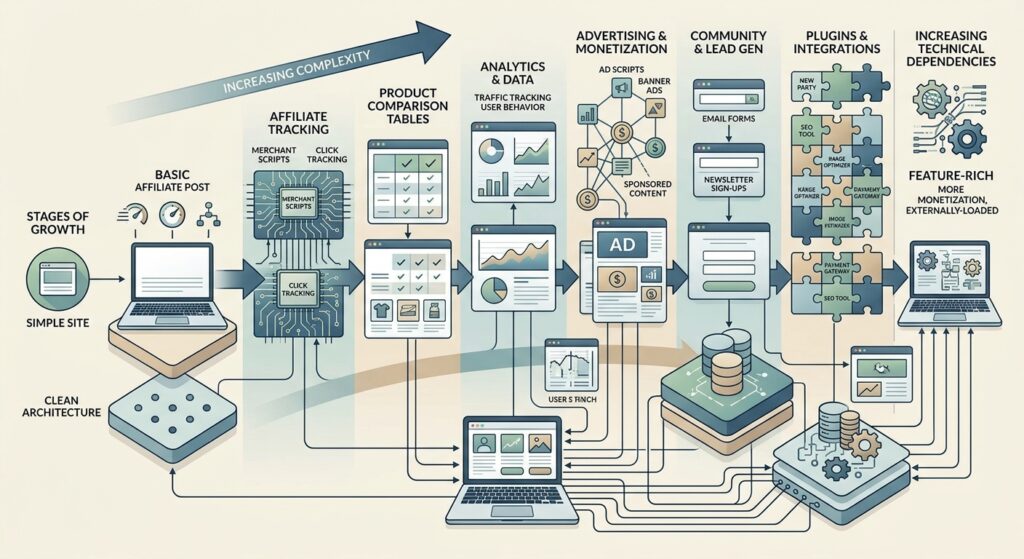
Ghost generally has the performance advantage out of the box, while WordPress can achieve excellent speed with proper configuration. The more useful question for affiliate bloggers is how well each platform maintains performance after adding the tools required to monetize a site.
Why Does Ghost Often Feel Faster?
Ghost's architecture is lean by design. Fewer plugins mean fewer scripts competing for load time, and the controlled environment prevents the kind of bloat that accumulates on a heavily extended WordPress site. Ghost is faster by default than typical WordPress setups, largely because its publishing workflow was optimized from the start rather than built up through third-party additions.
Can WordPress Be Fast Enough for Affiliate SEO?
Yes, and plenty of high-traffic affiliate sites prove it daily. Getting there requires deliberate choices: quality hosting, a caching plugin, a CDN, image optimization, and a lightweight theme instead of a heavy, feature-stuffed one.
Plugin discipline matters just as much as the hosting stack. Every plugin you install adds scripts, and every script is a potential drag on load time. Regular database maintenance and careful script management keep a growing WordPress site from slowing down as content and monetization tools accumulate.
What Happens to Performance as an Affiliate Site Grows?
Here's what theoretical speed comparisons miss: performance debt. Every monetization feature you add (another ad network, a new comparison-table plugin, a tracking pixel, a coupon popup), adds scripts and dependencies. Each one is small on its own. Together, they compound.
This applies to both platforms, not just WordPress. A Ghost site loaded with third-party embeds for comparison tables and ad scripts accumulates the same performance debt a plugin-heavy WordPress site does. The platform matters less here than the discipline you apply as you scale monetization. An affiliate site optimized for speed on day one and then loaded with ten new revenue tools over a year is not the same site anymore, regardless of which CMS it runs on.
Which Platform Is Easier to Use for an Affiliate Blogger?
Ghost offers the cleaner writing experience. WordPress offers more flexibility, at the cost of more configuration. Which one is “easier” depends entirely on what you're optimizing for: simple publishing, or full control over a monetized website.
| Task | WordPress | Ghost |
| Initial setup | More steps, more decisions | Fast, minimal setup |
| Writing | Good, plugin-dependent editor | Clean, distraction-free editor |
| Media management | Flexible, requires organization | Simple, built-in |
| Templates | Thousands of themes | Limited, curated selection |
| Updating content | Easy, but plugin updates need monitoring | Easy, fewer moving parts |
| Affiliate-link management | Centralized via dedicated plugins | Manual, no native system |
| SEO workflow | Deep control via SEO plugins | Automatic, fewer options |
| Site customization | Extensive | More limited |
| Troubleshooting | Can be complex with many plugins | Simpler, fewer failure points |
Now, the tradeoff is consistent across every row: WordPress asks for more upfront and ongoing configuration in exchange for more control. Ghost asks for less configuration and gives you less to control.
Decision rule:
- Choose Ghost if: “I mainly want to write, publish, email subscribers, and sell memberships.”
- Choose WordPress if: “I want to build a customizable affiliate website with multiple traffic and revenue channels.”
If your affiliate income depends on link management, comparison content, and stacking multiple monetization tools, that second description is doing the real work. It's the harder platform to configure and the more capable one to run an affiliate business on.
Which Platform Gives Affiliate Bloggers More Monetization Options?
WordPress provides a broader monetization ecosystem, full stop. Ghost pulls ahead only in one specific area: paid memberships, newsletters, and subscription products. Your business model decides which advantage matters more to you.
How Does WordPress Support Affiliate Revenue?
WordPress supports nearly every monetization channel an affiliate blogger might combine:
- Affiliate links, managed through dedicated plugins with centralized tracking.
- Display ads, compatible with every major network, including Mediavine, AdThrive, and Ezoic.
- Sponsored content, inserted through custom post types or simple manual publishing.
- Digital products, sold directly via WooCommerce or a lightweight cart plugin.
- Courses, delivered through dedicated LMS plugins.
- Ecommerce, scaling from a single product to a full storefront.
- Lead generation, capturing emails through forms tied to a CRM.
- Memberships, added through plugins like MemberPress.
- Email marketing, connected to nearly any provider on the market.
- Comparison tools, built with dedicated table and review plugins.
This is what “affiliate-business flexibility” actually means in practice: stacking five or six revenue streams on the same content without switching platforms.
How Does Ghost Support Affiliate Revenue?
Ghost supports a narrower but tightly integrated set of tools. Affiliate links work fine, though they're inserted manually rather than managed centrally. Newsletters are native and central to how Ghost sites grow an audience. Paid memberships and subscriptions run through built-in Stripe integration at 0% platform fee on top of Stripe's own processing costs.
Ghost also supports tips and donations, sponsorship placements within newsletters, and a smaller set of third-party integrations for anything outside its core publishing and membership functions.
When Could Ghost Actually Be More Profitable?
Ghost can be the more profitable platform for a specific business model. If your funnel looks like free content, then email subscriber, then paid newsletter or membership, Ghost's native tools are a direct advantage rather than a limitation.
Data backs this up. Around 19% of Ghost creators already layer affiliate links on top of membership revenue, and a 2025 survey of Ghost creators with 500+ subscribers found median membership revenue of $2,400/month, with the top 10% earning over $12,000/month. That's real income, generated by features WordPress requires plugins and setup work to replicate. If subscriptions are your main engine and affiliate links are a bonus, not the core, Ghost's simplicity stops being a limitation and becomes the better commercial fit.
Recommended: The Best Blog Niches for Affiliate Marketing Success in 2025
How Do WordPress and Ghost Compare for Email Marketing and Audience Ownership?
Email matters more to affiliate bloggers than most comparisons admit, because search traffic is volatile. Algorithm updates can cut your organic traffic overnight. An email list is the one channel Google can't take away from you.
Ghost has a clear native advantage here. WordPress trades that built-in simplicity for the freedom to connect with virtually any email system on the market.
| Feature | WordPress | Ghost |
| Built-in newsletters | Requires plugin/integration | Native |
| Subscriber management | Via CRM plugin | Native |
| Segmentation | Depends on CRM tool | Basic native segmentation |
| Automation | Via CRM plugin (e.g., FluentCRM) | Limited native automation |
| Lead magnets | Flexible, plugin-based | Possible, less built-in tooling |
| Forms | Extensive plugin options | Native, basic |
| CRM integration | Broad compatibility | Limited |
| Email service providers | FluentCRM, GetResponse, and most major providers | Fewer native integrations |
| Paid subscriptions | Plugin-based | Native, Stripe-integrated |
The strategic point behind this table matters more than any single row. The strongest affiliate business doesn't depend entirely on Google. It runs on a funnel: search traffic brings a reader to your content, that content converts them into an email subscriber, nurture emails build trust, and trust drives the affiliate recommendation, ideally on repeat.
WordPress supports this funnel by connecting to specialized tools built for each stage, such as FluentCRM for automation and segmentation, paired with whatever forms and lead-magnet plugins fit your niche. It takes more setup, but you can build a highly tailored nurture sequence around affiliate promotions specifically.
Ghost supports the same funnel more directly, with fewer moving parts. Newsletter sign-up is already built into every post, subscriber management lives in the same dashboard as your content, and paid tiers are one toggle away. If you want that funnel running fast without stitching together three separate tools, Ghost gets you there with less friction, even if the automation stays simpler than what a dedicated CRM offers on WordPress.
Recommended: HubSpot vs Mailchimp: Which Email Platform Is Best for Affiliate Bloggers in 2025?
What Are the Biggest Weaknesses of WordPress and Ghost for Affiliate Bloggers?
Neither platform is perfect. WordPress's biggest weakness is complexity, while Ghost's biggest weakness is limited extensibility. The right choice depends on which limitation is more likely to interfere with your business as your affiliate site grows.
What Are the Main Weaknesses of WordPress?
WordPress gives you extensive control, but that control creates additional responsibility. An affiliate blogger may need to manage:
- Plugin updates and maintenance.
- Website security.
- Hosting and server configuration.
- Performance optimization.
- Plugin conflicts.
- More initial configuration.
The risk is not that WordPress is inherently difficult. The risk is configuration sprawl. Adding plugins for SEO, affiliate links, caching, analytics, forms, reviews, and other functions can create more dependencies that must be maintained.
What Are the Main Weaknesses of Ghost?
Ghost takes the opposite approach. Its focused architecture simplifies publishing, but its smaller ecosystem means fewer specialized solutions for unusual affiliate requirements.
Ghost has fewer affiliate-specific tools, less design flexibility, more limited ecommerce functionality, and greater dependence on integrations when you need capabilities outside its core publishing model. Self-hosting also introduces a different technical stack and operational responsibility.
The Future Regret Test
Ask yourself:
Which limitation would I regret more when my affiliate site reaches 100,000 monthly visitors?
If you would rather manage additional plugins in exchange for maximum control over SEO, monetization, and commercial content, WordPress is likely the better choice.
If you would rather sacrifice some flexibility to keep publishing and audience management simple, Ghost may be the better fit.
The important decision is not which platform is easiest today. It is which constraint you can live with as the business becomes larger and more valuable.
Can You Migrate an Affiliate Blog Between WordPress and Ghost?
Yes, migration in either direction is possible. It is not frictionless. Every ranking signal your affiliate site has built, URLs, redirects, metadata, images, internal links, affiliate links, structured data, analytics, and search visibility, is at risk during a poorly executed move.
What Should You Preserve During Migration?
Treat this as a checklist, not a suggestion:
- URL structure
- Slugs
- Metadata (titles, descriptions)
- Categories
- Images
- Internal links
- Affiliate links
- Redirects
- Canonical tags
- XML sitemap
- Analytics tracking
- Search Console verification
- Structured data (schema)
- Email subscriber lists
Miss any item on this list and you risk losing rankings, breaking affiliate tracking, or disconnecting from your existing audience.
When Should You Migrate?
The best timing windows are before publishing hundreds of articles, when the migration cost is still low, or during a planned redesign, when you're already touching every page. Migration also makes sense once platform limitations start materially affecting revenue, not just your workflow preferences, or once maintenance costs on your current platform become excessive relative to what you're earning.
What Is the Biggest Affiliate SEO Migration Mistake?
Changing URLs without implementing a complete redirect and URL-mapping strategy. This single mistake accounts for most of the ranking losses affiliate bloggers report after migrating. Every old URL needs a corresponding 301 redirect to its new destination, mapped individually, not just redirected to a homepage.
A simple URL migration matrix looks like this:
| Old URL | New URL | Redirect Type | Status |
| /best-running-shoes-2025/ | /reviews/best-running-shoes/ | 301 | Verified |
| /product-x-review/ | /reviews/product-x/ | 301 | Pending |
| /category/deals/ | /deals/ | 301 | Verified |
Build this mapping before you migrate, not after traffic drops. “Backup your website” is generic advice that protects your content. A URL-mapping matrix protects your rankings, which is the part that actually determines whether your affiliate income survives the move.
Final Verdict: Which Should You Choose for Affiliate Marketing in 2026?
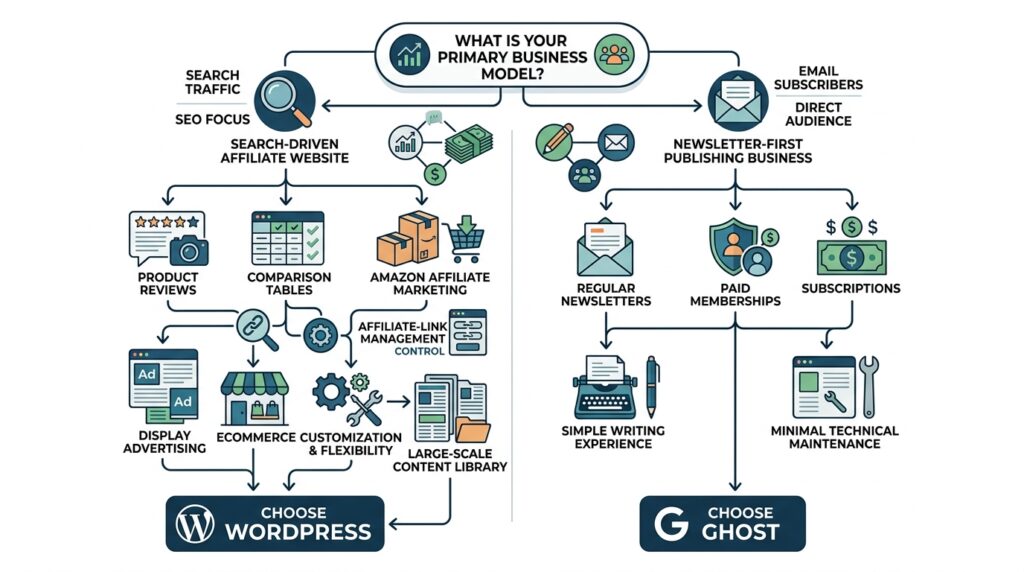
For most affiliate bloggers, WordPress is the better platform in 2026. Affiliate publishing requires more than writing good articles. It requires SEO control, commercial-intent content structures, product comparisons, affiliate-link management, conversion optimization, analytics, email capture, and room to add new revenue streams as the business grows. Ghost is the better specialist choice specifically when publishing, newsletters, and memberships matter more than extensive affiliate-site functionality.
The Bottom Line: If your strategy is to attract search traffic, publish commercial content, recommend products, manage affiliate links, and diversify revenue, WordPress gives you the broader foundation. If your strategy is to build a publication around your audience, email list, memberships, and recurring subscriptions, Ghost may be the more natural choice.
Frequently Asked Questions
Is Ghost faster than WordPress?
Ghost generally has a performance advantage out of the box because it uses a lean publishing architecture with fewer plugins and dependencies. WordPress can also deliver excellent performance when you use quality hosting, caching, a CDN, image optimization, a lightweight theme, and disciplined plugin management. For affiliate websites, performance depends on the complete site setup, including comparison tables, tracking scripts, images, and advertising.
Which is better for blogging, WordPress or Ghost?
WordPress is better for bloggers who want to build a flexible website with multiple traffic and revenue channels. Ghost is better for publishers who prioritize a clean writing experience, newsletters, memberships, and subscriptions. For search-driven affiliate blogging, WordPress is generally the stronger choice because it provides more SEO tools, affiliate-link management options, product review features, and monetization flexibility.
Do people still use WordPress for blogging?
Yes. WordPress remains a major platform for blogging and website publishing. Its large plugin and theme ecosystem allows bloggers to build simple publications or complex affiliate businesses with SEO tools, e-commerce, advertising, email marketing, and specialized content functionality. For affiliate bloggers, WordPress remains particularly useful because the platform can support commercial content and additional revenue channels as the business grows.
How much does Ghost blog cost?
Ghost offers both managed Ghost(Pro) hosting and self-hosting options. The supplied research identifies Ghost(Pro) as a paid managed service and notes that pricing varies by plan, while self-hosted Ghost shifts hosting and technical responsibilities to the site owner. Affiliate bloggers should compare the complete cost of hosting, email, memberships, integrations, and maintenance rather than comparing the CMS price alone.
What is the best blogging platform in 2026?
There is no single best blogging platform for every business model. WordPress is the better choice for most affiliate bloggers because it provides extensive SEO control, affiliate-link management, product comparison functionality, customization, and monetization options. Ghost is the better choice for a publisher-first business that prioritizes newsletters, memberships, subscriptions, and simple publishing.