Chadrack
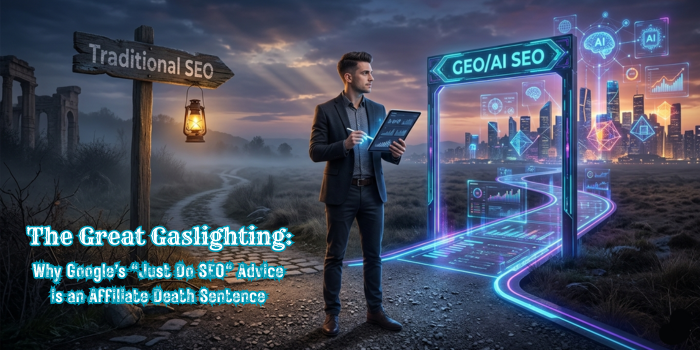
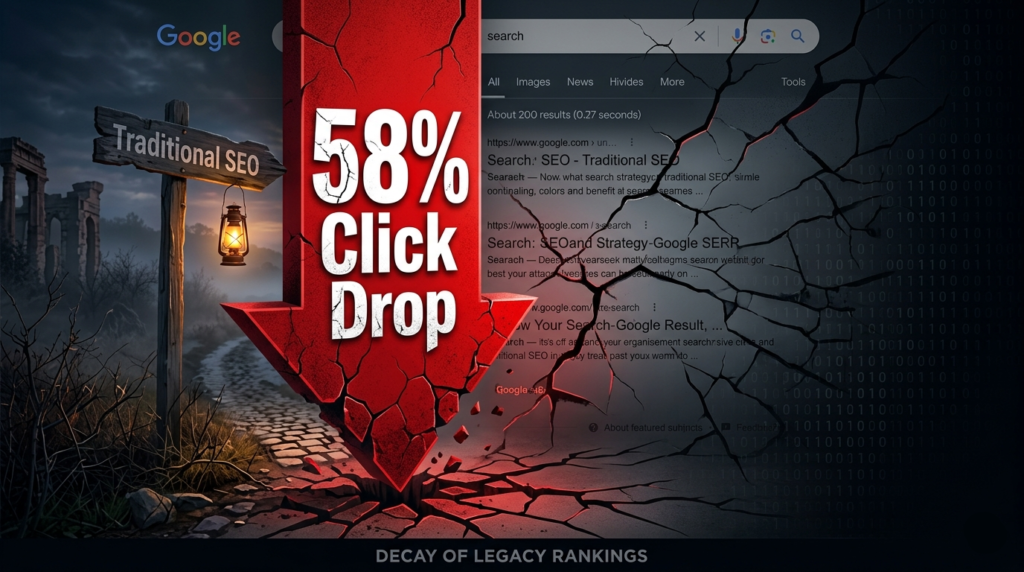
Google's 2026 “just do SEO” advice is a dangerous oversimplification for affiliate marketers. AI Overviews now reduce clicks to the #1 organic result by 58%, and 28% of sources cited by AI have zero Google organic visibility. For affiliates, traditional SEO is no longer a growth strategy. AI SEO for affiliate marketers requires mastering Generative Engine Optimization (GEO) and building visibility across non-Google discovery surfaces.
DISCLOSURE: WebIncomeJournal is supported by readers like yourself. We may earn an affiliate commission when you purchase through our links, which helps us offer our content for free. Learn more here.
For over a decade, I supported what I believed was Google’s attempt at sanitizing the web. The Panda Update of 2011 that wiped out content farms overnight, the Penguin update of 2012 that gutted manipulative link schemes, and the Helpful Content Updates (HCUs) that began in late 2022 to penalize thin, low-effort, “written for rankings” content, I applauded every one of them.
Why?
Because I genuinely believed Google was doing the hard, necessary work for sanitizing the web. And of course, I still believe that these were necessary as they rewarded real expertise and protected the reader.
However, since AI entered the picture, it is now clear that Google's priority is all about itself. In response to competitors like ChatGPT Search and Perplexity AI, Google introduced AI Mode and AI Overviews — features that stole the clicks and traffic while your content continues to feed the AI answers. And now, during Google I/O 2026, beyond accelerating AI Overviews, Google announced Universal Cart — an AI-powered shopping experience that lets users browse and purchase products directly inside Google Search, without ever visiting an affiliate site or a merchant's product page.
What this means is that Google is now moving beyond summarizing your content. It is now replacing the commercial transaction affiliates depend on. They have taken the traffic, and now they are taking the income.
The surprising thing is that while they are doing all of these, they have continued their narrative that publishers and affiliate creators should ignore everything being pushed out as GEO or AEO and instead focus on traditional SEO best practices.
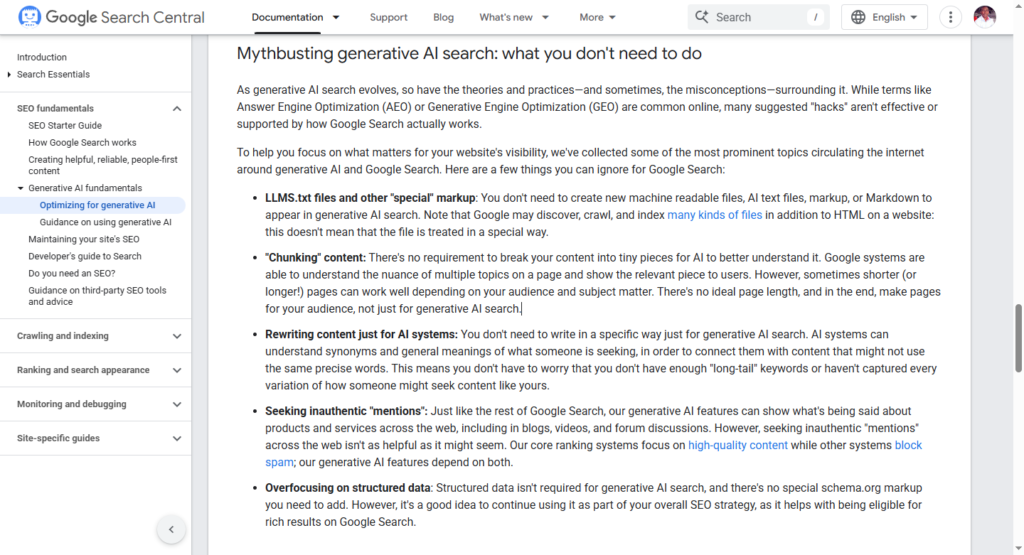
To me, that is gaslighting.
No doubt, quality content matters. However, Google’s narrative is not honest. It is strategically framed to keep content creators as fodder for their search machine while they systematically cannibalize the traffic, clicks, and commissions. They want your content, but they do not want you to get paid for it.
As an affiliate in 2026, you must understand that visibility no longer lives inside Google's organic blue links. Statistics from different sources clearly show that about 28% of the sources that AI systems actively cite have zero organic visibility on Google. Meaning your biggest competitor in the AI search era may be a site that does not even rank on Google. So, just optimizing for traditional SEO does not cut it anymore.
This is why I’m concerned about Google’s insistence on just doing traditional SEO. It’s clear that the affiliate playbook in this AI-driven search landscape has changed, and Google is not telling us the truth.
In this AI SEO for affiliate marketers post, I insist that surviving this AI shift requires GEO (Generative Engine Optimization) whether Google says so or not.
Debunking Google Gaslighting: Why “Just Do SEO” Isn't Enough

If you have read Google's official 2026 guidance, you will notice that Google has continued the narrative that AEO and GEO are still just SEO. While that sounds reasonable on the surface, it is, however, clear that Google simply used the medium to affirm its authority on SEO. In the post, Google explicitly positions its own guidance as the definitive ground truth for SEO, AEO, and GEO, and urges caution with outside tools, services, and data providers.
The tone is measured, but the timing is not.
Think about what this guidance does in practice as an affiliate marketer. It tells you to ignore the growing body of independent research on AI search visibility. It frames every contrarian data point as misinformation. And it does this precisely at the moment when independent research is revealing things Google has no interest in publicizing.
That is not helpfulness; that is narrative control.
The Technical Reality Google Glosses Over
Traditional SEO visibility was straightforward: rankings, impressions, and clicks. If you ranked #1, you got the traffic.
AI-powered search visibility works differently — and Google's guidance undersells this gap significantly. Two mechanisms drive how your content actually gets surfaced inside AI systems:
- Retrieval-Augmented Generation (RAG): AI systems do not just rank your page — they retrieve specific passages from it and use those passages to construct a generated answer. Whether your content gets pulled depends on how extractable, direct, and structurally clear those passages are.
- Query Fan-Out: When a user submits a query, AI systems generate multiple related sub-queries simultaneously to gather broader context. Your content may need to satisfy not just the original query but several adjacent ones to earn a citation.
In traditional SEO, visibility meant ranking. In AI search, visibility means being used as a source. Those are fundamentally different outcomes. And of course, optimizing for one does not automatically optimize for the other.
The Separate Discovery Layer Nobody at Google Wants to Discuss
Here is the data point that makes Google's “just do SEO” argument fall apart completely: 28% of the sources most frequently cited by ChatGPT have zero organic visibility on Google. Zero. They do not rank. They are not in the top results. Google's systems would not surface them.
Yet AI systems cite them repeatedly.
ChatGPT and Claude are not extensions of Google Search. They are trained on internet-scale data, they operate their own retrieval pipelines, and they apply their own quality signals — signals that do not map cleanly onto Google's ranking factors. A site with strong domain authority but thin, generic affiliate content may rank well in Google and get ignored by AI. A site with no SEO presence but deeply specific, experience-rich content may never appear in Google's blue links and still get cited constantly by AI systems.
That is a separate discovery layer. And Google's guidance, by design, has nothing useful to say about it.
The Death of the “Interchangeable Intermediary”
The March 2026 Core Update finished rolling out on April 8, 2026. Google said almost nothing about it publicly — just a quiet confirmation on their Search Status Dashboard that the rollout was complete. No detailed explanation. No list of what changed.
But the results spoke clearly enough.
What the March 2026 Core Update Actually Targeted
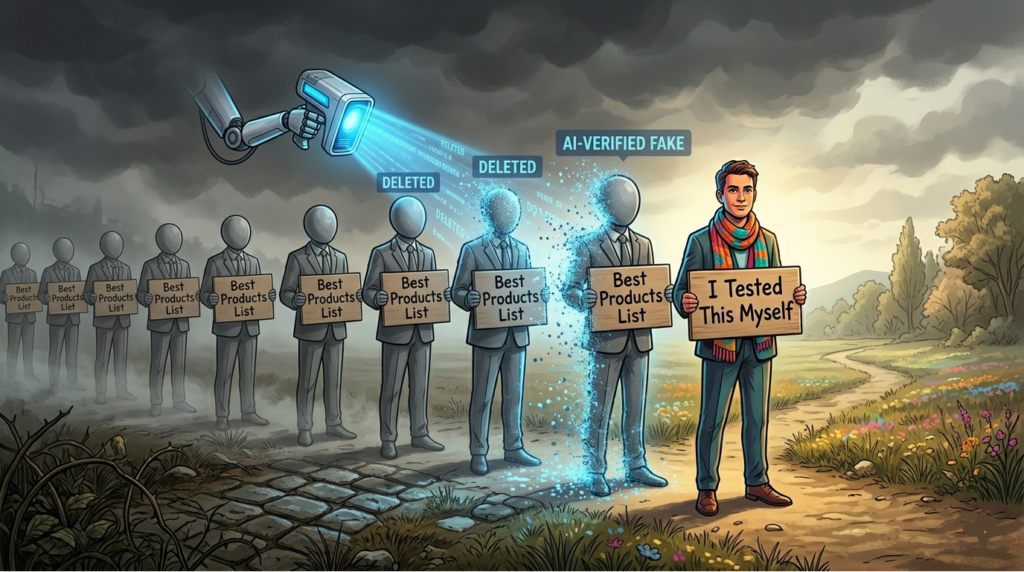
Generic affiliate aggregators took the hardest hits. Sites built around thin product roundups, rewritten manufacturer specs, and “best of” lists assembled without any first-hand testing or genuine expertise saw dramatic visibility drops almost overnight.
This was not an accident or a side effect. It was the point.
Google's own 2026 guidance draws a sharp line between two types of content, and every affiliate marketer needs to understand exactly where that line sits:
| COMMODITY CONTENT | NON-COMMODITY CONTENT |
| “7 Tips for First-Time Homebuyers” | “Why We Waived the Inspection & What the Sewer Line Cost Us” |
| Generic product roundups based on specs | Reviews built on actual hands-on testing |
| Summaries of what others have already published | Original analysis no AI could replicate |
| Written to rank | Written because you know something others don't |
Commodity content, by Google's own definition, is content based on common knowledge that could originate from anyone and adds little unique insight. If a generative AI model could produce your article in 30 seconds using publicly available information, that article is commodity content — and Google's systems are now explicitly designed to filter it out.
Experience Is the Only Moat Left
This is the shift that should keep every affiliate publisher up at night.
For years, the affiliate model rewarded aggregation. You did not need to own the product, test the service, or have any genuine skin in the game. You needed to rank. The traffic came. The commissions followed.
That model is dying. Not because affiliate marketing is dead, but because the interchangeable intermediary is dead. Google's AI systems, trained to identify unique expert perspectives, are increasingly able to distinguish between content written from experience and content written about a topic.
A site that publishes “The 9 Best Email Marketing Tools for 2026″ based on a comparison of pricing pages is not the same as a site that publishes “I Tested 9 Email Marketing Platforms for 6 Months: Here's What My Affiliate Commissions Actually Looked Like.” One is a commodity. One is a primary source.
The hard truth for affiliates is this: if your content could be replaced by a well-prompted AI without any loss of informational value, Google's 2026 systems (and every AI search engine behind them) will eventually treat it as replaceable.
The only content that survives this filter is content that requires you to exist.
Recommended: AI Affiliate Marketing Content Strategy That Ranks in AI Search Engines (2025 Tested)
The New Affiliate Playbook: Mastering AI Visibility (GEO)
If traditional SEO was about earning Google's trust, Generative Engine Optimization is about becoming AI's most useful source. The mechanics are different. The content requirements are different. And the reward — being cited as a primary source inside AI-generated answers — is fundamentally different from a blue-link ranking.
Here is what the data says actually works:
The Listicle Dominance: Structure Your Content for RAG Retrieval
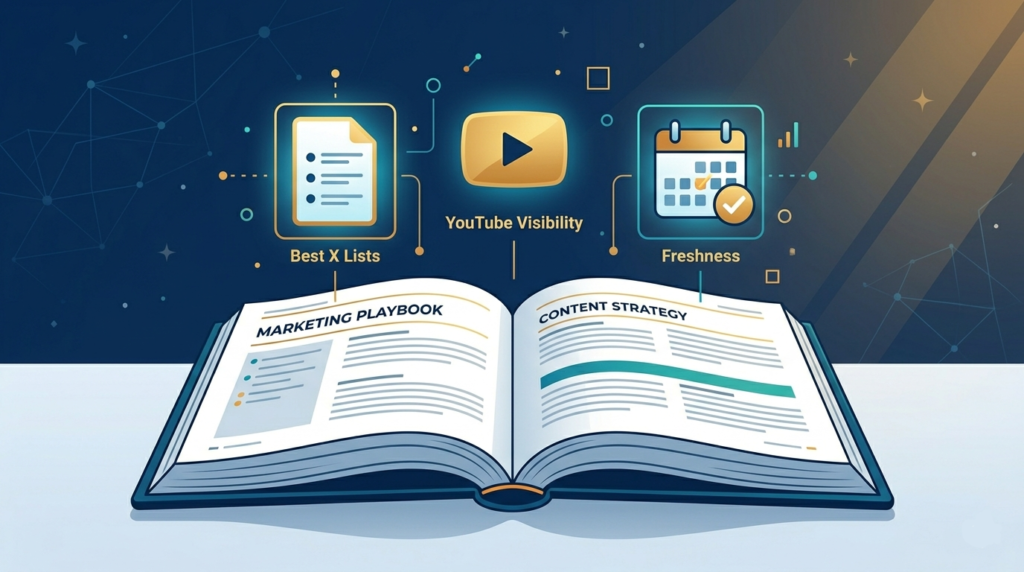
According to Ahrefs' analysis of one billion data points across fourteen studies, “Best X” list articles account for 43.8% of all page types cited by ChatGPT. That is not a marginal advantage — that is structural dominance.
The reason comes back to RAG mechanics. When an AI system retrieves content to construct an answer, it needs passages that are clean, self-contained, and directly responsive to a specific sub-query. A well-structured “Best X” listicle delivers exactly that: discrete, scannable entries with clear headers, specific product names, concrete attributes, and direct comparative language.
To structure your listicles for maximum RAG retrieval:
- Lead each entry with a declarative statement, “Tool X is the best option for affiliate marketers who need automation,” not a vague description.
- Include specific named entities (brand names, pricing tiers, feature names, integration partners) in every entry.
- Add a concise pros/cons block per entry so AI systems can extract structured comparison data.
- Place your primary answer within the first 100 words of the article, before any introductory context.
- Use H2s that mirror natural language queries; “Which email marketing tool is best for affiliate marketers?” ranks as a heading, not just as SEO text.
The YouTube Multiplier: The Signal Most Affiliates Are Ignoring
Of all the factors studied in Ahrefs' AI visibility research — including backlinks, domain rating, page count, and organic traffic — YouTube mentions showed the highest correlation with AI brand visibility. This held true across both Google's AI products and OpenAI's ChatGPT.
That finding should completely reframe how affiliate marketers think about content distribution.
YouTube is not just a traffic channel. It is an authority signal that AI systems weigh heavily when deciding which sources to trust and cite. Whether it is your own channel, a guest appearance, a sponsored mention, or an organic feature in someone else's video, showing up on YouTube puts you on AI's radar in a way that most traditional SEO tactics simply do not.
If you have been putting off building a YouTube presence, the 2026 data make the case clearly: stop waiting. And I’m definitely speaking to myself here also!
The Freshness Mandate: Update or Become Invisible
AI systems strongly favor current sources. Research shows that 79% of pages cited by AI systems were updated within the current calendar year. For affiliate content (where product pricing, feature sets, and competitive landscapes shift constantly), publishing a review and walking away is now a visibility death sentence.
The practical implication is straightforward:
- Audit your top affiliate pages quarterly and update pricing, feature comparisons, and verdicts based on actual current data.
- Add a visible “Last Updated” dateline at the top of every review and roundup — AI systems read this as a freshness signal.
- Treat your best-performing listicles as living documents, not published-and-done articles.
Freshness is not just an SEO best practice anymore. In AI-powered search, it is a citation requirement.
Recommended: How to Use AI to Write Affiliate Product Reviews that Sell [2025 Guide]
Transparency as a Survival Tactic
Here is a counterintuitive truth that took me years to fully accept: in the AI search era, trying to appear neutral is one of the fastest ways to lose credibility — with both AI systems and the humans they serve.
Transparency is not a soft, ethical nice-to-have. It is a hard, technical advantage.
The “Third-Person” Trap: Neutrality Is Now a Red Flag
For years, affiliate content operated under an unspoken rule: appear objective. Present yourself as a disinterested guide. Do not let the reader see the commission structure behind the curtain.
That approach is now backfiring.
AI systems (trained on vast datasets that include consumer behavior, editorial signals, and content quality patterns) have become increasingly good at identifying content that performs neutrality without delivering it. Generic “we tested the top ten tools” framing, unattributed comparative claims, and vague editorial personas are patterns that correlate with low-trust commodity content.
What AI systems reward instead is attributed perspective. First-person experience. Named authors with verifiable credentials. Specific claims tied to specific contexts.
Google's own E-E-A-T framework (Experience, Expertise, Authoritativeness, Trustworthiness ) is explicit about this. Experience comes first now. Not expertise in the abstract. Documented, first-hand, demonstrable experience.
The “Link-Out” Strategy: Generosity Builds Machine Trust
One of the most counterintuitive GEO tactics with real data behind it is deliberate outbound linking — including links to direct competitors.
AI systems assess content trustworthiness partly by evaluating whether a page behaves like a reliable reference source or a closed promotional funnel. Pages that link generously to corroborating sources, competing tools, and independent reviews signal editorial confidence. Pages that only link inward — or not at all — signal the opposite.
The practical move is straightforward:
- Link out to 2-3 competing tools or resources within every major affiliate roundup.
- Cite independent third-party reviews (from outlets like Wirecutter, G2, or Capterra) when backing up comparative claims.
- Frame competitor mentions honestly: “Tool X is stronger for e-commerce sellers; Tool Y — which we cover in this guide — is better suited for content-driven affiliate sites.”
This is not charity. It is a trust signal that both AI systems and human readers interpret as editorial integrity.
Strategic Self-Promotion: Ranking Yourself #1 Without Getting Penalized
You can rank your own product, service, or preferred affiliate tool at the top of your list — and do it without triggering Google's spam filters or losing AI citation eligibility. The key is justification density.
Every top ranking in your list needs to be earned on the page, not just asserted. That means:
- State your evaluation criteria upfront, “We ranked these tools based on commission structure, automation depth, and affiliate dashboard usability.”
- Show your methodology — even a brief paragraph explaining how you tested or assessed each tool adds legitimacy.
- Acknowledge the limitations of your #1 pick — a genuine caveat (“This tool is not the right fit if you are running a high-volume e-commerce store”) signals honest assessment, not promotion.
- Disclose your affiliate relationship clearly — not buried in a footer, but near the top of the post where both readers and AI systems encounter it early.
Transparency does not hurt your conversions. In an era where AI systems are getting better at detecting manufactured consensus, it is what keeps you in the citation pool.
Conclusion: Adapt or Be Grounded
In this AI SEO landscape, you can't depend on Google. Google is telling you to “just do SEO,” but they will not send you a notification when your affiliate content becomes irrelevant to AI systems. There will be no algorithm update announcement that says, “commodity affiliate content is now officially penalized across all AI discovery layers.”
The traffic will just quietly stop coming — and by the time the data makes the pattern undeniable, the affiliates who adapted six months earlier will already own the citations you lost.
So, stop waiting for Google’s permission
The independent research is out there. One billion data points across fourteen studies. A 58% click reduction on #1 organic results. 28% of AI-cited sources have zero Google organic visibility. Those are figures you must not ignore.
You don't need Google to confirm these findings for them to be real. The data exists. The pattern is clear. Treat AI search as its own engine — because it is. ChatGPT, Claude, and Perplexity AI are not Google with a different interface. They are independent discovery layers with their own retrieval logic, their own citation patterns, and their own content quality signals. Optimizing exclusively for Google in 2026 is the strategic equivalent of optimizing exclusively for desktop traffic in 2015.
The affiliate marketers who will survive this shift share one defining characteristic: they stopped creating content that could be replaced and started creating content that could only come from them. First-hand experience. Specific data. Named perspectives. Documented results.
That is not a content strategy. That is a survival strategy.
The AI search era does not reward the middleman. It rewards the source.
Become the source.
Frequently Asked Questions
How much organic traffic are Google AI Overviews taking from affiliate sites?
Google AI Overviews reduce clicks to the #1 organic search result by 58%. That figure was 35% just ten months earlier, meaning the rate of traffic loss is accelerating, not stabilizing. For affiliate sites that depend on click-through traffic to generate commissions, AI Overviews represent the single largest structural threat to the traditional affiliate content model in 2026.
Can a website be cited by ChatGPT if it has no visibility in Google Search?
Yes. Research shows that 28% of the pages most frequently cited by ChatGPT have zero organic visibility in Google Search. ChatGPT and other AI systems operate independent retrieval pipelines that do not rely on Google's ranking index. This means AI search functions as a completely separate discovery layer, where content quality, specificity, and structure determine citation eligibility — not Google rankings.
What is the difference between commodity and non-commodity content for SEO?
Commodity content is based on common knowledge that any writer — or AI model — could produce without direct experience. An example is “7 Tips for First-Time Homebuyers.” Non-commodity content delivers unique, first-hand insight that requires direct experience or specialized expertise to produce. An example is “Why We Waived the Home Inspection and What the Sewer Line Cost Us.” Google's 2026 guidance explicitly identifies non-commodity content as the primary factor for long-term visibility in both traditional Search and AI-powered search features.
Is Generative Engine Optimization (GEO) different from traditional SEO?
GEO and traditional SEO share foundational principles — crawlability, quality content, and clear structure — but they optimize for different outcomes. Traditional SEO targets ranking positions in Google's blue-link results to generate clicks. GEO targets citation eligibility inside AI-generated answers, where a single synthesized response replaces a ranked list of links. In traditional SEO, visibility means ranking. In GEO, visibility means being used as a named source inside an AI answer.
Does YouTube visibility influence how often a brand is mentioned by AI chatbots?
Yes, and the impact is significant. Ahrefs' analysis of one billion data points found that YouTube mentions carry the highest correlation with AI brand visibility of all factors studied — outperforming traditional SEO signals like backlinks, domain rating, and page count. This correlation held true across both Google's AI products and OpenAI's ChatGPT. Brands that appear on YouTube — whether through their own channel, guest appearances, or third-party features — are cited more frequently by AI systems than brands with no YouTube presence.