3 Passive Income Streams Every Blogger Should Add in 2025 (#3 Runs on Autopilot)

I’ll be honest with you – the scariest moment in my blogging journey wasn’t when traffic dipped, or when a post flopped. It was the day one of my main affiliate programs changed its payout terms overnight. In a single email, 40% of my income disappeared.
And here’s the lesson I learned that day: If your blog relies too heavily on one stream of income, you’re carrying unnecessary risk. Algorithms change. Ad blockers get smarter. Affiliate programs tighten rules or slash commissions. And when that happens, you can go from thriving to scrambling in a matter of weeks.
That’s why 2025 is the year to think differently about monetization. The good news? There are multiple ways to earn income from your blog that don’t require you to hustle every single day. The kind of income that keeps flowing even when you’re not glued to your laptop.
In this post, I’ll walk you through three powerful passive income streams that every blogger should add this year. I’ll also show you the one model I discovered that runs almost on autopilot – and how you can test it out for free before risking a cent.
If you’ve ever wondered, “What’s the smartest way to make my blog income more stable, scalable, and hands-off?” – you’re in the right place.
Key Takeaways:
- Passive income streams are revenue sources that generate money with minimal ongoing effort after initial setup
- Diversifying across multiple income streams protects you from sudden algorithm changes or policy updates
- Three proven models work best for bloggers: affiliate programs, digital products, and automated ecommerce
- One ecommerce model now offers a risk-free test-drive that lets you keep the profits while you decide
Let's get to it.
DISCLOSURE: WebIncomeJournal is supported by readers like yourself. We may earn an affiliate commission when you purchase through our links, which enables us to offer our content for free. Learn more here.
What Does “Passive Income” Really Mean (for Bloggers)?
When people hear the phrase passive income, they often imagine money magically showing up without lifting a finger. But let’s set the record straight – especially in blogging. For us, passive income simply means creating systems and assets that keep earning long after the initial work is done.
Think of it like planting seeds. You write a guide, review, or course once, and that same piece of content can bring in affiliate commissions, product sales, or ad revenue for years. In fact, many bloggers report that a single evergreen article optimized for SEO can generate $500 or more per month on autopilot – with almost no extra effort beyond updates.
The formal definition of passive income, according to Wikipedia, is money earned with minimal labor. For bloggers, it’s more about reducing ongoing labor, not eliminating it entirely. You’ll still need to update old content, refresh offers, or tweak funnels occasionally. But the heavy lifting happens once.
The beauty of blogging-based passive income is scale. One blog post can reach thousands of readers a month with no extra cost. One email funnel can nurture hundreds of subscribers automatically. One digital product can sell repeatedly without new production.
So, when I say “passive income” in this article, I don’t mean effortless money. I mean smart, upfront work that sets you free from trading hours for dollars. It’s the difference between being stuck in the grind and building a blog that pays you while you sleep.
That being said, let’s now explore each option.
Passive Income Option #1: Affiliate Programs
Why Bloggers Love Affiliate Income
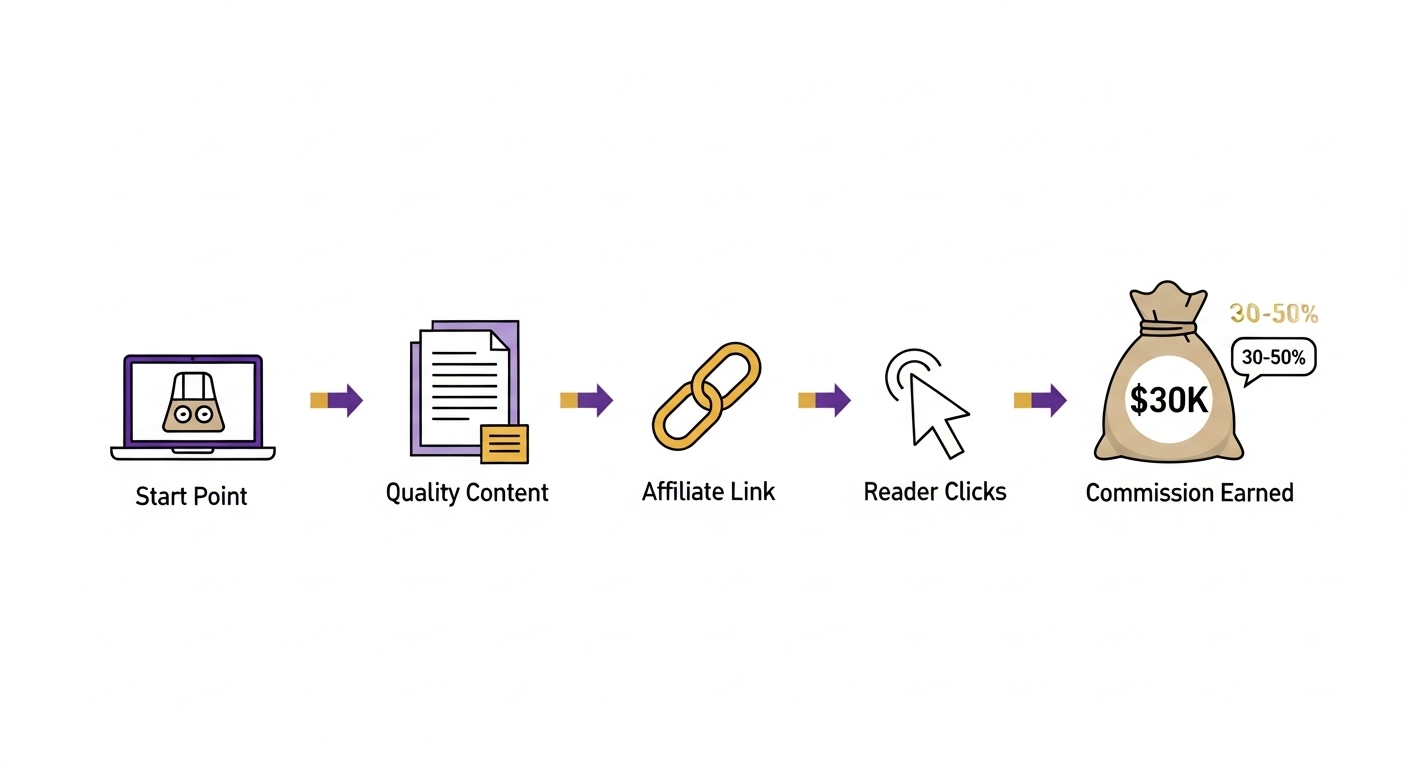
Affiliate marketing has been the go-to passive income stream for bloggers for years – and for good reason. It fits naturally into what most of us already do: writing product reviews, creating comparison guides, or publishing resource pages. You recommend tools, courses, or services you trust, and when your audience buys through your link, you earn a commission.
The technical barrier is low. You don’t need to handle inventory, set up payment gateways, or manage fulfillment. Some affiliate programs even pay recurring commissions, meaning you keep earning as long as your referral stays subscribed. High-ticket programs can be even more lucrative, turning a single sale into hundreds of dollars in commission.
Real Examples & What Works in 2025
In 2025, affiliate marketing is still strong, but the winners are those focusing on niche-specific offers. General Amazon product links don’t convert like they used to, thanks to shrinking commissions. Instead, bloggers are making more with SaaS tools, niche software, and online courses – products that directly serve their readers’ problems.
According to Productive Blogging, affiliate income consistently outperforms ad revenue for many bloggers, with some earning $5,000–$10,000 per month once their site gains traction. The key is choosing programs with generous commissions, using deep links that take readers straight to the exact product, and building funnels through email marketing that nurture readers before the sale.
Challenges & How to Mitigate Them
Of course, affiliate income isn’t risk-free. Competition is fierce. Audiences are wary of endless affiliate links, and platforms regularly change commission structures. (Amazon’s 2020 rate cuts are a painful reminder of how fast things can shift.) Over-reliance on a single affiliate program can leave you exposed.
The solution? Diversify your offers. Combine affiliate promotions with content upgrades, email funnels, or even your own products. And be transparent with your readers – trust drives clicks far more than a scattered list of links.
Affiliate marketing in 2025 is still one of the easiest ways to add passive income to your blog. Just make sure it’s one part of your strategy, not the whole thing.
Passive Income Option #2: Digital Products
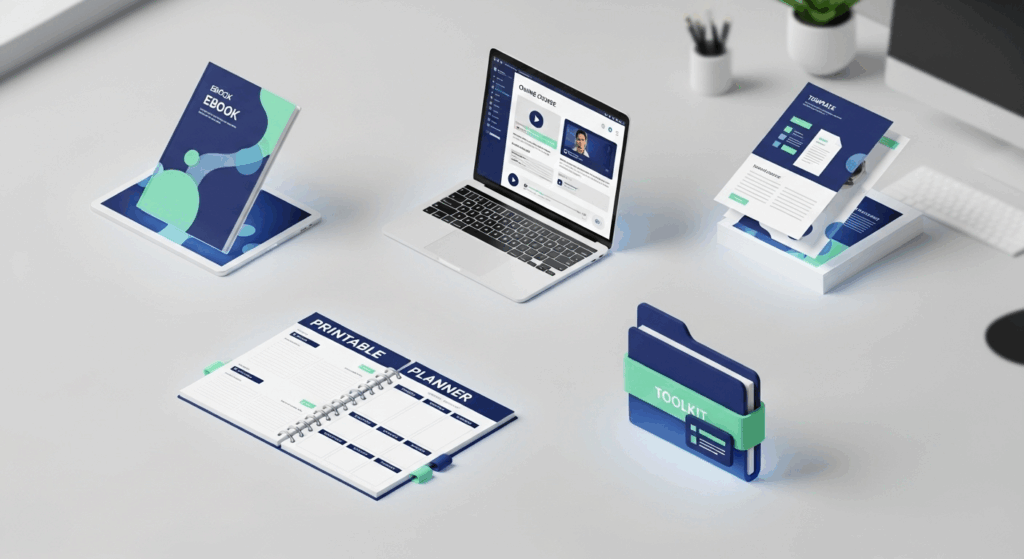
Types of Digital Products That Work for Bloggers
If affiliate programs are about promoting other people’s products, digital products let you flip the script – you create something once and sell it over and over. Popular formats include e-books, online courses, templates, printables, and toolkits. Shopify’s guide to passive income ideas lists digital products as one of the top ways creators are scaling revenue in 2025 because they combine low overhead with high scalability.
The beauty here is ownership. With affiliates, you earn a slice of someone else’s pie. With digital products, the whole pie is yours.
The Path from Creation to Passive Earning
The process looks like this:
- Market research – Validate what your audience actually wants. Run polls, ask your email list, or study what’s already selling in your niche.
- Create an MVP (minimum viable product) – Don’t spend six months perfecting a course. Start with a short guide, a basic template pack, or a workshop replay.
- Build a funnel – Offer a freebie, capture emails, and guide subscribers to your product with automated sequences.
- Automate delivery – Use platforms like Gumroad, Teachable, or ThriveCart so purchases and downloads happen without manual effort.
This is what I call the launch-invest loop. A product launch often brings a spike in sales. The profits can then be reinvested into ads, upgrades, or new products, while your evergreen funnel keeps delivering steady baseline revenue in between launches.
Trade-offs & Common Pitfalls
Of course, digital products aren’t “set it and forget it.” They take significant upfront work to create, and they require periodic updates to stay relevant. You may need to handle refunds or occasional support questions.
Another common pitfall: launching without an email list. An evergreen funnel powered by consistent list growth is what turns a one-time sale into a truly passive stream.
The upside? Once built, digital products can become your blog’s most profitable asset. Many bloggers report $2,000–$20,000 per month in digital product sales once they’ve dialed in their funnels. That’s a level of income affiliate links alone rarely reach.
Passive Income Option #3: Ecommerce with a Done-For-You Store
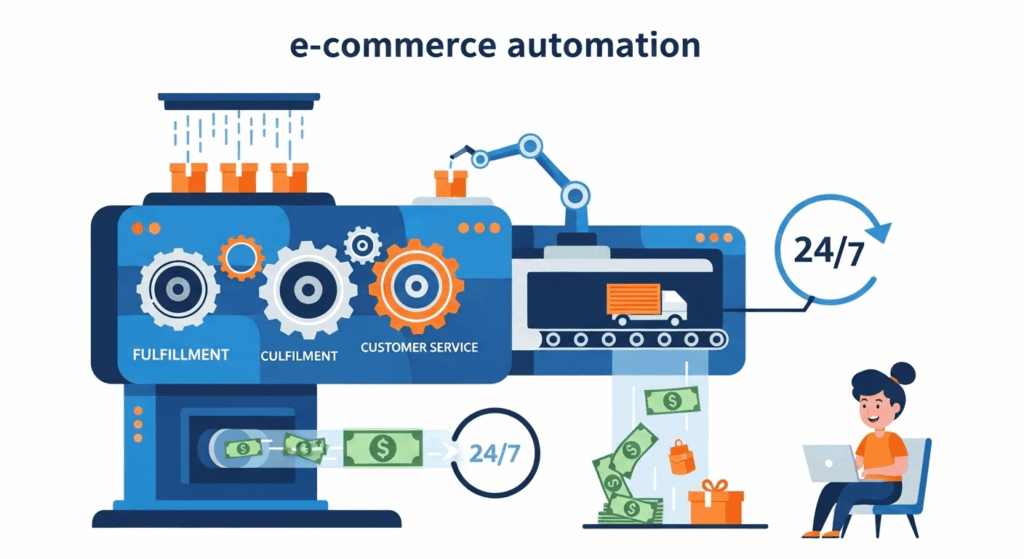
Why This Option Appeals to Digital Entrepreneurs
For years, e-commerce seemed out of reach for bloggers. Product research, inventory, shipping, and customer service felt overwhelming. But in 2025, done-for-you store models have changed the game. You can skip the heavy lifting – no warehouses, no stockpiling boxes in your garage, no worrying about fulfillment.
Instead, you get a ready-made store with preloaded products. All you do is drive traffic through your blog audience, email list, or ads, and the system handles the rest. It’s e-commerce without the grind. For bloggers already building authority in a niche, this can be the perfect complement: you’ve got the audience, now you just add products.
Introducing the Sellvia Free Test-Drive as a Case Study
One standout example is Sellvia’s “Test-Drive a Store Free for 7 Days” offer, covered in Yahoo Finance. Here’s the pitch: you get access to a proven ecommerce store, complete with products, fulfillment, and customer service. During your 7-day trial, you keep 100% of the profits. At the end, you decide whether to buy the store or walk away.
Users on Trustpilot praise Sellvia’s fast U.S. fulfillment, easy product imports, and reliable customer support. Some report strong margins when paired with targeted ads. That said, cautionary voices on forums like Reddit note concerns about niche saturation and whether the model works long-term. Both perspectives matter, and you should treat the test-drive as an experiment – not a guaranteed goldmine.
Step-by-Step: How to Test Your Store in 7 Days
Here's your game plan:
- Day 1-2: Choose and activate your store. Browse Sellvia's catalog and select a niche that interests you or aligns with your existing audience. Activate your test-drive and familiarize yourself with the dashboard.
- Day 3-4: Launch your first ads. Start with a modest budget—$20-50 daily. Test Facebook or Google ads targeting your niche audience. Monitor which products get clicks and engagement.
- Day 5-6: Fulfill orders and track performance. If orders come in, Sellvia handles fulfillment automatically. Your job is monitoring profit margins: ad spend versus revenue.
- Day 7: Analyze and decide. Review your numbers honestly. Did you generate profit? Break even? Lose money while learning? Decide whether to purchase the store or cancel.
Pros, Risks, and Tips for Success
The pros are compelling:
- Extremely low upfront risk with the free test-drive
- Fast setup (hours, not months)
- Hands-off operation once ads are running profitably
- No inventory headaches or fulfillment logistics
But understand the risks:
- Ad spend can quickly eat profits if you don't know what you're doing
- Niche saturation means some markets are overcrowded
- Platform dependency—you're building on someone else's infrastructure
- Requires advertising skills or willingness to learn fast
My tips for success:
Start with a modest ad budget you can afford to lose while learning (say $10–$20/day). Monitor your ROI daily—don't set ads and forget them. Don't scale too fast just because you had one good day. Test, optimize, and scale gradually only after consistent profitability.
Treat this as a side income stream, not your entire business. It works best as a complement to your blog and other passive income streams, not a replacement.
For bloggers, this is the closest you’ll get to e-commerce that runs on autopilot. It’s not zero-effort, but it’s as close as it gets in 2025.
Which Model Should You Try First — and Why
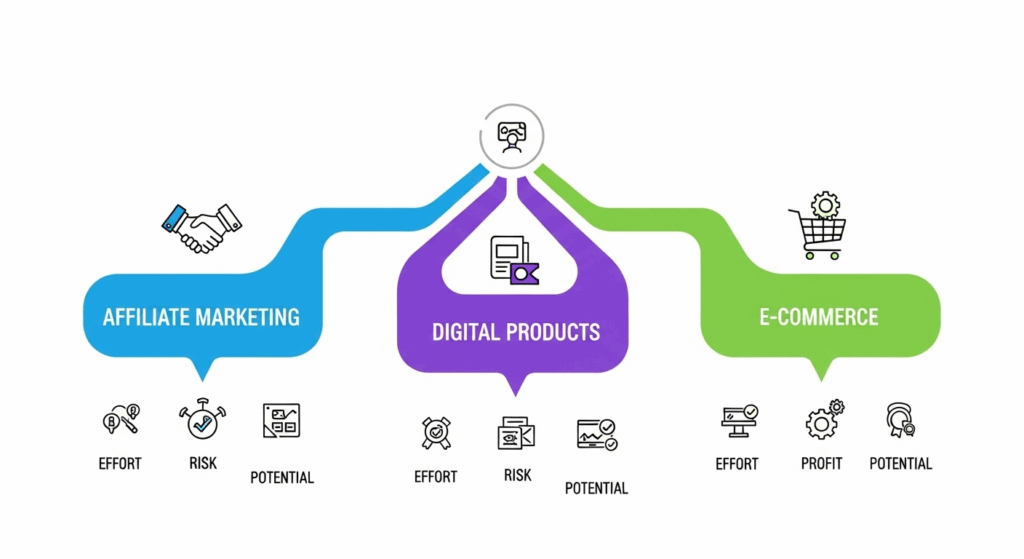
Let's cut through the noise and compare these three models directly. Here’s a quick look at how affiliate marketing, digital products, and done-for-you ecommerce stack up:
| Income Stream | Effort to Set Up | Upfront Cost | Risk Level | Scalability | Ongoing Maintenance |
| Affiliate Programs | Low (hours to days) | $0-50 (content tools) | Very Low | Medium-High | Low (content updates) |
| Digital Products | High (weeks to months) | $100-1000+ | Medium | Very High | Medium (updates, support) |
| Done-For-You Ecommerce | Low (hours) | $0-500 (test + ads) | Medium-High | High | Low-Medium (ad monitoring) |
Each model serves a different purpose in your income portfolio.
Affiliate marketing gives you quick wins with minimal investment. Digital products offer the highest profit margins but require significant upfront work. E-commerce provides scalability without product creation but demands advertising knowledge.
Suggested Strategy for Bloggers in 2025
If you’re wondering where to start, the smart path is gradual. Begin with affiliate programs – they’re the easiest to plug into your content and have almost no upfront cost. Once you’ve built an audience and an email list, layer in digital products. This gives you ownership and higher profit margins.
Finally, experiment with e-commerce as a growth booster. Done-for-you stores like Sellvia’s trial are worth testing, but they should never replace your core blog income. Think of e-commerce as a way to accelerate your growth, not as your only lifeline.
Diversification is the real goal. One stream pays the bills, another scales your reach, and the third gives you upside potential.
How to Test Ecommerce Safely (Without Wrecking Your Finances)
E-commerce is exciting, but it’s also where bloggers can get burned if they move too fast. The key is to treat it like an experiment, not an all-in bet.
Start with small ad budgets – $10–$20 per day is enough to test audiences and see if a store has legs. Don’t spin up multiple stores at once. Test one store, one funnel, one set of ads.
Track your numbers obsessively. Compare ad spend vs. profit daily. Use analytics tools to identify which products and audiences are driving results, and use split testing to refine your ads before scaling.
And here’s the most important part: don’t abandon your blog or your existing income streams. E-commerce should be your sidearm, not your main weapon. Your blog remains the foundation – the traffic source, the authority builder, the consistent income driver.
Handled with discipline, a done-for-you store can add meaningful revenue without draining your finances. But rush in without guardrails, and you risk turning “passive income” into a very active headache.
Test-Drive a Store for Free
Ready to see if e-commerce works for your business?
Sellvia's 7-day free test-drive removes the biggest barrier: risk. You get a fully operational store, run it for a week, keep any profits you generate, and decide whether to continue. No credit card required upfront. Cancel anytime if it's not for you.
Here's the catch: spots are limited. They can only onboard a certain number of test-drive stores at a time to maintain quality and support. If you're curious about adding e-commerce to your passive income portfolio, now's the time to act.
Click here to start your free 7-day test-drive and choose your store from their catalog.
And here's my promise to you: if you use my link to sign up, I'll personally follow up with you during your test period. I'll share the ad strategies that worked for me, help you troubleshoot any issues, and make sure you're getting the most out of your seven days. You won't be doing this alone.
The worst that happens? You test it for free, learn something about ecommerce, and decide it's not for you. The best that happens? You discover a new income stream that runs mostly on autopilot while you focus on content creation.
What have you got to lose?
Conclusion
Diversifying your blog income isn't just smart, it's essential for long-term stability.
We've covered three passive income streams that work for bloggers in 2025: affiliate programs that integrate naturally with your content, digital products that scale infinitely, and done-for-you ecommerce that runs mostly on autopilot.
Each model has its place. Affiliate marketing gets you started quickly. Digital products give you the highest margins. E-commerce offers scalability without product creation.
The game-changer? You can now test the e-commerce path completely risk-free for seven days. No upfront investment in inventory. No long-term commitment. Just a legitimate trial to see if it fits your business.
Don't let your income depend on a single stream. Algorithm changes happen. Affiliate programs restructure. Ad networks adjust policies. The bloggers who weather these storms are the ones who've built multiple revenue sources that support each other.
Try the free test-drive and see for yourself. Take action today, test intelligently, and build the diversified income portfolio that gives you real financial security.
Your future self will thank you.
Frequently Asked Questions
-
How does a blogger make passive income?
A blogger makes passive income by creating content that earns money over time with little ongoing work. Common sources include affiliate marketing, display ads, digital products, sponsored content, and ecommerce stores that run on autopilot. The goal is to publish valuable content once and let it keep generating revenue as traffic grows.
-
What is the highest paying passive income?
The highest paying passive income for most online creators comes from affiliate marketing and digital product sales. Both allow you to earn commissions or royalties repeatedly from one piece of content. Some bloggers also scale income through automated ecommerce stores or online courses that sell 24/7.
-
What type of blogger makes the most money?
Bloggers who focus on profitable niches like finance, technology, lifestyle, or business tend to make the most money. They attract audiences that brands pay well to reach. These bloggers often mix multiple income streams, including affiliate marketing, email lists, and product sales, to grow earnings faster.
-
How to make $1,000 a month passively?
To make $1,000 a month passively, a blogger needs to build consistent website traffic and link it to monetized content. For example, you can combine affiliate links in evergreen posts, sell a small digital product, or add a done-for-you ecommerce store that runs automatically. Over time, small daily earnings add up to reliable monthly income.
-
How much money do beginner bloggers make?
Beginner bloggers usually make between $0 and $500 per month during their first few months. Income grows as traffic increases and monetization improves. With consistent posting, SEO, and the right passive income systems, many bloggers reach $1,000–$3,000 monthly within a year.