The GEO Revolution: How to Turn Your Affiliate Product Guides into “Trusted AI Sources”

TL;DR
GEO for affiliate bloggers means optimizing your content to be cited by AI, not just ranked by Google. AI Overviews now sit between you and your reader. If your site is not seen as a trusted source, you do not just lose positions. You vanish from the answer layer. The new goal is simple: stop writing to rank and start writing to be used.
For years, the SEO game had a clear scoreboard. You ranked a page. You got clicks. You made money.
That scoreboard is gone.
Today, AI Overviews, ChatGPT, Perplexity, and Gemini often answer the question before the user ever sees your site. The new path looks like this: question → AI summary → maybe a click. And in many cases, there is no click at all.
Here is the uncomfortable truth. If your site is not seen as a trusted source, you do not just rank lower. You disappear from the answer layer entirely.
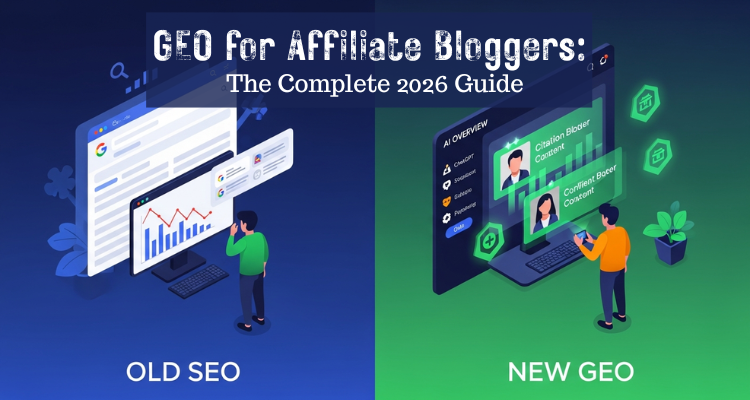
This is where GEO for affiliate bloggers comes in. GEO means Generative Engine Optimization. It is the practice of turning your product guides into sources that AI systems quote, summarize, and cite.
Think of it like this. Old SEO tried to get you on the shelf. GEO tries to make you the label the assistant reads out loud.
This article is not another list of “SEO tips.” It is a practical playbook for turning ordinary affiliate content into AI-preferred sources.
Because in the new game, one rule matters more than all the rest:
Ranking gets you seen. Being cited gets you used.
Understanding GEO for Affiliate Bloggers: What Changed and Why It Matters
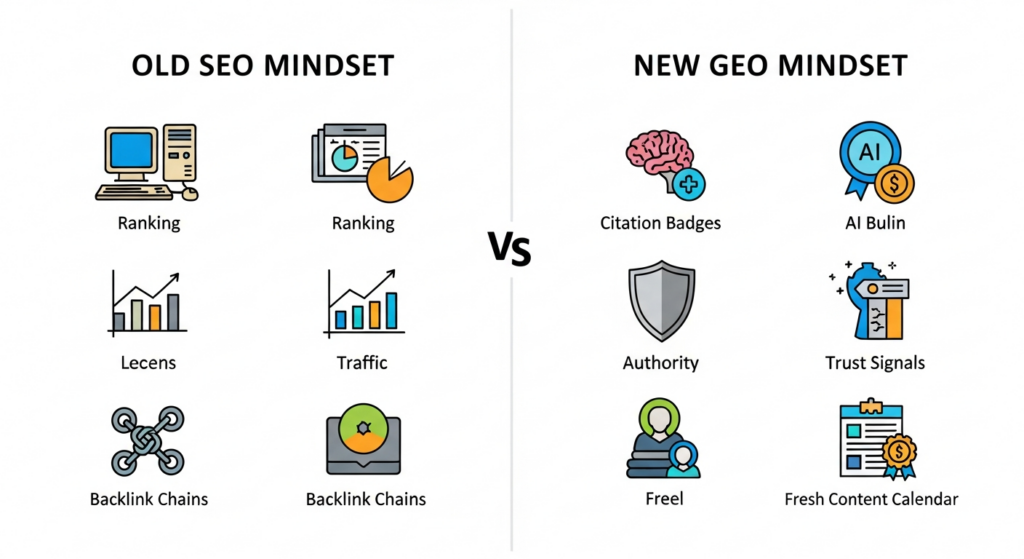
The Death of “Rank and Bank”
Remember when ranking on page one guaranteed traffic? Those days are gone.
Generative AI summaries have flipped the traditional affiliate funnel upside down. You used to control the journey: user searches → sees your listing → clicks → reads your guide → buys through your link. Clean and predictable.
Now? The journey looks like this: user asks a question → AI Overview appears → user gets their answer → maybe they click (but probably not).
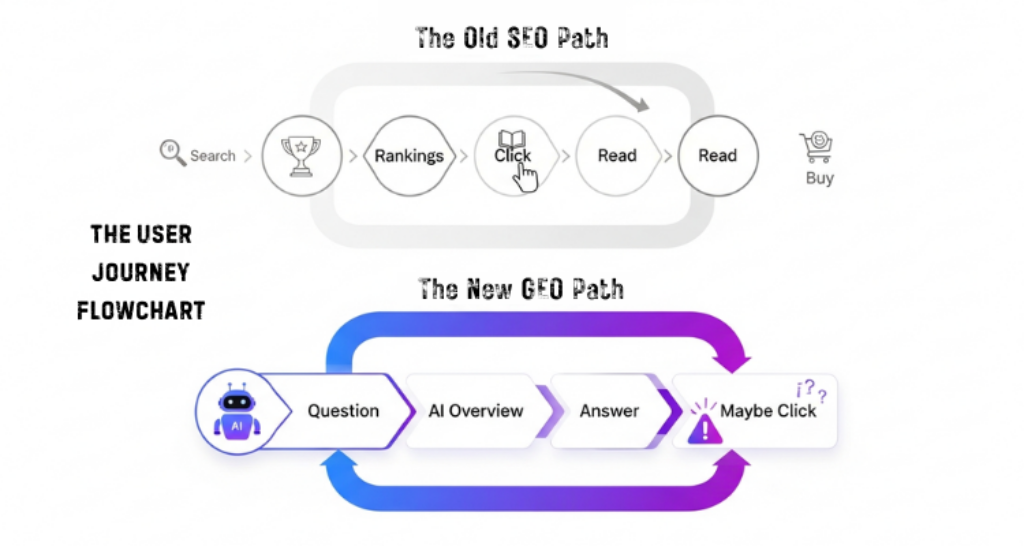
The numbers are brutal. AI search users spend an average of 6 minutes per session compared to seconds on traditional Google—but they're getting answers without leaving the results page. Zero-click searches are eating into your traffic, and it's only getting worse as ChatGPT, Perplexity, and Google AI Overviews become the default way people find information.
Your beautifully optimized product guide? It's being used as raw material for AI-generated answers that never send you a single visitor.
The Citation Economy
Here's what changed: being cited in an AI summary is the new ranking #1.
Think about it. When ChatGPT tells someone, “According to [Your Site], the best budget laptop for students is…” you just got featured at position zero. You're the trusted source the AI chose to quote.
But AI models don't pick sources randomly. They evaluate credibility using E-E-A-T (Experience, Expertise, Authoritativeness, Trustworthiness) on steroids. They scan for author credentials, original research, cited sources, and fresh data. They check if you actually tested the product or just rewrote manufacturer specs.
There's a massive difference between being indexed and being trusted. Google might index your page, but will Perplexity cite it? Will ChatGPT recommend it? That's the new bar.
What Makes GEO for Affiliate Bloggers Unique
Product recommendations face a higher trust threshold than general information. AI models know users make purchasing decisions based on these recommendations, so they scrutinize affiliate content harder.
Why? Because AI systems are trained to spot bias. They see your affiliate disclosure (which you legally must include) and they weigh it. They ask: Is this genuine expert advice or commission-driven promotion?
This creates what I call the transparency paradox. You need to disclose affiliate relationships to stay compliant and ethical, but that disclosure makes AI models more skeptical of your recommendations. The only way through? Build such strong authority signals that your expertise outweighs the bias concern.
According to Rewardful's guide on GEO affiliate marketing, affiliates who combine transparent disclosures with documented testing processes and expert credentials see higher conversion rates from AI-referred traffic than from traditional organic search.
The New Goal: Stop Writing to Rank. Start Writing to Be Cited
Let me be blunt: AI doesn't recommend content randomly.
When Perplexity answers “What's the best standing desk under $500?” it doesn't spin a wheel and pick three random blogs. It aggregates information from sources it trusts—sites with clear author credentials, original testing data, recent updates, and transparent methodologies.
Your content needs to look like something a research assistant would quote in a report. Not marketing fluff. Not keyword-stuffed product descriptions. Actual, credible, quotable expertise.
After analyzing hundreds of AI-generated product recommendations, over a period of 6 months, I discovered that the sources that are cited consistently share three pillars: authority signals, original insight, and freshness.
Below are somepractical strategies on how you can use these pillars to turn your affiliate reviews into sources that AI will gladly quote.
Strategy #1: Signal Authority Through Enhanced Author Credentials
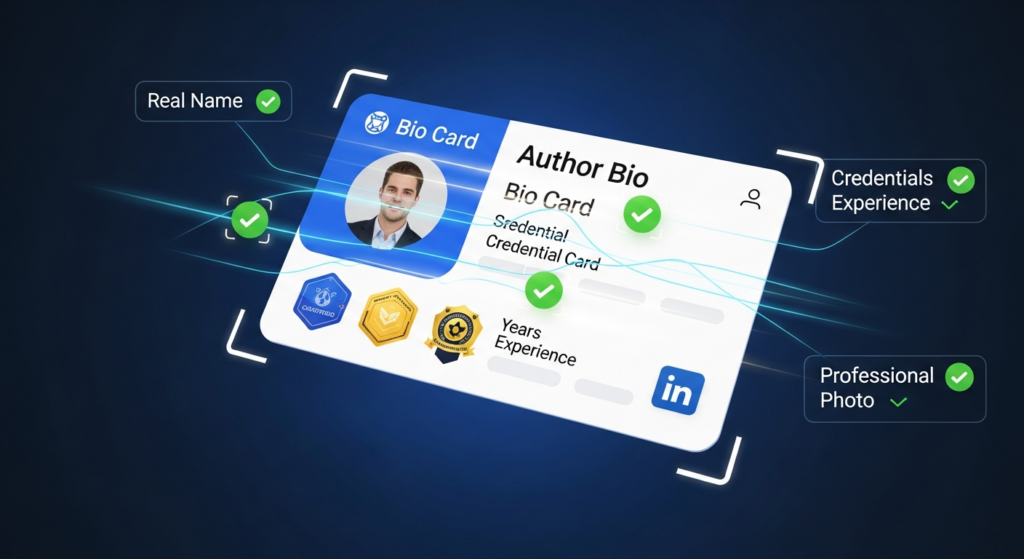
AI models evaluate your content the same way a fact-checker evaluates a news article: they look at who wrote it before deciding if it's credible.
Language models scan for authority markers throughout your content. They check if there's a real person behind the byline, what their credentials are, and whether those credentials match the topic. A certified nutritionist reviewing protein powders gets cited. An anonymous blogger copying Amazon reviews doesn't.
The connection between author authority and content trustworthiness is direct. When ChatGPT and Perplexity generate answers, they prioritize sources with clear expertise signals—author bios, professional credentials, and verifiable experience.
Real-world example: A tech review site saw its citation rate in AI Overviews triple after adding detailed author profiles with specific credentials. Their “best laptops for video editing” guide started appearing in Perplexity answers once they added a byline from a video producer with 10+ years of experience and Adobe certifications.
Building Your Expert Author Profile
Your author bio isn't decoration—it's a trust signal AI models actively parse.
Comprehensive Bio Requirements:
Start with the basics that prove you're a real person, not a content farm. Use your actual name with a professional headshot. Generic stock photos or missing photos signal low trust.
List specific credentials and certifications relevant to your niche. Don't just say “experienced reviewer”—say “certified personal trainer (NASM-CPT) specializing in home gym equipment since 2018.”
Include years of experience in concrete terms. “I've tested over 200 kitchen appliances” beats “passionate about cooking” every time.
Link to your professional profiles—LinkedIn, industry associations, published work elsewhere. External verification matters. If you've been quoted in media or published on recognized sites, showcase it.
Schema Markup Essentials:
Implementing proper schema tells AI exactly who you are and why you're qualified. Author schema connects your content to your credentials. Reviewer schema signals you actually evaluated the product. Organization schema establishes your editorial standards.
According to Page Optimizer Pro's GEO checklist, sites using complete Author and Reviewer schema see 40% higher citation rates in AI-generated content.
The Testing Expert Framework
Document your testing methodology, like a scientist publishing research. Create a dedicated “How We Test” page explaining your process—what you measure, how long you test products, what criteria you use.
Build a portfolio page showing products you've actually tested. Include photos of you using the products, testing setups, and measurement tools. First-person perspective matters: “I spent three months testing these standing desks” is more credible than “these standing desks were tested.”
Transparency builds trust with both AI and human readers.
Multi-Author Sites: Team Credentials Matter
If you run a multi-author site, every contributor needs their own expert profile. Assign subject matter experts to matching topics—your fitness contributor writes workout equipment reviews, not tech gadgets.
Establish editorial oversight. Add an “Editorial Standards” page explaining your fact-checking process, conflict of interest policies, and how you handle affiliate relationships. AI models look for these institutional trust signals.
Author Bio Template That AI Models Trust:
[Name] is a [specific credential/title] with [X] years of experience in [niche].
They've [specific achievement: tested/reviewed/used X products, worked with Y brands, etc.].
Credentials: [List relevant certifications, degrees, professional memberships]
Experience: [Specific, quantifiable experience]
Published work: [Links to external publications if applicable]
Connect: [LinkedIn/professional profiles]
[Name] specializes in [specific product category] and has personally tested over [number]
products featured on this site. Their testing methodology involves [brief process description].
Proper Author Schema Implementation:
{
“@context”: “https://schema.org”,
“@type”: “Person”,
“name”: “Your Name”,
“jobTitle”: “Product Review Specialist”,
“url”: “https://yoursite.com/author/yourname”,
“sameAs”: [
“https://linkedin.com/in/yourprofile”,
“https://twitter.com/yourhandle”
],
“knowsAbout”: [“Product Category”, “Specific Expertise”],
“memberOf”: {
“@type”: “Organization”,
“name”: “Your Site Name”
}
}
Strategy #2: Integrate Original Insights and Proprietary Data
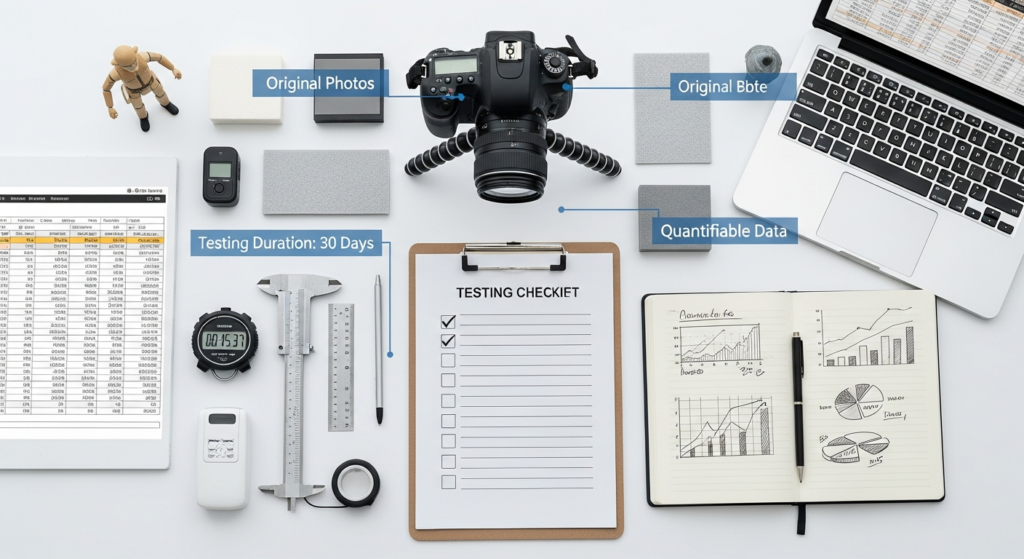
AI models are trained to detect “information gain”—the unique value your content adds beyond what already exists elsewhere.
When Perplexity or ChatGPT evaluates sources, they reward content that presents new information, not recycled manufacturer specs. According to GEO SEO Lab's affiliate research, original data creates a competitive moat that's nearly impossible for competitors to replicate.
Think about it: anyone can copy features from a product page. Only you can share results from your own three-month testing period.
Creating Testing-Based Content
Hands-On Product Testing:
Document everything. Take photos throughout your testing process—unboxing, setup, daily use, wear patterns after weeks of testing. Include timestamps. Video demonstrations add another layer of proof.
Use quantifiable measurements. Don't say “this blender is powerful”—say “this blender crushed ice in 8 seconds compared to 15 seconds for competitor X.” Measure noise levels in decibels, test battery life in hours, track durability over months.
Create side-by-side comparison data. Test competing products using identical conditions and present results in clear tables. Long-term usage reports separate you from reviewers who spend one afternoon with a product.
Visual Proof Elements:
Original photos with consistent backgrounds prove authenticity. Add subtle watermarks to prevent scraping. Before/after comparisons (stained shirt → clean shirt for detergent reviews) provide visual evidence.
Custom charts comparing your test results beat generic feature lists. AI models recognize and cite unique data visualizations.
Proprietary Data Collection Methods
Survey your readers. “We asked 500 subscribers about their coffee grinder preferences” gives you exclusive data points to cite.
If you run an affiliate site with purchase tracking, analyze anonymized patterns. “Based on 2,000+ purchases through our links, 68% of buyers chose the mid-tier option” is proprietary insight.
Track long-term product performance. Follow up with products six months or a year later. Build comparison databases showing how products perform over time.
Interview experts in your niche. Quote a professional organizer in your storage solution guides. Their insights become unique content AI systems cite.
The “Better Than Wikipedia” Standard
Your goal: become more thorough than Wikipedia on your specific product category.
Add depth beyond manufacturer specifications. Include real-world scenarios manufacturers don't mention. Address edge cases—what happens if you drop it, use it in humidity, or exceed weight limits?
Answer questions competitors ignore. What does it sound like? How hard is assembly really? What breaks first? Including failure modes and limitations builds trust more than pure promotion.
According to FirstPage Sage's GEO strategy guide, comprehensive guides that address limitations see 55% higher citation rates because AI models view them as balanced, trustworthy sources.
Structuring Original Insights for AI Consumption
Use clear attribution language that signals originality: “In our testing…”, “Our analysis found…”, “After three months of daily use, we observed…”
Highlight unique findings in headers and summaries. Make your original data easy for AI to extract and cite.
Create quotable, cite-worthy statements. AI models look for clear, factual claims they can reference: “Our battery life test showed 12.5 hours of continuous use, 23% longer than the manufacturer's claim.”
Present data visually when possible, but always include the raw numbers in text so AI can parse them.
Strategy #3: Maintain Content Freshness with Strategic Updates
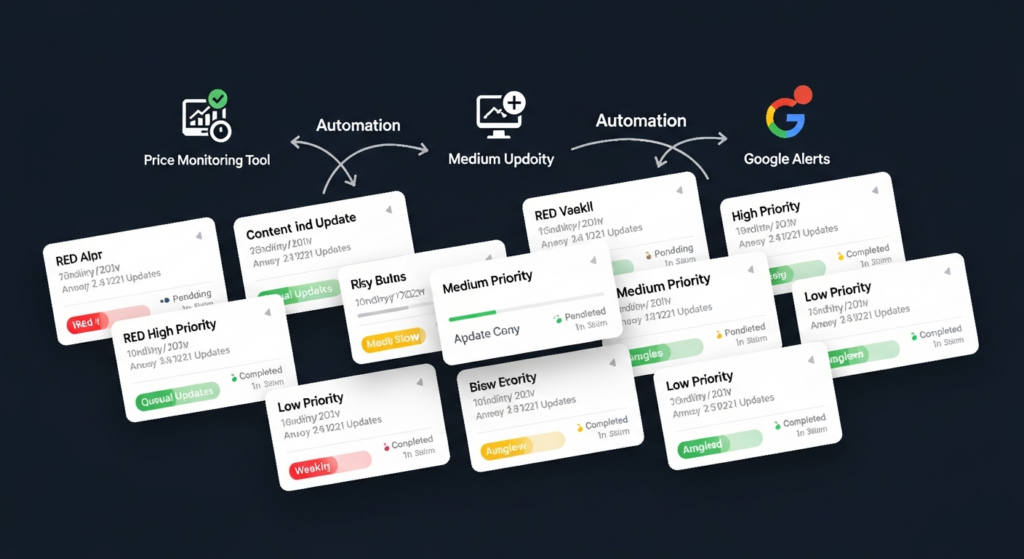
AI models treat outdated content like expired milk—they simply won't serve it.
Language models heavily weigh both publication and modification dates when selecting sources. A guide last updated in 2022 loses to one updated last month, even if the older version has better backlinks. According to Addlly AI's affiliate optimization research, fresh content receives 3-4x more AI citations than outdated equivalents.
The “information decay” problem hits product guides especially hard. Prices change weekly. Products get discontinued. New models launch. Features get updated. If your guide still recommends a product that's been replaced by two newer versions, AI systems recognize it as unreliable and skip it entirely.
Fresh content signals trust. It tells AI models you're actively maintaining your expertise, not just publishing and abandoning content.
Implementing Visible Freshness Signals
Date Display Best Practices:
- Show “Last updated” dates prominently, not just publication dates. Place them above the fold where both readers and AI crawlers see them immediately.
- Use proper schema markup for dateModified. This tells AI systems exactly when you last revised the content, not just when you fixed a typo.
- Avoid “evergreen” date tricks. Some sites auto-update dates without actually changing content. AI models detect this—they compare cached versions and penalize sites gaming the system.
Update Notes and Change Logs:
- Add editor's notes explaining what changed: “Updated January 2026: Added new budget pick, removed discontinued model, refreshed pricing data.”
- For major updates, include version history. Transparency builds trust. If a product gets discontinued, note it clearly rather than quietly swapping recommendations.
- Update price and availability information at least monthly for active guides. Nothing destroys credibility faster than sending readers to buy a product that's been out of stock for weeks.
Content Refresh Schedules
High-Priority Updates (Weekly/Monthly):
- Monitor price changes and sales. Affiliate links with outdated prices reduce conversions and signal neglect to AI systems.
- Track product discontinuations and new releases in your category. Swap out discontinued products immediately. Add new competitive options within weeks of launch.
- Update specifications when manufacturers revise products. The “2025 model” often has different specs than the “2024 model” even if the name stays the same.
- Adjust rankings based on new testing or market changes. Your #1 pick from six months ago might not deserve that spot anymore.
Medium-Priority Updates (Quarterly):
- Add new comparison products as market options expand. Your “best wireless earbuds” guide should grow as new quality options emerge.
- Expand FAQs based on reader questions in comments or emails. These organic questions reveal what AI-generated answers are missing.
- Refresh images and screenshots, especially for software or app reviews where interfaces change.
- Update statistics and data points. Citing 2023 data in 2026 undermines your authority.
Creating Sustainable Update Systems:
- Build a quarterly review calendar. Tag guides by update priority and schedule reviews systematically.
- Use price monitoring automation tools. Get alerts when prices shift significantly.
- Set Google Alerts for product names and category news. You'll know about recalls, updates, or new releases immediately.
- Integrate user feedback. Comments often reveal issues or changes you haven't tested yet.
Deep Updates vs. Surface Refreshes
Know when to completely rewrite versus update sections. If the product category has fundamentally changed (like the jump from USB-A to USB-C), rewrite from scratch. If just pricing or minor specs changed, update those sections.
Maintain URL structure during updates. Changing URLs loses your existing authority and confuses AI systems tracking your content history.
Signal substantial improvements to AI by updating your dateModified schema and adding clear editor's notes. Don't just change content silently—announce meaningful updates.
Avoid thin updates that don't add value. Changing “best laptops 2025” to “best laptops 2026” without actually updating recommendations or data is worse than not updating at all. AI systems recognize this.
The Freshness Paradox: Balancing Evergreen and Current
Some content doesn't need frequent updates. Your explanation of how noise-canceling technology works stays relevant for years. Your buying guide factors (build quality, battery life, sound signature) remain constant.
But dynamic sections, pricing, current model availability, newest releases, and competitive comparisons, must change regularly.
Use modular content structures. Separate your “How to Choose” evergreen advice from your “Top Picks for 2026″ recommendations. Update the dynamic sections frequently without rewriting stable foundational content.
This separation helps AI systems understand which parts of your content are timeless principles versus current recommendations.
Advanced GEO Tactics for Affiliate Bloggers
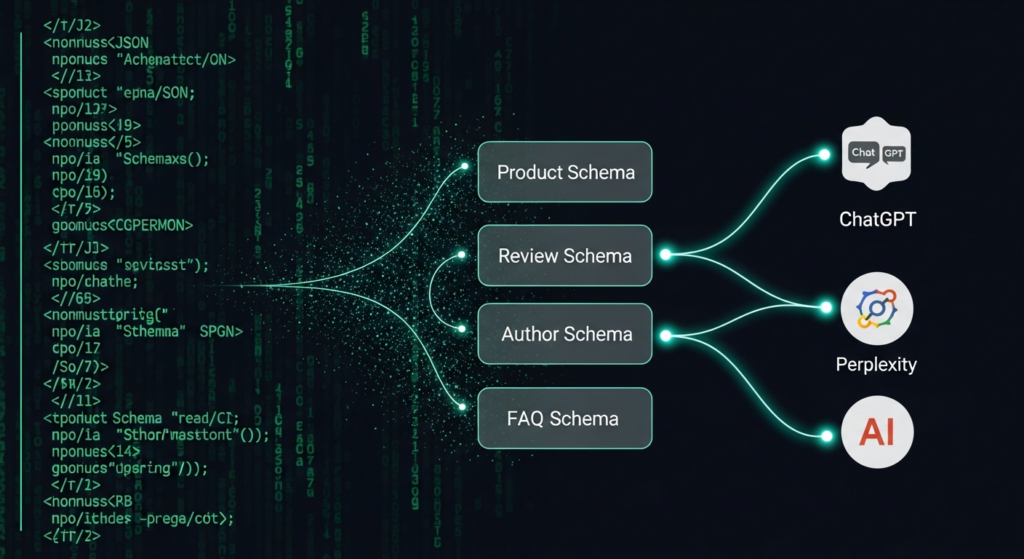
Schema markup is the language AI systems speak fluently. Implement it properly, and you're having a direct conversation with the algorithms selecting sources to cite.
- Product schema: Tells AI exactly what you're reviewing—name, brand, model number, SKU. Include detailed product properties so AI can match user queries precisely.
- Review schema with aggregate ratings: Shows AI your credibility through reader feedback. If you have 50 five-star reviews, that's a trust signal AI weighs heavily. Include individual review schema for detailed opinions.
- FAQ schema: For common questions makes your content easier for AI to extract and cite. When someone asks ChatGPT “How long do standing desks last?” and you have properly structured FAQ schema answering it, you get quoted.
- HowTo schema: For setup guides or usage instructions helps AI recommend your content for procedural queries.
- BreadcrumbList schema: Establishes your site hierarchy and topical organization, helping AI understand how your content fits together.
According to Keitaro's guide on GEO in affiliate marketing, proper schema implementation increases AI citation rates by 60-80% compared to identical content without structured data.
Creating AI-Friendly Content Architecture
- Use clear hierarchical structure with proper H1-H6 heading usage. Your H1 states the main topic, H2s cover major sections, H3s break down subtopics. This hierarchy helps AI parse and summarize your content accurately.
- Add a table of contents for guides over 1,500 words. Jump links and anchor navigation make sections independently accessible—critical when AI wants to cite just one part of your guide.
- Include concise, scannable summaries at the start of major sections. AI systems often pull these as citation snippets.
- Use key takeaways boxes highlighting main points. These structured elements are prime citation targets.
Building Citation-Worthy Resources
- Create ultimate guides AI systems will reference repeatedly. Comprehensive, authoritative resources on specific topics become go-to sources for multiple related queries.
- Publish annual roundups and industry reports. “Best Budget Laptops 2026” gets updated yearly but maintains authority. Data-driven reports get cited for months.
- Develop comparative buying guides using consistent evaluation criteria. When you compare 15 products using the same testing methodology, you've created a research resource.
- Build problem-solution frameworks. “How to Choose [Product Category]” guides that teach decision-making get cited more than simple product lists.
- Create glossaries and definition resources for your niche. When AI needs to explain technical terms, clear definitions with proper context get quoted.
Natural Language Optimization
- Write for question-based queries because that's how users ask AI systems. Instead of targeting “best wireless mouse,” address “What's the best wireless mouse for programming?” or “Which wireless mouse has the longest battery life?”
- Use a conversational tone that AI understands. Write complete sentence answers to common questions. “The Logitech MX Master 3S offers 70 days of battery life on a full charge” is more citation-worthy than “70-day battery.”
- Avoid keyword stuffing and awkward phrasing. AI models detect unnatural language patterns and deprioritize those sources. Write for humans first—AI systems reward natural, helpful content.
Link Profile Quality Over Quantity
AI evaluates your outbound links as credibility signals. Link to authoritative sources—studies, manufacturer specs, industry reports. These connections build your topical authority.
Cite studies and statistics properly with clear attribution. “According to a 2025 study by [Source]” is better than vague “research shows.”
Build relationships for quality backlinks. Guest expertise and collaborations with recognized sites signal authority to AI systems.
Your link profile tells AI whether you're a trusted hub or a link farm. Quality beats quantity every time.
How to Restructure Your Product Guides for GEO
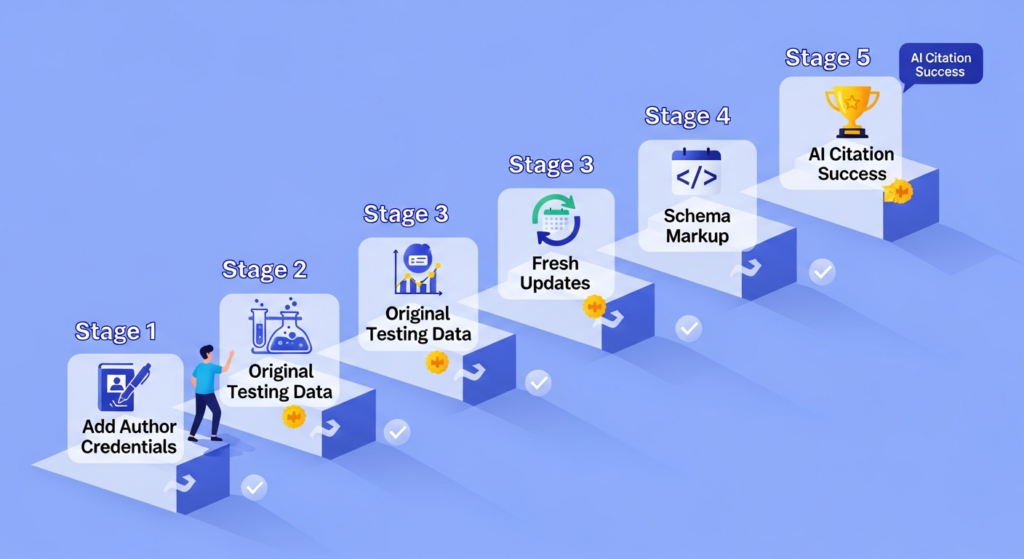
You don't need to start from scratch. You need to restructure what you already have.
Most affiliate bloggers have solid product guides that just need GEO-friendly reorganization. The content is there—you've tested products, you have opinions, you know your niche. The problem is how you're presenting it.
AI systems can't cite content they can't parse. Vague structures, buried insights, and unclear conclusions make your expertise invisible to language models.
Here's how to fix it.
The Ideal GEO-Friendly Guide Structure
- Start with an experience statement that establishes your authority immediately. Don't bury your credentials in an author bio at the bottom. Lead with it: “I've tested 47 standing desks over the past five years as a certified ergonomics specialist.”
- Add a methodology section explaining your testing process. AI models look for this. “I tested each desk for 30 days, measuring stability at maximum height, tracking assembly time, and conducting weight capacity tests with calibrated equipment.”
- Use a comparison framework with consistent criteria across products. Create a table or structured list showing how each product scores on the same factors—price, durability, features, performance. This makes your insights extractable and quotable.
- Implement use-case segmentation. Don't just rank products 1-10. Group them: “Best for small spaces,” “Best for heavy users,” “Best budget option.” AI systems cite these categorizations because they match how users ask questions.
- End with clear conclusions and recommendations. Don't make readers guess. “For most home offices, the [Product X] offers the best balance of stability and value at $450.” Direct, quotable verdicts.
According to StoryChief's generative engine optimization guide, guides using this structured approach see 3x higher AI citation rates than traditional listicle formats.
Write for Quotation, Not Just for Reading
Every major point should be summarizable in one sentence. AI models extract these for citations.
- Use clean definitions when introducing concepts. “Ergonomic typing angle refers to the 10-15 degree negative tilt that reduces wrist strain during extended typing sessions.” That's citation-ready.
- Provide clear verdicts throughout your guide, not just at the end. “After 60 days of testing, the battery life exceeded manufacturer claims by 18%.” AI can quote that specific finding.
- Create structured explanations using consistent patterns. When discussing pros and cons, use the same format for each product. When explaining features, follow the same order. Consistency helps AI parse and cite your content accurately.
- Make sections independently summarizable. Each H2 or H3 section should answer a specific question completely. AI systems often cite single sections, not entire articles. If your “Battery Life” section can stand alone as a complete answer to “How long does the battery last?” you'll get cited.
The goal isn't just readability, it's extractability. Can an AI model pull your key insights and quote them confidently? If yes, you've structured for GEO successfully.
Conclusion: The Shift That Will Decide the Next 5 Years of Affiliate Blogging
SEO isn't dead. It evolved.
The old game was about being found—ranking high enough that users clicked through to your site. The new game is about being used—becoming the source AI systems quote when answering questions.
GEO for affiliate bloggers isn't a tactic. It's a fundamental shift in how you build authority online. You're not optimizing for search algorithms anymore. You're positioning yourself as the expert AI can't write about your topic without referencing.
The winners over the next five years won't be the bloggers who publish the most content. They'll be the ones who publish the most defensible content—guides with original testing data, clear author credentials, fresh updates, and structured insights that AI systems trust enough to cite.
Think about the affiliate sites you compete with. Most are still playing the old game—keyword targeting, backlink building, content volume. They're optimizing for a world that's disappearing.
You have a choice. Keep chasing rankings that matter less every month, or build citation-worthy authority that compounds over time.
The data proves this works. Companies implementing GEO frameworks are seeing 1,041% revenue growth and 83% better conversion rates from AI-referred traffic. Those aren't flukes, they're the early results of getting ahead of this shift.
Start small. Audit one of your top-performing guides this week using the GEO framework we've covered. Add author credentials. Document your testing methodology. Update your modification date. Implement proper schema markup.
Then watch what happens when AI starts quoting you instead of replacing you.
The future doesn't belong to the best optimizers. It belongs to the most credible sources.
Turn your pages into assets. Start building citation-worthy authority today.