AI SEO Tools for Affiliate Marketers: Your 2025 Optimization Stack

Are You Still Playing SEO Like It's 2020? Well, I hate to inform you that you’re already decades behind the competition. Search changed dramatically in 2025. According to the Q3 2025 Forrester Wave™ SEO Solutions report, there’s a major shift in what brands need to succeed in AI-driven search.
Statistics already show that AI Overviews now appear in over 13% of all searches, up 72% since January. This is expected to become worse with the official launch of AI Mode. Gartner's 2024 prediction that search traffic would plummet 25% by 2026 is already playing out. SEO experts who laughed it off are not laughing anymore. Some sites have already lost 25%, if not more!
The brutal truth before us, as affiliate marketers, is that page rankings are dead. Traditional SEO tactics – keyword stuffing, link building, technical tweaks – will not cut it anymore. AI-powered search engines now dominate how people discover products and services. They aren't just Googling anymore; they're asking ChatGPT, Perplexity, and Gemini for product recommendations.
The implication? Your beautifully optimized blog post means nothing if AI engines can't find, understand, or recommend your content. To survive and thrive in this new search era, you need AI SEO tools that optimize your content for both human readers and artificial intelligence.
In this post, you will learn actionable strategies and discover a practical “AI Optimization Stack” to ensure your content gets found and quoted by AI.
Let's dive in.
Key Takeaways:
- The SEO landscape demands a proactive shift from traditional methods to AI-centric strategies.
- Focus your efforts on getting your content included and quoted in AI summaries and responses.
- Utilize the right stack of tools for technical setup, content generation, and brand amplification.
- Consistently demonstrate Expertise, Experience, Authoritativeness, and Trustworthiness (E-E-A-T).
- Build a network of branded signals across multiple platforms to ensure AI can validate your presence wherever it's looking.
Understanding the AI Search Era: What's Changed for SEO?
As an affiliate marketer, you might feel like the ground beneath your feet is shifting with every new AI announcement. Well, you're not wrong. The search landscape is fundamentally different from what it was even a year ago, and understanding these changes is the first step to staying competitive. We're no longer just optimizing for blue links; we're optimizing for AI.
What are AI Overviews, and how do they impact organic visibility?
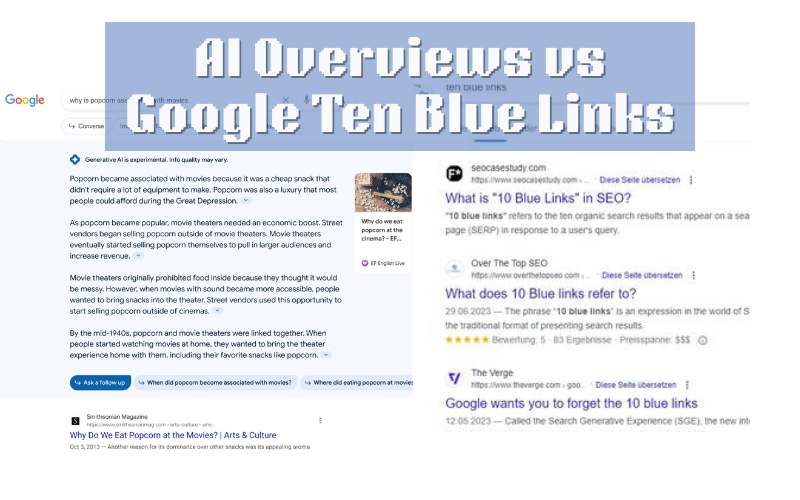
AI Overviews, also known as AI-generated answers or Search Generative Experience (SGE), are rapidly becoming a dominant force in search results. These AI-generated summaries pull information from multiple sources to answer complex queries directly on the search page.
The impact on affiliate marketers is brutal. Traditional organic listings now get pushed below the fold, receiving fewer clicks as users find their answers without leaving Google. Recent stats indicate that AI Overviews appear in 13.14% of searches – that's millions of lost clicks daily.
But here's the opportunity: AI Overviews still cite their sources. If your content provides comprehensive, well-structured answers to user queries, you can get quoted and linked within these summaries. Meaning the game has shifted from ranking #1 to becoming the authoritative source AI engines trust and reference.
How does semantic search enhance user intent understanding?
Semantic search is AI's secret sauce for truly understanding what a user wants. AI-powered search engines, like ChatGPT and Perplexity, don't just match keywords; they understand context, nuance, and user intent at a deeper level.
When someone searches “best affiliate marketing tools,” traditional search looks for those exact words. AI search understands they're likely comparing software options, want specific features, pricing details, and real user experiences.
This means your content needs to be comprehensive. Instead of targeting single keywords, you need to cover entire topics thoroughly. Answer related questions, provide context, and address follow-up concerns users might have.
Why is E-E-A-T more critical than ever in an AI-driven world?
In this AI-driven world, E-E-A-T (Expertise, Experience, Authoritativeness, and Trustworthiness) isn't just a guideline; it's a non-negotiable requirement. AI engines prioritize high-quality, trustworthy information from authoritative sources. For us, as affiliate marketers, this means we need to actively demonstrate our E-E-A-T. We can do this by:
- Expertise: Showcasing deep knowledge in your niche through detailed product comparisons and technical insights
- Experience: Sharing personal testing results, case studies, and hands-on product usage
- Authoritativeness: Building citations, mentions, and backlinks from reputable sources in your industry
- Trustworthiness: Maintaining transparent affiliate disclosures, accurate information, and consistent brand messaging
AI engines can detect thin, generic content instantly. They reward sites that provide genuine value and demonstrate real expertise in their field.
Building Your 2025 AI SEO Tools Stack
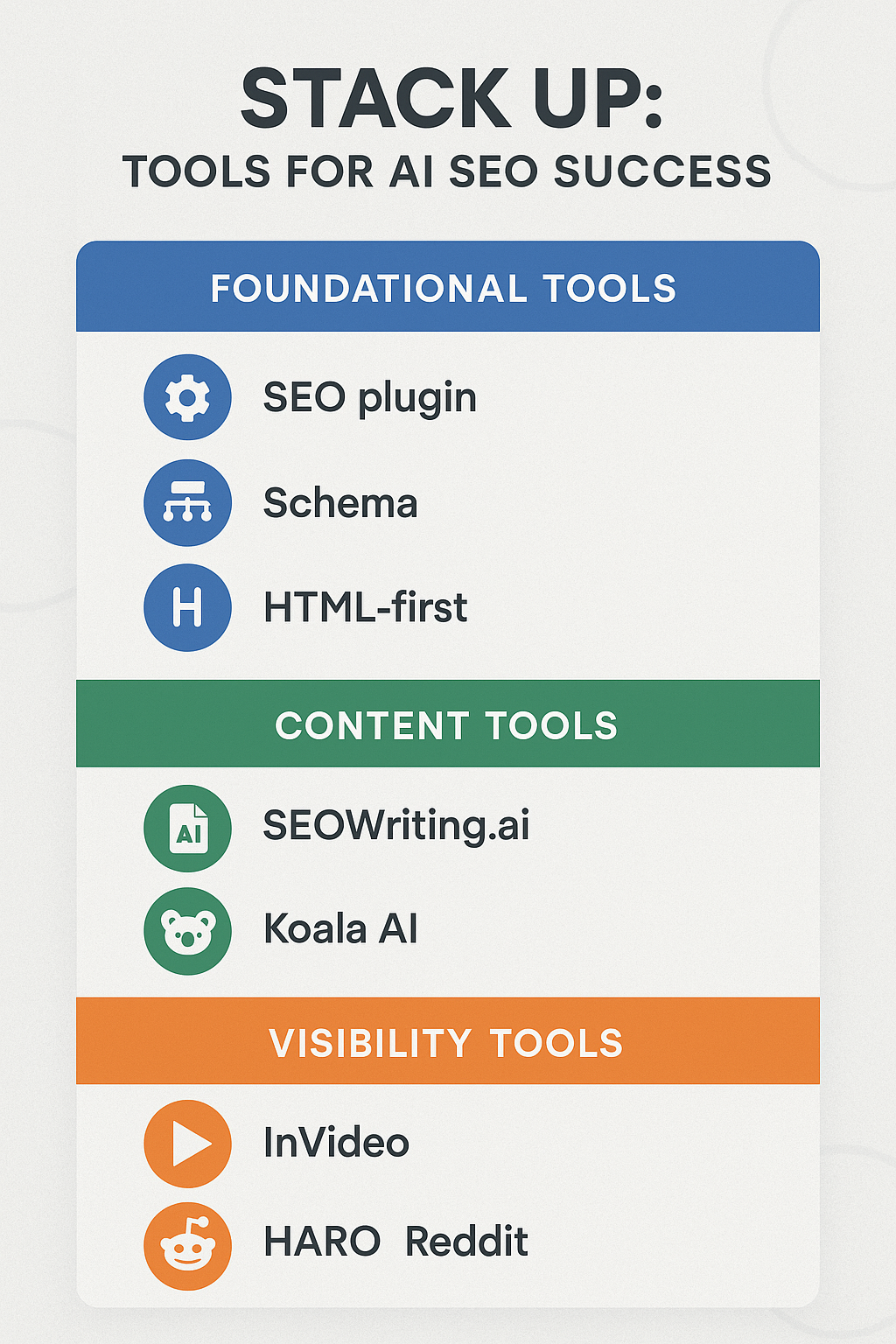
Now that we understand the shifting sands of AI search, it's time to get practical. As an affiliate marketer, your success hinges on having the right AI SEO tools in your arsenal. We're talking about a stack that doesn't just help you rank on Google but ensures your content is discoverable and quotable by AI Overviews and other conversational AI platforms. This isn't just about survival; it's about playing offense.
1. Foundational Tools & Technical Setup
Before you dive into content creation, you need a solid technical foundation. Think of it as preparing your site to be easily read and understood by both traditional search crawlers and advanced Large Language Models (LLMs). This initial setup is crucial for your AI search visibility.
First, you need a robust SEO plugin. I recommend Rank Math or SEOPress. These aren't just for basic SEO; they are essential for implementing crucial schema markup, generating accurate sitemaps, and managing your llms.txt and robots.txt files. Properly configured, these tools tell AI exactly what your site is about and what content it should focus on.
Next, prioritize HTML-first site architecture. This means avoiding overly JavaScript-heavy themes that can slow down your site or make it difficult for AI to fully crawl and understand. A fast-loading, clean HTML structure ensures optimal indexability. We want to make it as easy as possible for AI to process your valuable affiliate content.
Finally, embrace Schema Everywhere. Schema markup is a powerful way to tell search engines and AI exactly what kind of content is on your page. Rank Math is great for this, or you can leverage AI like ChatGPT to generate precise schema for your products, reviews, and FAQs. This structured data helps AI extract entities and key information directly, making your content more likely to appear in AI summaries.
Our goal here is simple: make your site perfectly legible and indexable by both traditional crawlers and LLMs, laying the groundwork for your AI SEO tools to shine.
2. Content Creation & Optimization Stack
Once your technical foundation is solid, the next critical step for affiliate marketers is mastering content creation and optimization for AI. This stack of AI SEO tools and strategies is all about producing content that Large Language Models (LLMs) can easily digest, extract relevance from, and ultimately present in AI Overviews.
First up, consider tools like SEOWriting.ai. Scaling quality content is the biggest challenge I see affiliate marketers face. You need volume, but AI engines punish thin, generic content ruthlessly. This AI-powered content creation tool understands affiliate marketing better than generic writing tools. It generates pre-briefed, SEO-aligned blog drafts that include product comparisons, pros/cons sections, and natural affiliate link placements.
I've used SEOWriting.ai to produce 50+ affiliate reviews monthly. The content requires minimal editing and ranks consistently in AI search results.
Next is Koala AI. This tool excels at building content silos – interconnected articles that establish topical authority. It analyzes your niche and suggests related topics, creating comprehensive coverage that AI engines recognize as authoritative.
To win with the AI-powered search engines, a highly effective listicle strategy is to use high-converting formats like:
- “Best [Product] for [Use Case] in 2025”
- “Top [Number] [Product Category] Compared”
- “[Product] vs [Competitor]: Complete Guide”
This format naturally aligns with commercial investigation search intent, and AI models prefer this type of structured content for extracting entities and relevance.
Focus on these AI-friendly formats:
- Product roundups with detailed comparisons
- Step-by-step tutorials with clear outcomes
- Buyer guides addressing specific pain points
Finally, implement a rigorous freshness protocol. Stale content kills AI visibility. I update my top 20 pages quarterly, adding new products, removing discontinued items, and refreshing statistics. Delete thin pages that don't serve users; they drag down your entire site's authority.
🧠 Goal: Create high-intent content that LLMs can extract entities and relevance from, making your affiliate content the definitive answer.
3. Brand & Entity Visibility Tools
Beyond creating great content, your success in the AI Search Era hinges on making your brand a recognizable, authoritative entity. This isn't just about links anymore; it's about training Large Language Models (LLMs) to see your brand as a trusted source in your niche. This involves leveraging a diverse set of AI SEO tools and strategies to amplify your presence across the digital landscape.
One powerful tactic is transforming your existing content into varied formats. You can use InVideo to turn your affiliate blog posts into branded videos, complete with captions and voiceovers. This not only broadens your reach but also provides more signals for AI to recognize your brand across different content types. Remember, AI is looking for comprehensive information, and video is a huge part of that.
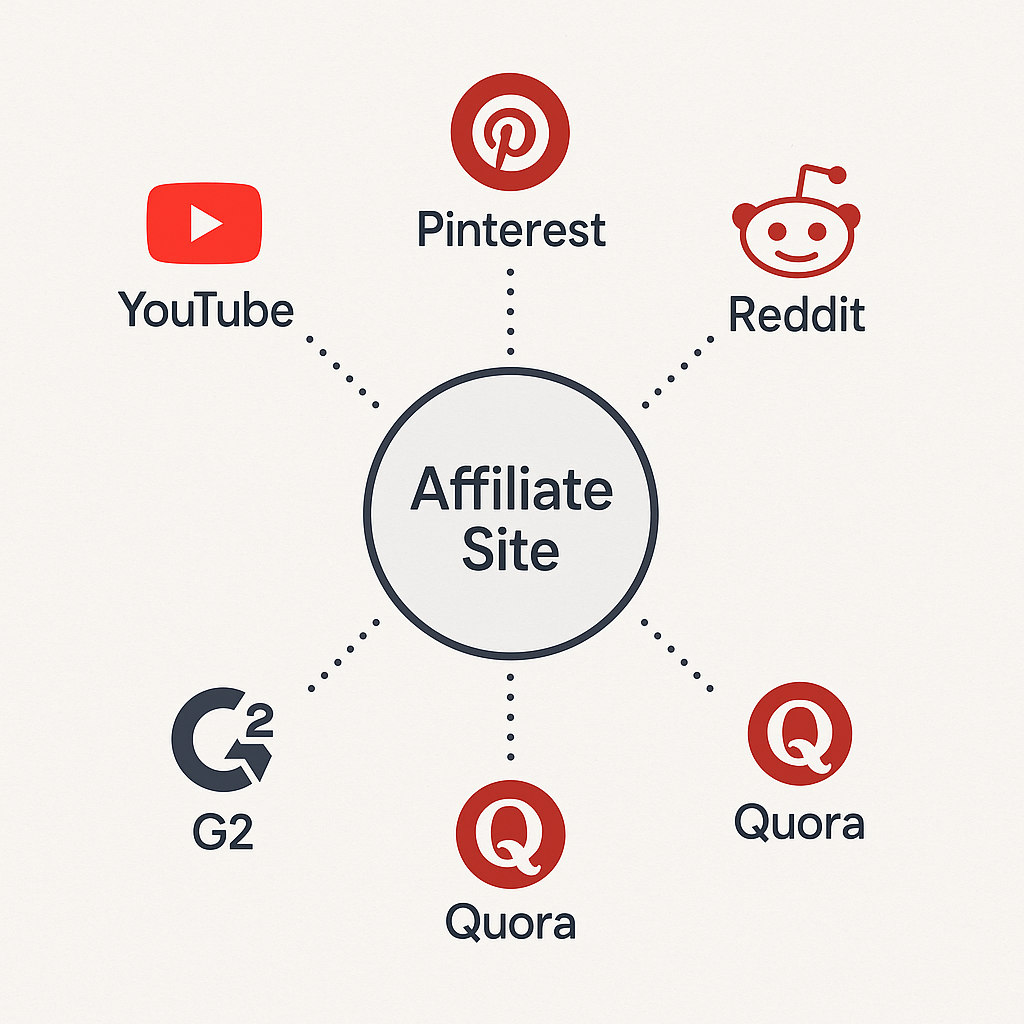
Furthermore, actively seek out mentions and engagement on other platforms. Establish your authority across these channels:
- Podcast mentions: Pitch yourself as a guest expert
- YouTube descriptions: Include detailed product breakdowns
- Reddit threads: Answer questions with genuine expertise
- Quora responses: Provide comprehensive answers linking to your content
These cross-platform signals reinforce your brand's presence and expertise, helping AI connect your entity with specific topics.
Don't underestimate the power of traditional listing sites. Submit to relevant directories:
- G2 (for B2B products)
- Trustpilot (for e-commerce)
- Niche-specific directories in your industry
These platforms act as strong trust signals for both users and AI, validating your brand's legitimacy and authority.
Finally, work to get cited in listicles and “best tools” roundups. Tools like HARO (Help A Reporter Out), strategic niche outreach, and even AI-generated PR pitches can help you secure mentions. When other authoritative sites reference your brand, it's a huge boost for entity recognition and topical authority in the eyes of LLMs.
🧠 Goal: Train LLMs to recognize your brand as an authoritative entity in your niche, making it a go-to source for AI-generated answers.
4. Cross-Platform Signal Amplification
In the AI Search Era, your brand's digital footprint needs to extend far beyond your own website. For affiliate marketers, cross-platform signal amplification is about strategically using various online channels not just for direct traffic, but for reinforcing your brand and entity in the eyes of AI. Instead of treating social platforms as simply traffic sources, you should see them as brand validation systems that AI engines use to verify your authority.
Choose platforms based on your niche and audience:
- Pinterest: Visual niches like home decor, fashion, or fitness products
- YouTube: Trust-building through detailed product demonstrations and reviews
- Reddit: Authentic product discussions and community-driven recommendations
Your goal isn't driving clicks—it's reinforcing your brand entity across the web. When AI engines crawl these platforms, they need to see consistent messaging and expertise.
When you post content on these external platforms, optimize it for AI understanding. Use these tactics to maximize AI visibility with these tactics:
- Upload video transcripts to YouTube for better content indexing
- Add schema markup to social media profiles
- Include strategic backlinks to your affiliate site in bio sections
- Cross-reference your content across platforms
This linking strategy helps AI connect the dots between your various online presences and your main hub.
Finally, implement a robust cross-pollination strategy for your content:
- Blog post → YouTube video → Pinterest infographic → Reddit discussion
- Email newsletter content → Social media posts → Blog updates
- Product reviews → Video testimonials → Social proof posts
When AI engines find your brand mentioned consistently across platforms, they develop confidence in your authority and are more likely to recommend your content.
🧠 Goal: Build a network of branded signals AI can validate across multiple sources
5. New KPIs for AI-Driven Affiliate SEO
The traditional SEO metrics like keyword rankings and organic traffic that we've relied on for years, while still relevant, no longer tell the whole story for affiliate marketers. In the AI Search Era, we need to shift our focus to new KPIs for AI-driven affiliate SEO.
Today, our priority should be more on visibility in AI answers. This means adapting our measurement strategies to truly understand our impact on AI-powered search engines. And this requires new measurement approaches.
First, closely monitor monthly branded search volume in Google Search Console. Growing branded searches indicate increasing authority and trust, key signals AI engines use for recommendations.
I track branded searches for my affiliate sites monthly. A 20% increase typically correlates with improved AI visibility within 60 days.
Second, test your brand visibility in AI platforms:
- Ask ChatGPT about your niche and see if you're mentioned
- Check Perplexity for product recommendations in your category
- Monitor Google's SGE (Search Generative Experience) for brand inclusion
Your inclusion in AI summaries is the ultimate validation that AI views your information as authoritative and relevant.
Third, track mentions in Industry Content:
- “Best affiliate marketing tools” articles
- “Top [your niche] experts” lists
- Industry roundups and comparison guides
Use Google Alerts and Mention.com to monitor brand mentions across the web. When other authoritative sites include your brand or recommendations in their roundups, it signals to AI that you are a recognized entity within your niche.
Finally, validate your structured data using tools like Google's Rich Results Test, Schema.org validator, and NLP analysis tools to confirm entity extraction. Monitor how AI engines interpret your brand entity. Tools like Semrush's Brand Monitoring can track entity recognition improvements.
When your structured data is correctly implemented, it makes it easy for AI to understand the core entities and relationships within your content. The right AI SEO tools will help you achieve this, ensuring your content is machine-readable and primed for AI consumption.
🧠 Forget just rankings. Visibility in AI answers is now the new metric.
When people ask AI engines for recommendations in your niche, your brand should appear in the response. This visibility translates to long-term authority and sustainable affiliate revenue.
30-Day AI SEO Action Plan
Winning in the AI Search Era is more about putting these AI SEO tools and strategies into action, not just reading about them. Here’s a pragmatic 30-day plan to kickstart your AI-driven SEO transformation and ensure your content gets found by AI Overviews and other answer engines. This plan provides a structured approach to AI SEO implementation while maintaining your current operations.
Week 1: Technical Foundation
Day 1-2: Install and Configure Your SEO Plugin
- Install Rank Math or SEOPress (I prefer Rank Math for beginners)
- Configure basic settings: sitemaps, robots.txt, and meta tags
- Set up Google Search Console and Analytics integration
Day 3-4: Schema Markup Implementation
- Add Product schema to all affiliate product pages
- Implement Review schema for product reviews
- Create FAQ schema for common questions sections
Day 5-7: AI-Specific Optimizations
- Generate llms.txt file (tells AI engines how to use your content)
- Optimize site speed using PageSpeed Insights recommendations
- Review and fix any Core Web Vitals issues
Week 2: Content Creation
Day 8-10: Research and Plan
- Use Mangools or Ahrefs to identify high-intent keywords
- Create content briefs for one comprehensive listicle
- Plan your “Best [Product] for [Use Case] in 2025” article
Day 11-14: Content Creation and Optimization
- Write and publish your optimized listicle using SEOWriting.ai or Koala
- Include proper schema markup for products and reviews
- Add internal links to relevant existing content
- Optimize for AI readability with clear headings and bullet points
Week 3: Content Refresh
Day 15-17: Audit Existing Content
- Identify your top 5 performing pages from the last 12 months
- Check for outdated information, broken links, and missing schema
- Select 2-3 pages that need the most attention
Day 18-21: Refresh and Optimize
- Update product information, prices, and availability
- Add new sections addressing current user questions
- Improve internal linking between related articles
- Enhance schema markup where missing
Week 4: Brand Signal Amplification
Day 22-24: Video Content Creation
- Use InVideo to convert your best blog post into a video
- Add captions, voiceovers, and brand elements
- Include your affiliate links in the video description
Day 25-28: Multi-Platform Distribution
- Upload video to YouTube with optimized title and description
- Create Pinterest pins for visual content
- Share insights on relevant Reddit threads
Bonus Week: Authority Building
- Submit your site to 3 industry directories
- Pitch yourself for expert roundup articles using HARO
- Respond to Quora questions in your niche with valuable insights
While transformation doesn't happen overnight, this 30-day plan is enough to build momentum. I've used this exact plan with my affiliate sites and seen measurable improvements in AI visibility within 60 days.
Conclusion: Play Offense in the AI Search Era
In this article, we've seen that the SEO game in 2025 for affiliate marketers has fundamentally changed. The era of simply optimizing for traditional Google blue links is gone. Your affiliate blogs must evolve or, frankly, they risk disappearing from the search landscape entirely. As we've seen, AI Overviews and conversational AI are reshaping how users find information, making it imperative for us to adapt our strategies.
Your new focus right now must be on visibility across AI engines, not just chasing traditional Google rankings. This means creating content that Large Language Models (LLMs) can easily understand, extract entities from, and ultimately quote. By embracing the right AI SEO tools – from foundational setup to content creation and cross-platform amplification – you can build a robust presence that AI recognizes and trusts. We genuinely believe that with a proactive approach and consistent application of these strategies, you, as an affiliate marketer, can still win big in this new environment.
Your affiliate marketing success in 2025 and beyond depends on making this transition now. The tools are available, the strategies are proven, and the competitive landscape is still forming. Play offense, not defense, in the AI search era.
FAQ: AI SEO Tools & Affiliate Marketing
Can I use AI for affiliate marketing?
Yes, you can use AI for affiliate marketing. AI helps you write content, optimize product reviews, and analyze performance data. It also improves keyword targeting and enhances your user experience.
Can you do SEO with AI?
Yes, you can do SEO with AI. AI tools assist in keyword research, content optimization, technical audits, and schema generation. They help improve your visibility in both traditional and AI-powered search engines.
Which AI tool is best for SEO?
The best AI tool for SEO depends on your goals. For content creation, SEOWriting.ai and Koala AI are excellent. For technical setup, use Rank Math or SEOPress. For visibility, InVideo and HARO help strengthen your brand signals.
Is SEO dead after AI?
No, SEO is not dead after AI. SEO has changed. Traditional ranking methods matter less, but SEO still matters for AI visibility. Now, you must optimize for AI Overviews, semantic relevance, and entity recognition.
Is it possible to automate affiliate marketing?
Yes, it is possible to automate affiliate marketing. You can use AI tools to write product reviews, schedule content, monitor analytics, and update outdated posts. Automation saves time and keeps your site optimized.