
I get it.
You've been staring at your analytics dashboard, watching those traffic numbers slide month after month. Your affiliate commissions are a fraction of what they used to be. Your inbox is full of newsletters with subject lines screaming “SEO is dead” and “Google killed affiliate sites.”
Maybe you're wondering if you wasted years building something that's now obsolete.
Well, here's what I need you to understand: Affiliate blogging is not dead.
Yes, the problem isn't affiliate blogging as a business model. It's that Google's algorithm evolved, AI content flooded the market, and the strategies that worked five years ago stopped delivering results. Many traditional niche sites that relied on thin product roundups saw traffic drops of 50-90% following Google's Helpful Content Updates, the rise of AI Overviews, and Reddit's dominance in search results.
But amid this chaos, something that the doom-sayers won't tell you is that: affiliate marketing is projected to hit $31.7 billion by 2031, and brands are increasing their affiliate budgets, not cutting them. The money is still there. The opportunity is still real.
So, you just need to understand what actually changed and how to adapt.
In this post, I'm going to show you what actually changed in 2025, why the “affiliate blogging is dead” narrative is wrong, and the specific strategies that are working right now for bloggers who are thriving. No doom and gloom. No theory. Just what's actually working.
Key Takeaways:
- Affiliate blogging isn't dead—lazy, outdated strategies are.
- The bloggers thriving in 2026 focus on authentic expertise (E-E-A-T), diversify traffic beyond Google, and create experience-based content rather than keyword-stuffed listicles.
- The industry is growing to $31.7 billion, but success now requires quality over quantity and multi-channel distribution.
- The bloggers winning today build personal brands, create experience-based content, and treat their sites as long-term business assets rather than quick-money schemes.
What Changed in Affiliate Blogging in 2025?
Let me be blunt: if your traffic tanked in 2025, it wasn't bad luck. Google fundamentally rewrote the rules, and most affiliate bloggers missed the memo. Below are some of the notable changes that have happened in the industry.
Google Algorithm Evolution: Enhanced E-E-A-T Requirements
Google's 2025 Core Updates didn't just tweak the algorithm—they transformed it. The search giant doubled down on E-E-A-T (Experience, Expertise, Authoritativeness, Trustworthiness), making it the cornerstone of content evaluation.
Here's what this means for you: Google now actively looks for signs that a real human with actual experience created your content. Author bios, personal anecdotes, original photos, test results—these aren't nice-to-haves anymore. They're requirements.
You heard the stories, right? Product review sites that had been ranking on page one for years disappear overnight. Why? Their content read like it was written by someone who'd never touched the products they were reviewing. Because it was.
Thin, AI-generated content without real-world experience isn't just ranking lower—it's getting deindexed entirely. Google's Helpful Content System is specifically designed to filter out content that exists only to manipulate search rankings.
The AI Content Flood Made Authenticity Premium
When ChatGPT and similar AI tools exploded in popularity, thousands of affiliate bloggers thought they'd found a shortcut. They pumped out hundreds of generic posts per month, flooding the internet with what is now being referred to as “content sludge.”
The result? A homogenization effect that made most affiliate content sound exactly the same. Generic intros. Predictable structures. Zero personality.
But here's the unexpected silver lining: this flood made authentic, experience-based content more valuable than ever. When everything sounds like a robot wrote it, human insight stands out like a beacon.
Google noticed too. Research shows a 45% reduction in unhelpful content appearing in search results as the algorithm got better at filtering AI spam.
Your personal stories, your mistakes, your “here's what nobody tells you” moments—these are now your competitive advantage.
The Shift from Traffic Volume to Traffic Quality
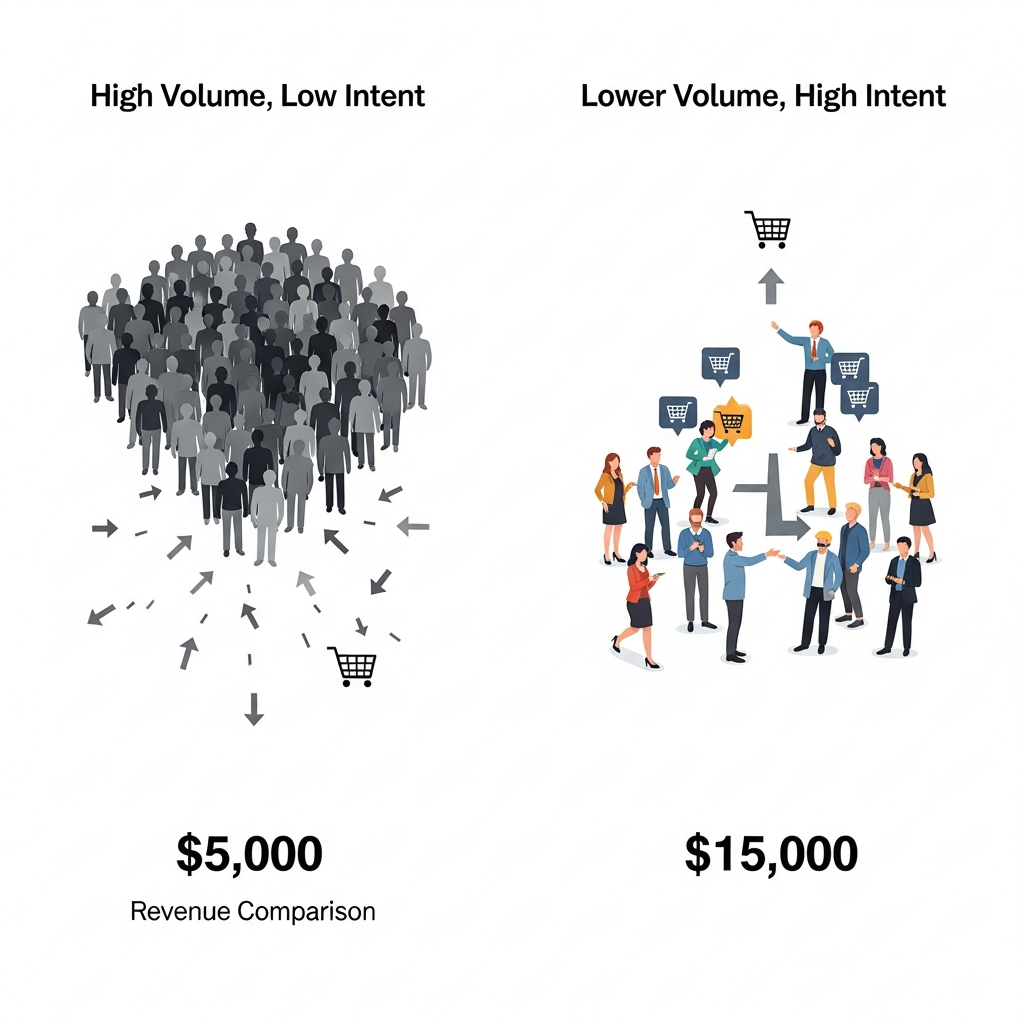
Here's something that'll flip your perspective: 100,000 pageviews from generic “what is” queries are worth less than 10,000 visitors with actual buying intent.
I've seen this firsthand. Bloggers obsess over vanity metrics while their bank accounts stay empty. The truth? Getting traffic remains the biggest challenge for 45.3% of affiliates, but it's the wrong traffic they're chasing.
Google shifted from ranking based purely on keywords to understanding entities and intent. A search for “best running shoes” used to trigger thousands of generic listicles. Now? Google wants to know: best for what? Marathon training? Flat feet? Trail running?
The “spray and pray” keyword strategy—where you'd target every variation and hope something sticks—is dead. AI Overviews now answer simple, informational queries directly in search results, meaning those easy-ranking “what is” posts that used to drive traffic? Gone.
You need to focus on conversion intent: people ready to make decisions, not people just browsing.
Stricter FTC Regulations and Platform Policies
If you thought disclosure requirements were strict before, 2025 raised the bar significantly.
The FTC has intensified scrutiny on affiliate disclosures, requiring clear, upfront transparency about affiliate relationships. Buried disclaimers at the bottom of your posts don't cut it anymore.
Amazon Associates rolled out policy changes that caught many affiliates off guard, tightening rules around how you can present their products and links.
And platforms are cracking down hard on misleading claims. Case in point: one major affiliate network faced a $4 million FTC settlement for deceptive advertising practices. That's not a slap on the wrist—it's a warning shot to the entire industry.
The message is clear: build trust through transparency, or risk getting shut down entirely.
Why Affiliate Blogging Is Not Dead
That being said, let’s consider some numbers that clearly show that everything you've been hearing about affiliate blogging is far from the truth.
The $17 Billion Industry Data Point
While bloggers panic on Reddit and Facebook groups, brands are pouring money into affiliate marketing at record rates. The global affiliate marketing industry is projected to reach $31.7 billion by 2031, growing from its current multi-billion dollar valuation.
Here's what really matters: 16% of all US ecommerce sales come from affiliate marketing. That's not a dying channel—that's a fundamental part of how people shop online.
And get this: 81% of brands use affiliate programs, with the average ROI sitting at $6.50 for every dollar spent. When's the last time you saw marketing channels delivering returns like that?
Even more telling? 57% of UK marketers plan to increase their affiliate budgets, while 40% are keeping spend steady. Only a tiny fraction is cutting back.
As you can see from those stats, the money didn't disappear. It just shifted to bloggers who adapted.
Successful Affiliate Bloggers Who Thrived in 2025
So who's actually winning right now?
I've studied dozens of case studies, and the pattern is clear. There are bloggers making $10K–$50K+ monthly in 2025, even after all the algorithm chaos.
One tech blogger pivoted from generic “best laptop” posts to deep-dive reviews based on three-month testing periods. Their traffic dropped 40%, but revenue doubled because the visitors who stayed actually bought.
Another focused on building an email list of a few thousand engaged subscribers in a tight niche. They launched a high-ticket affiliate product to just 2% of their list and generated five figures. No millions of pageviews required.
A third diversified into YouTube and Pinterest, treating their blog as the hub rather than the only traffic source. When Google algorithm updates hit, it barely touched their income.
What are they doing differently? They're treating affiliate blogging as authority-building, not traffic arbitrage. They're creating content from genuine experience, not keyword research tools. And they're building audiences they own, not renting attention from Google.
The Difference Between “Dead” and “Evolved”
Think about traditional retail for a second. When e-commerce exploded, people screamed that physical stores were dead. But retail didn't die, it evolved. The stores that adapted thrived. The ones that didn't became empty buildings.
That's exactly what happened to affiliate blogging.
What actually died? Lazy strategies. Thin, 500-word “best X” posts with no real insight. Keyword-stuffed content designed to game algorithms. PBN link schemes. Sites with zero brand identity.
What's thriving? Authority-building through helpful content. Experience-based reviews with receipts. Diversified traffic from email, social, and yes, still organic search. Real brands with real expertise.
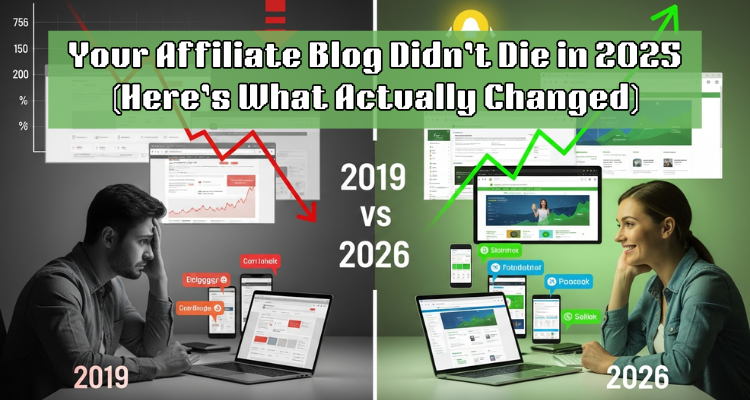
Your affiliate blog isn't dead. But the version that worked in 2019? Yeah, that one needs to go.
What Strategies Actually Died (And What Replaced Them)?
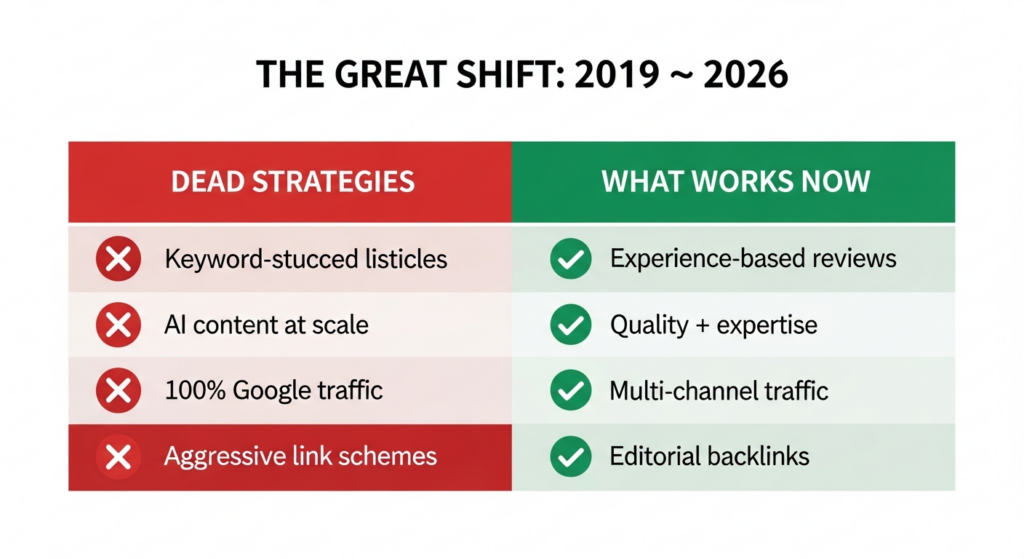
Alright, I’m sure at this point you want to know what's not working anymore, right? Well, that’s why this post, so let me save you months of frustration by showing you exactly which strategies to abandon.
Dead Strategy #1: Keyword-Stuffed “Best X” Listicles
Remember when you could rank a generic “Best Bluetooth Speakers 2025” post by cramming the keyword into every other sentence? Those days are over.
Generic product roundups that read like you copied specs from Amazon don't rank anymore. Google's algorithm can smell them from a mile away. Why? Because thousands of other sites published the exact same thing, often without touching a single product.
What works now: Original research, hands-on testing, and comparison frameworks that showcase real expertise.
Instead of “10 Best Headphones,” try “I Tested 12 Noise-Cancelling Headphones on 50 Flights—Here's What Actually Blocked Engine Noise.” See the difference? One is generic. The other signals genuine experience.
Document your testing process. Include photos of the products in your home. Share what broke, what surprised you, and what the marketing materials lied about. That's the content Google's E-E-A-T signals reward.
Dead Strategy #2: 100% Reliance on Google Organic Traffic
If 2025 taught affiliate bloggers anything, it's this: putting all your eggs in Google's basket is financial suicide.
We are all witnesses to how bloggers lost 70–90% of their income overnight when algorithm updates hit. Not because they did anything wrong, but just because Google changed its mind about what deserves to rank.
During the year, about 25.1% of affiliates said algorithm updates significantly hurt them, and among those affected, 47.4% had to completely change their content strategy. That's not adaptation—that's survival mode.
What works now: Multi-channel traffic diversification where your blog becomes the hub, not the entire wheel.
Build an email list. Create a YouTube channel. Leverage Pinterest for evergreen content. Show up where your audience hangs out—Reddit communities, Facebook groups, TikTok. When one channel dips, the others keep you afloat.
Dead Strategy #3: Thin, AI-Generated Content at Scale
The “publish 100 AI-written posts per month” strategy didn't just stop working; it became actively harmful.
Google explicitly stated that scaled content abuse—whether AI-generated or human-written—violates their spam policies. Sites caught doing this aren't just penalized; they're often completely deindexed.
The bloggers who tried to outsmart the system by flooding their sites with AI content found themselves buried under competitors who published less but with actual depth.
What works now: Quality over quantity, period. Publish one exceptional, experience-based post per week instead of seven mediocre ones.
Use AI as a research and editing assistant, sure. But the insights, the stories, the “here's what I learned the hard way” moments? Those need to come from you.
Dead Strategy #4: Aggressive Link Building Schemes
PBNs (Private Blog Networks), comment spam, reciprocal link farms—these tactics were already risky, but Google's 2025 Core Updates made them career-enders.
The search giant's link spam review got significantly more sophisticated, identifying and devaluing manipulative link patterns with scary accuracy. Sites relying on these schemes saw their rankings crater.
What works now: Editorial backlinks earned through creating genuinely valuable content that other sites want to reference.
Focus on digital PR, original research that attracts natural citations, and building relationships with other creators in your niche. One genuine mention from a respected industry publication beats 100 sketchy PBN links.
How to Adapt Your Affiliate Blog for 2026 Success
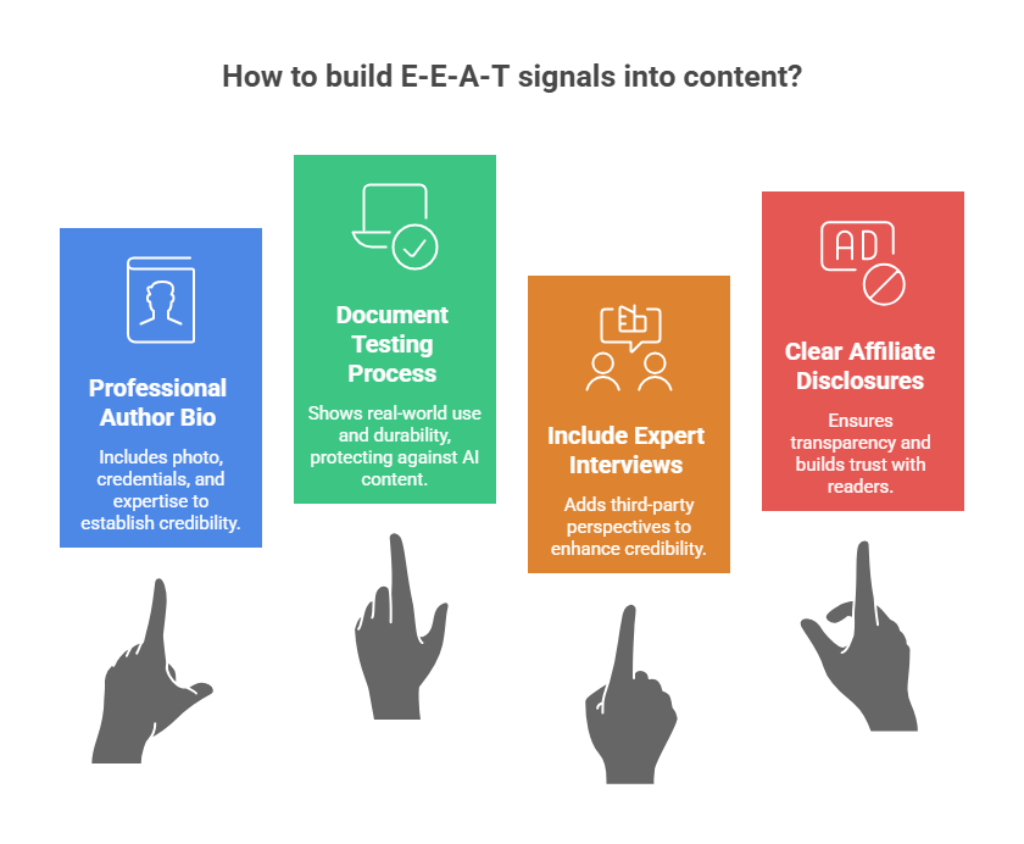
Alright, enough diagnosis. Let's talk treatment. Here are the specific strategies that are working right now for affiliate bloggers who are thriving.
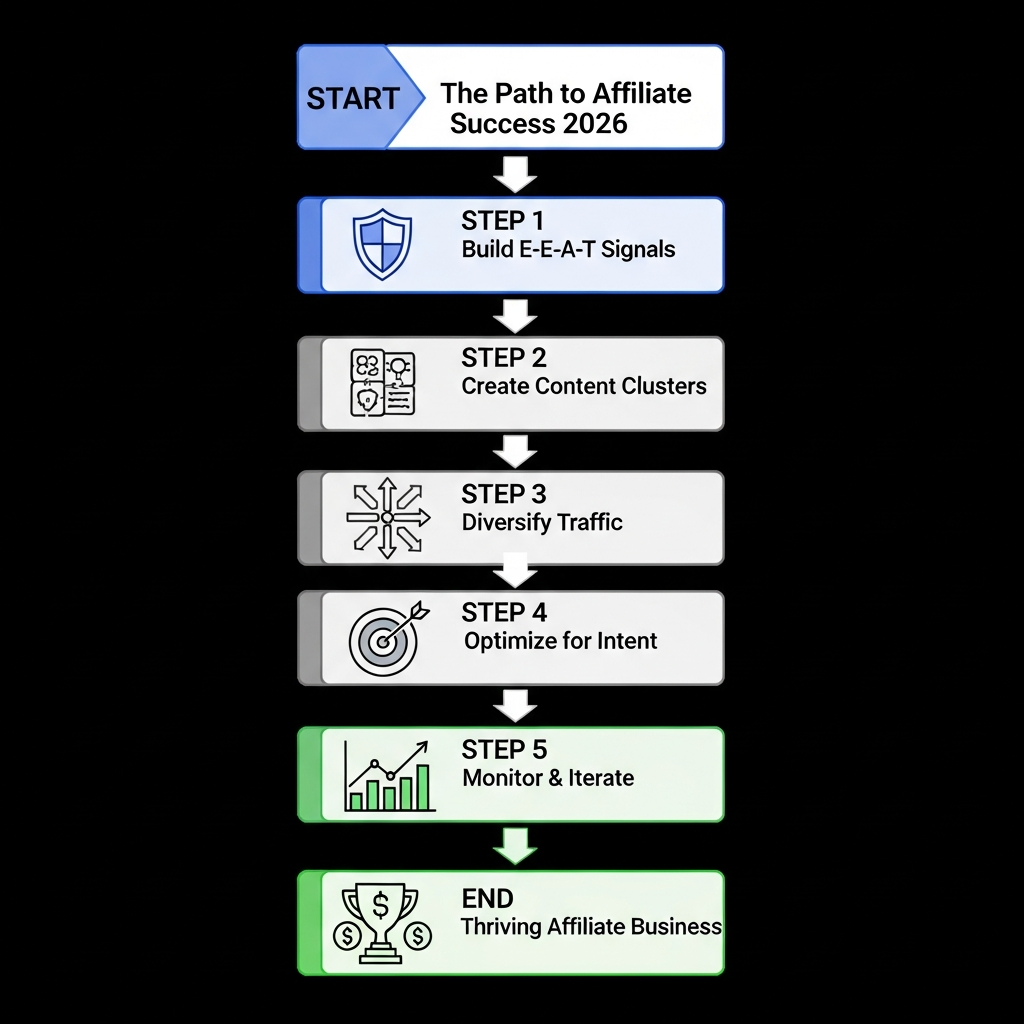
Build Real E-E-A-T Signals Into Your Content
Google wants proof that you're a real person with real expertise. Give it to them.
- Start with your author bio: Include a professional photo, your credentials, and why you're qualified to review products in your niche. “Tech enthusiast” doesn't cut it. “Software engineer with 10 years of testing dev tools” does.
- Document your testing process: Take photos of products in your workspace. Keep receipts. Film unboxing and testing videos. Show the scratch on the laptop after three months of daily use. This isn't extra work—it's the competitive moat that protects you from AI content farms.
- Include expert interviews and quotes: Reach out to product creators, industry professionals, or other users. Third-party perspectives add credibility that your opinion alone can't match.
- Make affiliate disclosures crystal clear: Put them at the top of posts, not buried at the bottom. The FTC is watching, and transparency builds trust with readers anyway.
Quick E-E-A-T Checklist:
- Author bio with photo and credentials ✓
- Original photos/videos of products ✓
- Testing timeline documented ✓
- Expert quotes included ✓
- Upfront affiliate disclosure ✓
- Links to author social profiles ✓
Create Content Clusters Around Your Expertise
Stop writing random posts and start building topical authority through content clusters.
Here's how it works: Create one comprehensive pillar page that covers a broad topic in depth. Then write 8–12 cluster posts that dive deep into specific subtopics, all linking back to the pillar.
Example transformation: Instead of scattered posts like “Best Standing Desk,” “Best Office Chair,” “Best Monitor,” create a pillar page: “Complete Home Office Setup Guide” with clusters covering each component in detail, ergonomics, cable management, lighting, and productivity tips.
This internal linking structure signals to Google that you're not just chasing random keywords—you're building genuine expertise in a specific area. Authority sites using this strategy consistently outrank scattered competitors.
Diversify Your Traffic Sources Beyond Google
This is non-negotiable. If Google is your only traffic source, you're one algorithm update away from broke.
- Email list building: Offer a lead magnet (comparison chart, buying guide PDF, exclusive discount list) in exchange for email addresses. One blogger I know generates 40% of their affiliate income from a list of just 3,000 engaged subscribers.
- Pinterest: Perfect for evergreen affiliate content. Create vertical pins for product comparisons and buying guides. One well-optimized pin can drive traffic for years.
- YouTube: Video product reviews convert incredibly well. You don't need fancy equipment—smartphone footage showing real usage beats polished marketing videos. Link to your detailed blog reviews in descriptions.
- Reddit and niche communities: Join conversations authentically. Answer questions, share genuine insights, and only mention your content when it truly helps. Build karma before you share links.
- Social media repurposing: Turn blog posts into Instagram carousels, TikTok videos, and LinkedIn articles. Multi-channel strategies are how successful affiliates survive volatility.
Optimize for User Intent, Not Just Keywords
Keywords are dead. Intent is everything.
Google cares about matching content to what users actually want. There are four types of search intent:
- Informational: “How does X work?” → Provide detailed guides
- Navigational: “Brand name login” → Not for affiliates
- Commercial: “Best X for Y” → Comparison content
- Transactional: “Buy X discount code” → Direct purchase pages
Match your content format to intent. Someone searching “coffee maker comparison” wants a detailed breakdown, not a sales page. Someone searching “Breville Barista Express discount” wants to buy now.
Stop optimizing for keywords like “best coffee maker” and start optimizing for entities (specific brands, models) and intent (comparison vs. purchase). Use tools like Google Search Console to see what intent your pages actually satisfy.
Update and Improve Existing Content Regularly
Fresh content gets attention, but updated content compounds over time.
I've seen year-old posts climb back to page one after updates with new data, current pricing, and fresh screenshots. The compound effect is real—each update makes the post stronger.
- Update quarterly: Stats and data points, pricing information, product availability, screenshots and images, broken or outdated affiliate links.
- Content pruning matters too. Remove or redirect underperforming posts that dilute your site's authority. If it's not ranking after a year and getting zero traffic, kill it or merge it into something better.
- Create a schedule: Set calendar reminders to review your top 20 posts every three months. This beats publishing mediocre new content.
Use AI as a Tool, not a Replacement
AI is powerful when used correctly. Deadly when misused.
- Where AI helps: Research and fact-checking, content outlines and structure, grammar and editing passes, headline variations for testing, meta descriptions, and summaries.
- Where AI fails completely: Unique insights from personal experience, authentic voice and personality, specific product testing observations, trust-building storytelling, nuanced recommendations based on user needs.
- Best practice: Use AI to draft the skeleton, then add 40–50% original content based on your real experience. The case studies demonstrate that hybrid approaches—utilizing AI for efficiency and humans for authenticity—yield the best results.
If you can't tell where the AI ends and you begin, you're doing it right.
What High-Performing Affiliate Bloggers Are Doing Differently in 2026
Let’s push this further as we examine the factors that separate bloggers making $50K+ monthly from those barely scraping by. It's not luck. It's the mindset and execution.
#1: They're Building Personal Brands, Not Just Websites
The most successful affiliate bloggers I've studied aren't hiding behind generic site names anymore. They're putting their faces, names, and personalities front and center.
In an AI-saturated world where everything sounds the same, authenticity is your unfair advantage. When readers can see your face, hear your voice, and follow your journey, they trust you. And trust converts.
Look at the top earners: they're doing behind-the-scenes content showing their testing process, filming face-to-camera reviews where you can see their genuine reactions, sharing failures and mistakes alongside successes, and building social proof through consistent author presence across platforms.
This isn't about becoming an influencer. It's about being a real human in a sea of faceless content farms. Personal branding matters more than ever because it's the one thing AI can't replicate.
#2: They're Choosing Quality Products Over High Commissions
Here's a mindset shift that separates amateurs from pros: high-performing affiliates promote products they genuinely believe in, even when lower-quality alternatives pay better commissions.
Why? Because your reputation is worth more than any single sale.
I've seen bloggers chase 50% commission products they'd never personally use, and their audiences can smell the desperation. Conversions tank. Trust evaporates. The short-term cash grab costs them long-term revenue.
Smart affiliates play the opposite game. They recommend products they actually use, acknowledge when something isn't perfect, compare lower-priced alternatives honestly, and sometimes tell readers not to buy anything at all.
Counterintuitive? Maybe. But authentic recommendations convert 2–3x better than desperate sales pitches. Readers aren't stupid; they know when you're selling versus when you're helping.
#3: They're Treating Affiliate Content Like Business Assets
Top performers don't view their blogs as side hustles. They treat them like investment portfolios.
They invest real money: premium hosting, professional photos, expert interviews, and testing products out of pocket. They invest time: 20–40 hours per comprehensive review. They invest in skills: learning SEO, conversion optimization, and email marketing.
But here's the key insight: they understand that content either appreciates or depreciates over time.
Evergreen guides that get updated regularly? Appreciating assets. Thin posts chasing trending keywords? Depreciating garbage.
They approach their sites with portfolio diversification too—mixing product reviews, comparison guides, how-to content, and industry analysis. When one content type gets hit by algorithm changes, the others cushion the blow.
#4: They're Monitoring Analytics and Iterating Constantly
Successful affiliate bloggers are obsessed with data, but they focus on metrics that actually matter.
Forget vanity metrics. Pageviews mean nothing if nobody's clicking your affiliate links. Instead, track click-through rates on affiliate links, conversion rates by traffic source, revenue per visitor, time on page for key content, and email list growth and engagement.
They A/B test everything: affiliate link placement (beginning vs. middle vs. end), call-to-action wording, button colors and sizes, product comparison table formats, and email subject lines.
Data-driven decision making separates gut feelings from proven winners. One blogger I know increased conversions by 47% just by moving affiliate buttons from the bottom to the middle of reviews.
Test. Measure. Iterate. Repeat. That's the game.
What Tools Are Essential for Affiliate Blogging Success in 2026?
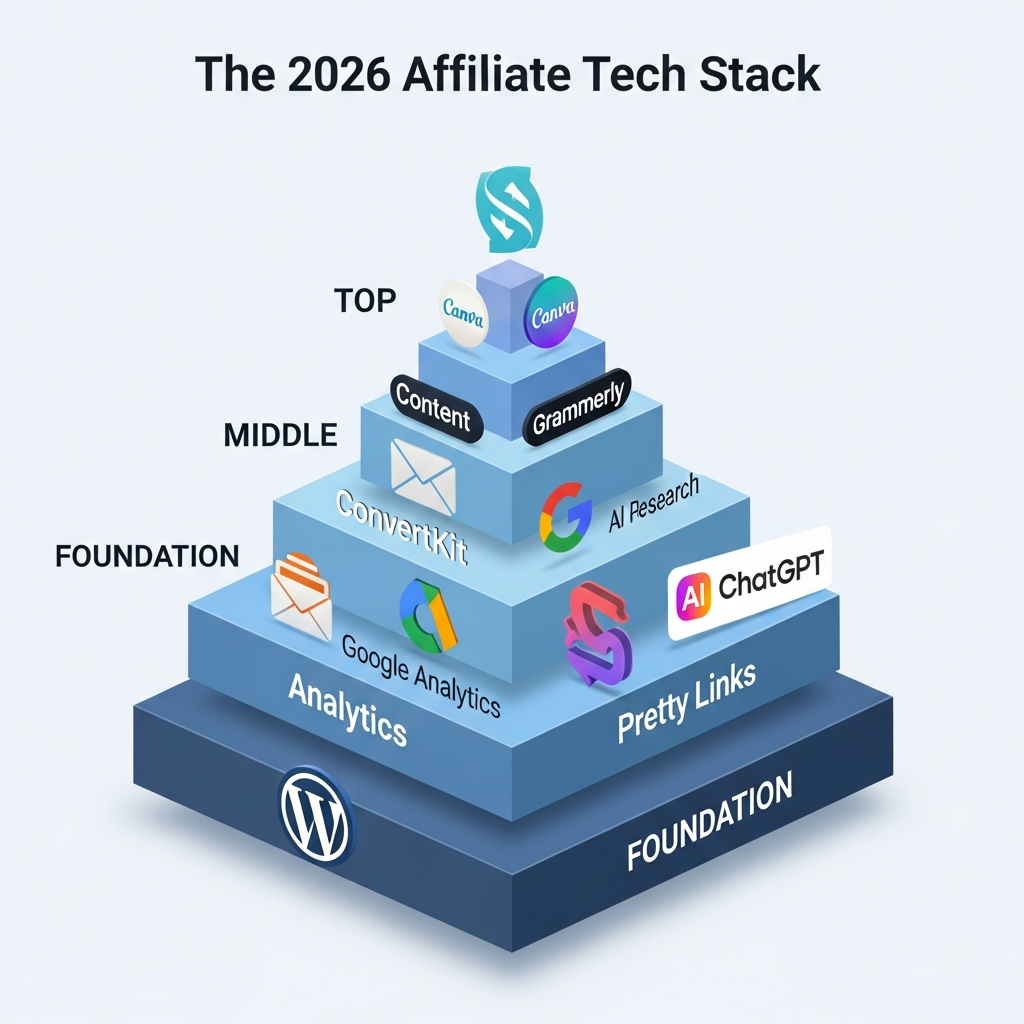
The right tools don't just make you faster, they make you better. Here's the tech stack that high-performing affiliate bloggers are using right now.
Content Management & Hosting
WordPress remains the foundation, but pair it with quality managed hosting (WP Engine, Kinsta, or Cloudways) for speed and security. Core Web Vitals matter for rankings, and cheap hosting kills conversions.
AI-Assisted Research Tools
Forget using AI just for writing. Smart bloggers use it for research and strategy.
ChatGPT or Claude for competitor analysis, content gap identification, and outline creation. Perplexity for quick fact-checking and citation finding. SEMrush or Ahrefs still dominate for keyword research, but now focus on intent analysis and content opportunity identification rather than just search volume.
The key? Use AI to identify what to write about and how to structure it, then add your genuine experience to make it valuable.
Advanced Tracking & Link Management
Link Whisper for internal linking optimization—it finds opportunities you'd miss manually and strengthens topical authority signals.
Pretty Links or ThirstyAffiliates for clean, trackable affiliate links. You need to know which links get clicks and which products actually convert.
Voluum or ClickMagick for advanced affiliate tracking across multiple channels. When you're driving traffic from email, YouTube, Pinterest, and organic search, you need to know which sources generate revenue.
Google Analytics 4 paired with Google Search Console, gives you the foundational data on traffic sources, user behavior, and search performance.
First-Party Data & Audience Building
This is non-negotiable. You must own your audience.
Kit (formerly ConvertKit), ActiveCampaign, or GetResponse for email marketing. Your list is the only traffic source you truly control. Choose platforms with solid automation and segmentation capabilities.
OptinMonster or Thrive Leads for building that list with high-converting opt-in forms, exit-intent popups, and content upgrades.
Notion or Airtable for content calendars, update schedules, and tracking which posts need refreshes.
Content Creation Enhancement
Canva Pro for creating comparison charts, infographics, and Pinterest pins without hiring designers.
Descript or CapCut for editing video reviews if you're diversifying into YouTube or social.
Grammarly or ProWritingAid for polishing drafts and maintaining consistency.
The total investment? Roughly $200–400 monthly for a serious operation. Sounds like a lot? One blogger earning $30K monthly told me their tool stack costs about 1.5% of revenue. That's not an expense—it's leverage.
Stop trying to do everything manually. Invest in tools that multiply your effectiveness, then focus your human energy on what only you can do: genuine expertise and authentic recommendations.
Conclusion: Your Affiliate Blog Can Thrive—If You Adapt
Let me say it one more time for the people in the back: affiliate blogging isn't dead. The old playbook is dead.
The bloggers making serious money today aren't the ones complaining on Reddit about algorithm updates. They're the ones who adapted.
They built real expertise and authority that AI can't fake. They created authentic, experience-based content that readers actually trust. They diversified their traffic sources so one Google update doesn't destroy their income. And they treated their blogs as long-term business assets worth investing in, not get-rich-quick schemes.
Yes, it's harder than it used to be. The days of throwing up 50 thin product reviews and watching passive income roll in are over. Good.
That means there's less competition for those willing to do the work. The affiliate marketing industry is growing, not shrinking. The money is there. The opportunity is real.
Stop mourning what used to work. Start implementing what works now.
The game changed. You can either adapt and thrive or keep playing by 2019 rules and wonder why you're losing.
If you are interested in more about this topic, then join our newsletter below. In the last few months of 2025, I devoted my time to digging into the biggest shifts redefining this industry. My commitment for 2026 is to provide you with real-world tactics, fresh insights, practical advice, and new ideas that will help you stay competitive as affiliate marketing enters its next era.
If you're interested in this, join our newsletter now to stay up-to-date with our weekly updates.