Strategic Affiliate Marketing Secrets Nobody Talks About: Uncover 10 Hidden Tactics Driving 300% More Conversions

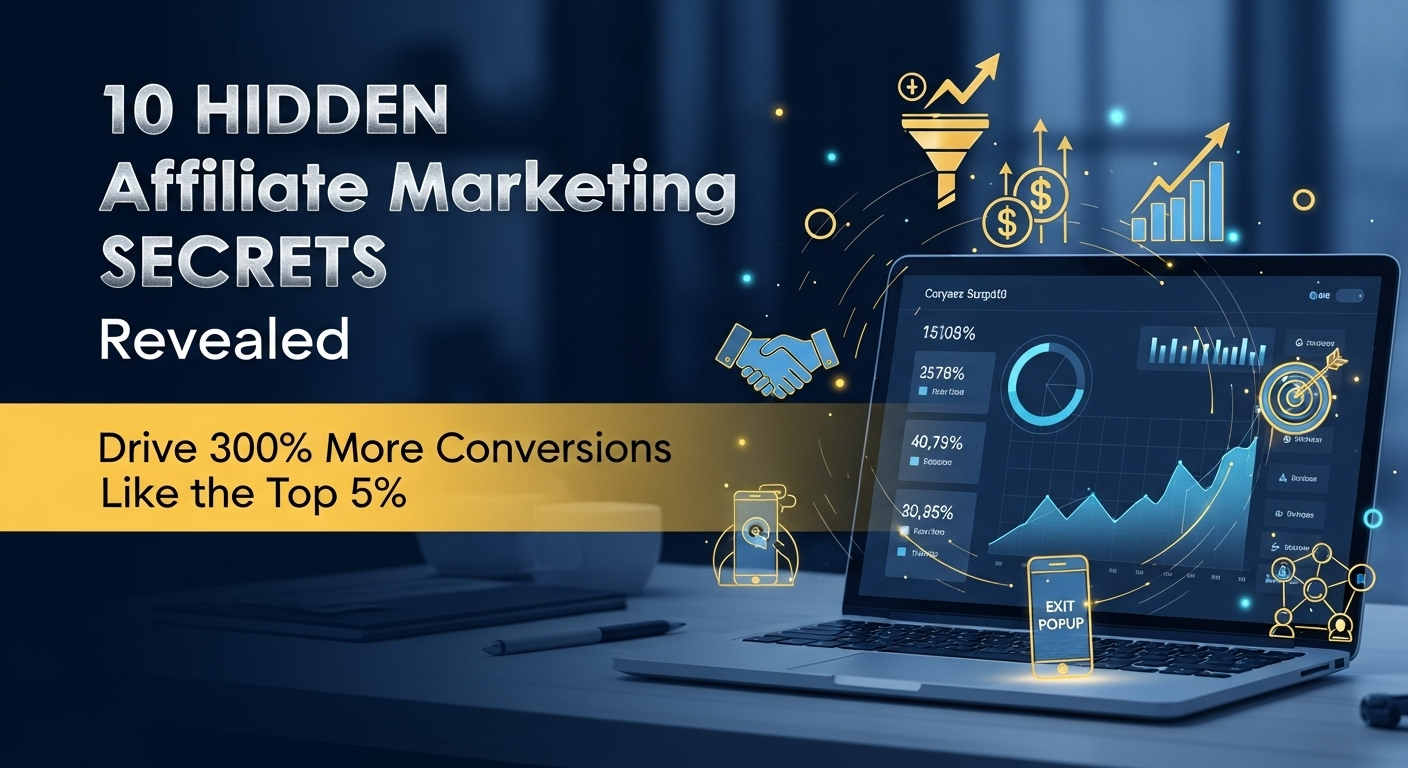
Affiliate marketing is on track to surpass $40 billion by 2030, yet an astonishing 95% of affiliates never make consistent income. Why? Because most are still recycling the same surface-level tactics—generic product reviews, overused funnels, and outdated SEO methods that no longer convert.
This guide dives into the real mechanics behind success—the strategic side of affiliate marketing that the top 5% quietly leverage to achieve 300%+ higher conversion rates andnot what they say in generic blog posts. You’ll uncover how these elite marketers use data-driven systems, psychological pre-framing, audience segmentation, and multi-touch attribution to turn ordinary traffic into reliable, scalable revenue.
Drawing from current market research, behavioral data, and proven frameworks used by high-performing affiliates, this article reveals 10 hidden strategies you won’t find in the typical “how-to” post. Each tactic is actionable, tested, and built for modern algorithms and buyer behavior.
Key Takeaways:
- The affiliate industry will hit $40B by 2030, but 95% still fail.
- Success isn’t about more content or traffic – it’s about unseen strategy.
- This article exposes 10 proven, underused tactics driving 300%+ conversions for top affiliates.
DISCLOSURE: WebIncomeJournal is supported by readers like yourself. We may earn an affiliate commission when you purchase through our links, which enables us to offer our content for free. Learn more here.
What Makes Strategic Affiliate Marketing Different from Basic Tactics?
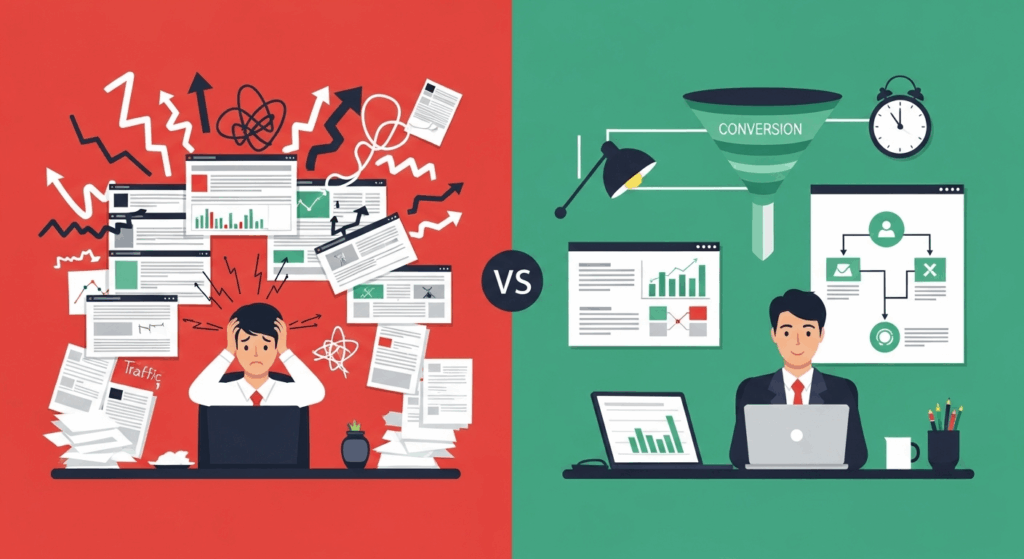
Most affiliates treat affiliate marketing like a numbers game—pump out content, blast affiliate links everywhere, and pray something sticks.
Strategic affiliate marketing flips that approach on its head.
Instead of promotional blasting, strategic affiliates craft strategic positioning – they educate, pre-frame, and influence purchasing behavior long before the checkout page. Every campaign is tested, refined, and informed by data-driven frameworks rather than guesswork.
In essence, affiliate strategy frameworks treat marketing like an ecosystem, not a one-off transaction. It’s customer journey optimization at every level – from awareness to post-purchase engagement – turning random clicks into loyal, high-value customers.
Why Do 95% of Affiliates Fail to Break $1,000 Per Month?
The failure rate in affiliate marketing isn’t about competition – it’s about confusion. 95% of affiliates never cross the $1,000/month mark because they focus on the wrong things: traffic over trust, clicks over conversions, and trends over strategy.
The failure rate in affiliate marketing is staggering, but it's not random.
I've watched countless affiliates make the same critical mistakes, and the pattern is painfully clear: they're optimizing for the wrong things.
First, they pick niches based on passion instead of profitability. Love yoga? Great. But if you're promoting $15 yoga mats with 5% commissions, you'd need 1,334 sales monthly just to hit $1,000. The math doesn't work.
Second, most affiliates chase clicks like they're the holy grail. They celebrate traffic spikes while ignoring the fact that their conversion rate is 0.3%. According to affiliate marketing data, the average affiliate conversion rate hovers around 0.5-1%—but top performers convert at 3-5%+.
Here's what kills conversions: promotional content overload. Your audience isn't stupid. When every post screams “BUY NOW” with your affiliate link, trust evaporates faster than your traffic.
The bigger problem? Zero strategic planning. Most affiliates operate like content factories—publish, promote, repeat—without ever analyzing what's actually working. They don't build email lists for retargeting. They don't create trust-building content that addresses objections. They don't map customer journeys or test different approaches.
They're also promoting the wrong products. High commission rates mean nothing if the product is trash or irrelevant to your audience. Data shows that choosing affiliate programs based on relevance and product quality—not just commission rates—leads to sustainable earnings.
The truth is, failing affiliates are running a traffic business when they should be running a conversion business. Success belongs to those who plan, not those who post. Strategic affiliates reverse-engineer outcomes through data, positioning, and long-term systems – while the rest keep guessing and hoping. That’s the difference between stagnation and scale.
That being said, let’s jump into the meat of this post…
💡 Want to Turn Your Affiliate Traffic into Consistent Profit?
Download our free Advanced CRO Checklist (PDF) and start tracking your optimization progress step-by-step.
The 10 Hidden Strategies Top 5% Affiliates Use to Drive 300% More Conversions
Secret #1 – The Bridge Page Strategy: How Pre-Sell Content Increases Conversions by 47%
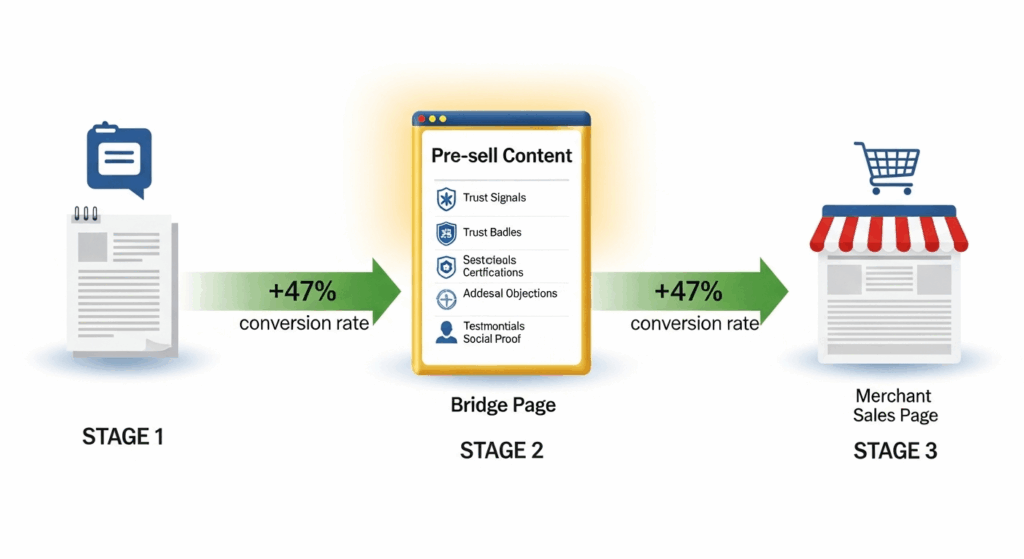
Most affiliates send visitors directly from a blog post or ad to a product page – skipping a crucial step that can increase conversions by up to 47%. That missing step is the bridge page.
A bridge page is a strategic intermediary between your content and the merchant’s offer. Its job is to warm up visitors with targeted pre-sell content that builds trust, addresses objections, and frames the product as the natural next step. Instead of relying on a cold pitch, it creates a seamless psychological transition from curiosity to conviction.
The key lies in pre-framing techniques – using narrative, problem agitation, and subtle authority positioning to influence decision-making before the user even reaches the offer. According to ConversionXL’s behavioral research, pre-suasion and message sequencing can dramatically enhance perceived value and readiness to act.
A high-performing bridge page should:
- Start with a relatable pain point or story.
- Present the affiliate product as a proven solution.
- Include social proof such as testimonials or case studies.
- End with a strong but natural call-to-action leading to the merchant page.
To implement:
- Identify high-traffic pages with low conversions.
- Create bridge page content that directly addresses reader intent.
- Use video or trust indicators for emotional reinforcement.
- Continuously A/B test headlines, layouts, and CTAs using tools like Google Optimize or VWO.
- Track outcomes via analytics to refine your bridge page optimization process.
Bridge pages aren’t filler – they’re conversion multipliers that turn passive clicks into primed buyers through intentional storytelling and psychological alignment.
Secret #2 – Multi-Touch Attribution Modeling: Stop Giving Credit to the Wrong Channels
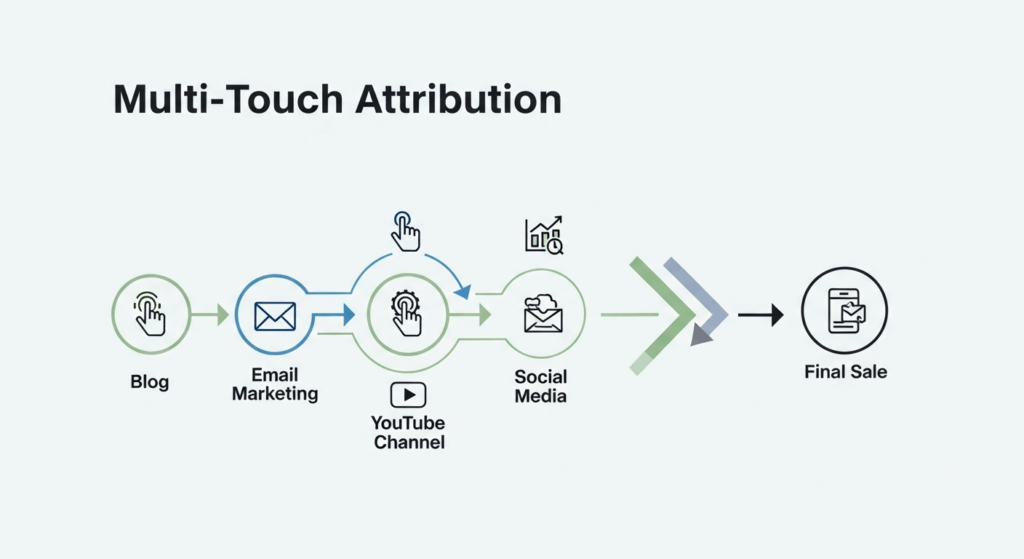
If you’re still measuring performance with last-click attribution, you’re ignoring nearly 70% of the real customer journey. Most conversions don’t happen from one link click – they result from a sequence of micro-interactions across multiple platforms, devices, and moments.
That’s where multi-touch attribution modeling comes in. Instead of crediting just the final click, this framework distributes credit across all touchpoints – from the first blog impression to the final email or ad engagement. As HubSpot’s attribution guide explains, this approach exposes which channels truly drive ROI.
There are several models to consider:
- Linear attribution: Equal credit to all touchpoints.
- Time-decay model: More credit to interactions closer to conversion.
- Position-based model: Emphasizes first and last touchpoints while recognizing mid-funnel influence.
By implementing multi-touch tracking with tools like Google Analytics 4 or Segment, you can identify underappreciated contributors – such as your bridge pages, nurturing emails, or remarketing ads.
Implementation Steps:
- Add UTM parameters consistently to all affiliate links.
- Enable cross-device tracking to capture complete user journeys.
- Analyze assisted conversions within analytics dashboards.
- Adjust content strategy and ad spend based on verified performance data.
- Reinvest in high-assist, high-intent channels for maximum ROI.
True strategic affiliates make decisions backed by attribution modeling, not assumptions. When you know what truly moves the needle, scaling profitably becomes science – not guesswork.
Secret #3 – The Lifetime Commission Negotiation Framework
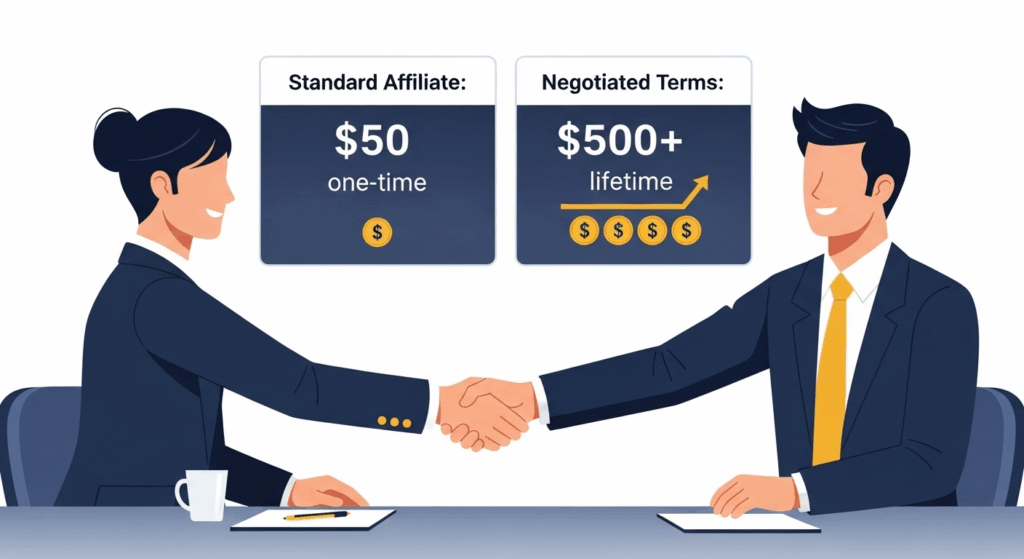
Most affiliates accept the default 20–40% commission and stop there. The top 5% don’t. They negotiate lifetime or recurring commissions, turning one-time sales into streams of passive income that generate 3–5x more revenue per customer. This is the Lifetime Commission Negotiation Framework in action.
Merchants offer these terms selectively – usually to affiliates who can prove measurable value. That value comes from sending qualified traffic that converts above average or from building long-term brand exposure. If you can demonstrate that your audience trusts your recommendations, you have leverage.
Start by building a performance track record. Document conversion rates, audience engagement, and sales growth over time. Then, approach the merchant strategically – not as a favor request, but as a data-driven proposal. You’re showing them why rewarding you with recurring payouts benefits both sides.
Use a clear negotiation script such as:
“Our audience converts 2.3x above your program average. With a lifetime commission, I can reinvest in scaling campaigns that drive sustained customer acquisition for your brand.”
According to PartnerStack’s affiliate revenue insights, brands are increasingly open to custom commission structures for affiliates who can justify ROI.
Implementation Steps:
- Build a verifiable record of conversions and retention.
- Present traffic quality and conversion data visually.
- Request a meeting when performance peaks or during merchant budget renewals.
- Propose win-win terms that increase volume and retention for both.
- Strengthen the relationship through consistent performance and transparent communication.
Smart affiliates don’t just earn commissions – they negotiate systems that pay indefinitely.
Secret #4 – Advanced Audience Segmentation: Why Sending the Same Message to Everyone Kills Conversions
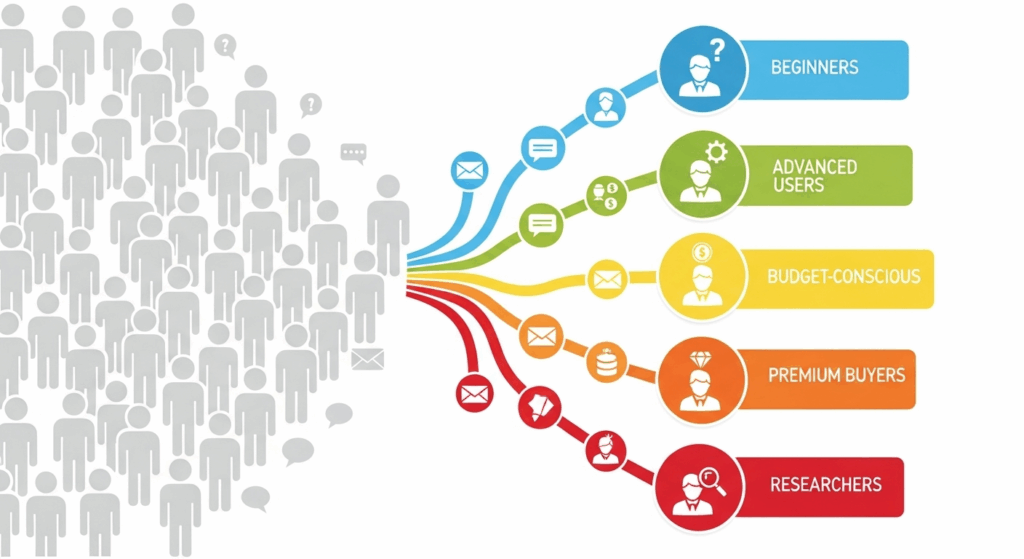
If you’re blasting one message to everyone, you’re leaving money on the table. Generic affiliate campaigns average 0.5–1% conversion, while segmented, personalized campaigns can reach 3–5%+, according to Campaign Monitor’s segmentation report.
Audience segmentation is the art of dividing your audience into distinct groups based on behavior, intent, and psychographics – then crafting offers that resonate uniquely with each. Instead of one-size-fits-all content, strategic affiliates deliver messaging that feels individually tailored.
Behavioral segmentation looks at user actions – clicks, time on page, or purchase history. Psychographic profiling digs into deeper motivators: goals, values, or pain points. Combine these insights with intent-based segmentation, which identifies where the user is in the buying journey.
Effective affiliates build segment-specific funnels – a different landing page, email flow, or bonus offer for each persona. Tools like Kit (formerly ConvertKit), ActiveCampaign, or HubSpot make this seamless by tracking user behavior across channels.
Implementation Steps:
- Identify audience segments (beginners, comparison shoppers, advanced users).
- Map pain points and motivations for each.
- Create targeted content addressing each segment’s unique triggers.
- Build segment-specific funnels that nurture toward conversion.
- Continuously test messaging and offers to refine accuracy.
This is personalized affiliate marketing at its best – where each message feels like it was written for one person, not thousands. That’s what turns segmentation into scalable profit.
Secret #5 – The Psychology of Urgency and Scarcity Done Right
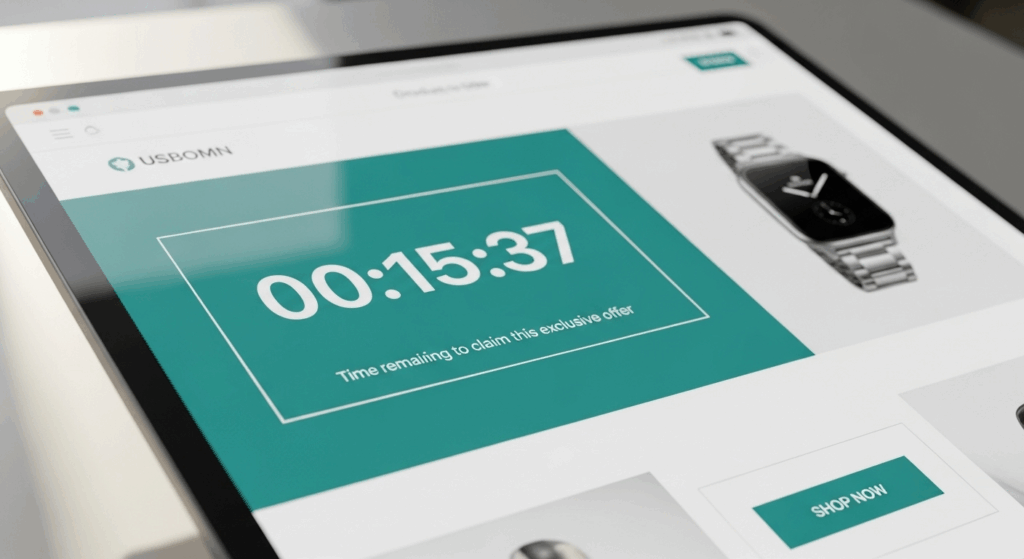
Urgency and scarcity can make or break conversions. Done right, they can boost sales by 30–60%. Done wrong, they destroy trust permanently. The difference lies in authenticity. Consumers today are hyper-aware of manipulation – fake countdown timers or false “limited stock” claims no longer work. In fact, scandals like the Emma Sleep fake timer controversy show how deceptive urgency tactics can backfire spectacularly.
Authentic urgency is rooted in real constraints – such as limited-time bonuses, event-based deadlines, or seasonal availability. Tools like Deadline Funnel can automate countdowns ethically by linking timers to actual offers, not fake scarcity.
Effective FOMO strategies use scarcity to encourage timely decisions without pressure. Examples include offering a 48-hour bonus for early buyers, seasonal bundles, or stacking limited incentives that expire progressively.
Combine these with exit-intent triggers that offer genuine opportunities – like a bonus guide or temporary discount for leaving visitors – instead of manipulative scare tactics. Every piece of urgency copy should be verifiable and honest.
Implementation Tactics:
- Design genuine limited-time offers with clear start and end dates.
- Use event-driven urgency (Black Friday, product updates, launches).
- Implement ethical exit-intent popups that respect user choice.
- Stack bonuses (fast-action bonuses, scarcity bundles).
- Continuously test urgency language – “expiring soon” vs. “limited seats.”
Ethical persuasion amplifies credibility. When urgency is truthful and value-driven, it doesn’t just boost conversions – it builds lasting trust.
Secret #6 – Platform-Specific Conversion Hacks Most Affiliates Miss
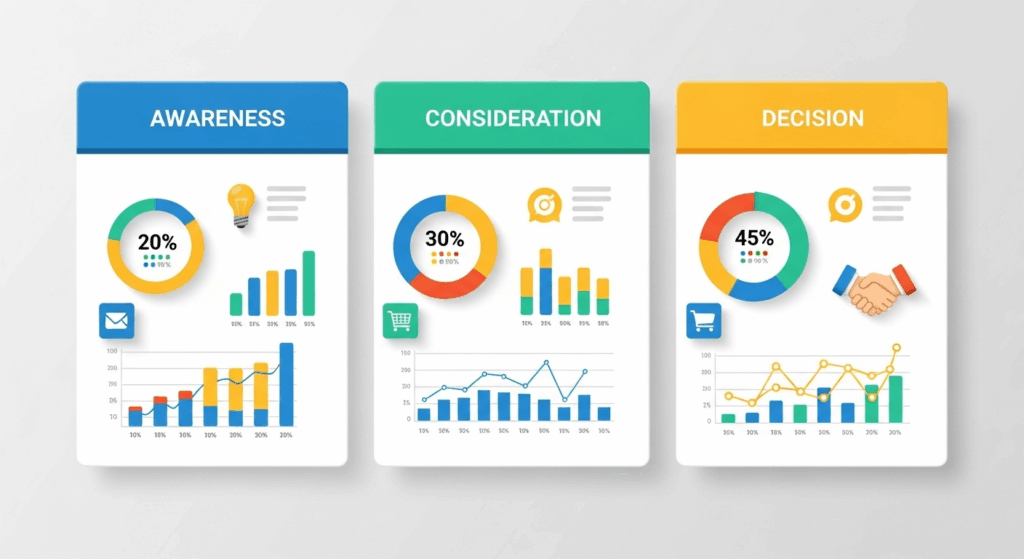
Every platform has its own conversion DNA. What works on YouTube won’t perform the same on Pinterest or native ad networks. Understanding platform-specific tactics gives affiliates an unfair advantage by aligning with algorithmic behavior and user intent.
Pinterest Affiliate Strategy:
Pinterest content has an unusually long lifespan – pins can stay active for months or even years, driving consistent traffic. Use a long-tail content strategy with keyword-rich descriptions, vertical images, and strong CTAs. Combine blog articles with Pinterest funnels to turn discovery traffic into conversions. Resources like Pinterest Trends help you align with seasonal spikes for exponential reach.
Native Advertising Opportunities:
Platforms like NewsBreak and Outbrain offer affordable CPCs for affiliates who understand storytelling ads. Use pre-landers for mobile traffic to warm visitors before directing them to offers. Employ rapid creative testing frameworks and prioritize mobile-first landing pages that load under two seconds.
YouTube Discovery Power:
YouTube remains unmatched for long-form trust building. Leverage its five discovery avenues – search, suggested, browse, notifications, and external embeds. Optimize titles and thumbnails for video SEO discoverability and use evergreen content to drive conversions for years. Educational reviews and tutorials often outperform direct promotions.
Implementation by Platform:
- Master one or two platforms first.
- Apply platform-specific tactics for content and targeting.
- Track engagement metrics and refine based on results.
- Scale what converts; diversify after profitability.
Strategic affiliates don’t chase trends – they adapt to platform psychology, turning every algorithm into an ally.
Secret #7 – The Content Cluster Authority Strategy

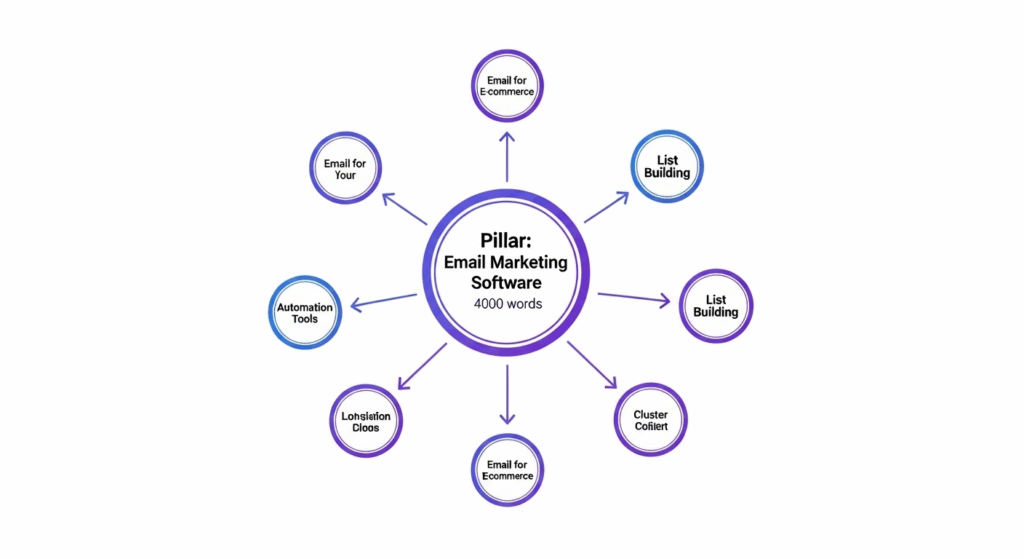
Single blog posts no longer dominate search results – content clusters do. This pillar-based content architecture is one of the most powerful ways to build topical authority, improve rankings, and boost conversions.
A content cluster consists of one comprehensive pillar page (the main topic) supported by multiple subtopic articles that link back to it. This structure helps search engines understand topic depth and relevance, signaling that your site is an authoritative source. According to HubSpot’s content cluster research, sites using clusters saw up to 40% higher visibility and stronger organic ranking stability.
But it’s not just about SEO – it’s also about conversions. When visitors explore interconnected content around a single theme, they naturally move through the customer journey – from awareness (intro guides) to consideration (comparisons) to decision (product reviews and offers).
Strategic internal linking optimization amplifies this effect by guiding users to relevant posts and maintaining engagement. Google rewards this with stronger topical relevance, which means better rankings and consistent organic traffic.
Implementation Steps:
- Identify core topic pillars relevant to your niche.
- Research high-value subtopics using tools like Ahrefs, Mangools, or SurferSEO.
- Build a pillar page (2,500+ words) covering the main topic in depth.
- Create supporting content targeting specific questions or related keywords.
- Interlink every article back to the pillar page and vice versa.
- Update clusters regularly to maintain freshness and authority.
When executed correctly, content clusters transform your blog from a collection of random posts into a strategic ecosystem – one that Google trusts and readers rely on.
Secret #8 – Building Merchant Relationships for Preferential Treatment
Top affiliates don’t just promote products – they build relationships that open doors to higher commissions, exclusive offers, and insider access. This is the merchant relationship advantage that separates elite affiliates from everyone else.
Merchants value affiliates who drive not just traffic, but quality conversions and long-term brand loyalty. When you become a trusted partner, you’re more likely to receive perks like early product releases, higher commission tiers, or even custom tracking bonuses. According to AffiliateWP’s partnership insights, merchants often reserve premium incentives for affiliates who demonstrate strategic alignment and professionalism.
To reach this level, think like a super affiliate – focus on consistent communication, proactive feedback, and shared growth goals. Instead of being transactional (“I’ll promote your product”), position yourself as a collaborator (“Here’s how I can help you expand your market share”).
Relationship-Building Tactics:
- Over-deliver early – outperform expectations in your first few campaigns.
- Provide actionable feedback and conversion insights that help the merchant optimize their funnels.
- Schedule regular check-ins via email or Zoom to discuss performance and future promotions.
- Suggest collaborative campaigns, webinars, or case studies to co-promote.
- Be reliable and professional in all communication.
- Once consistent results are proven, negotiate preferential terms – higher commissions, exclusive bonuses, or early access.
Affiliate success isn’t just about audience size – it’s about influence and relationship capital. When you become indispensable to the merchant’s growth, preferential treatment becomes inevitable.
Secret #9 – The Micro-Moment Optimization Framework
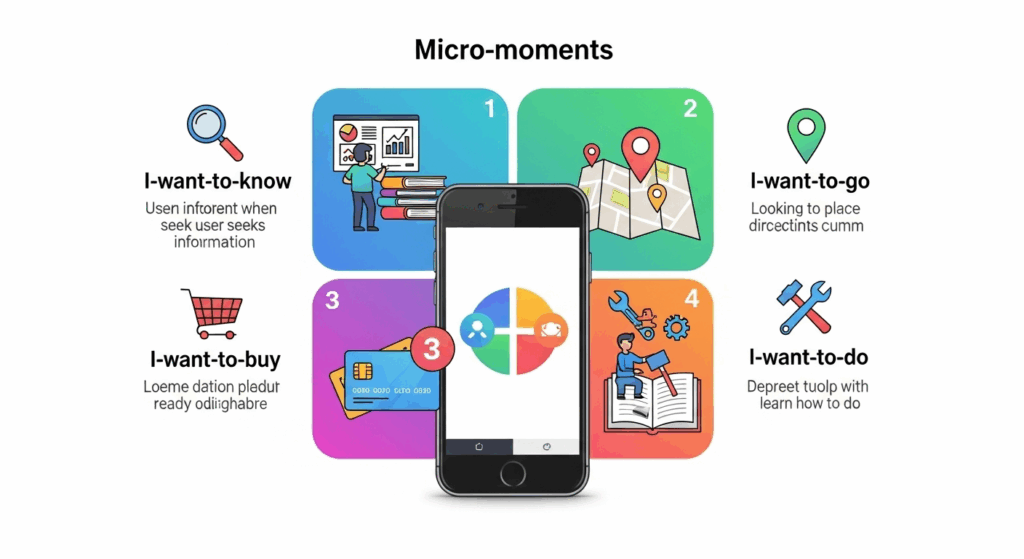
In today’s attention-scarce digital world, conversions often happen in seconds – during what Google calls “micro-moments.” These are brief windows of high intent when a user is ready to act: I-want-to-know, I-want-to-go, I-want-to-buy, I-want-to-do. Optimizing for these moments can double or even triple your conversion rates by meeting prospects exactly when they’re ready to decide.
According to Think with Google, over 90% of consumers use their smartphones to take quick action in these micro-moments – from comparing prices to watching review videos to finalizing purchases. Affiliates who understand these signals can intercept buyer intent with precision.
Start by mapping your customer’s micro-moments. Identify when your audience seeks solutions (I-want-to-know), explores options (I-want-to-go), makes purchase decisions (I-want-to-buy), or looks for implementation help (I-want-to-do). Then, tailor content to serve each intent instantly – short, focused, mobile-optimized content that answers, convinces, or reassures.
Speed is critical. Google’s studies show that a 1-second delay in mobile load time reduces conversions by 20%. Your content must load fast, be easy to navigate, and provide immediate next steps (CTA, demo, or link).
Implementation Framework:
- Map micro-moments along your customer’s journey.
- Create intent-matched content for each phase.
- Optimize every page for mobile responsiveness and speed.
- Eliminate unnecessary steps in the conversion path.
- Test timing and placement of CTAs using analytics tools.
By aligning with user intent in real time, you stop chasing leads and start capturing high-intent traffic the moment it’s ready to convert.
Secret #10 – Exit-Intent Recovery Systems That Recapture 20–35% of Lost Sales
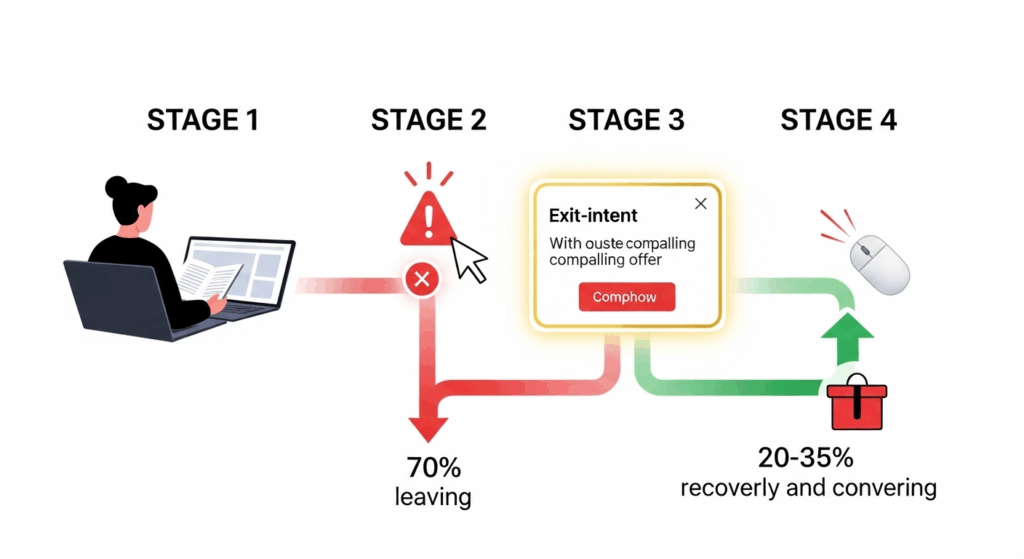
Most affiliates lose 70–90% of potential conversions to cart or page abandonment. But with the right exit-intent recovery system, you can recapture 20–35% of these lost sales by delivering perfectly timed offers that turn hesitation into action.
Exit-intent technology detects when a user is about to leave your page – based on cursor movement, scroll behavior, or inactivity – and triggers a tailored intervention. Tools like OptinMonster and Sleeknote make this seamless.
The most effective exit offers don’t rely on desperate discounts. Instead, they create value. Offer a limited-time bonus, free guide, or risk-reversal incentive (e.g., “Try it free for 7 days”). This ethical persuasion approach avoids devaluing your brand while re-engaging undecided visitors.
Combine this with email capture for retargeting or multi-step exit sequences – for example, showing social proof first, then a special incentive on a second visit. According to OptinMonster’s case studies, such sequences consistently improve recovery rates by up to 30%.
High-Converting Exit Strategies:
- Exclusive discount or bonus offer.
- Time-sensitive free add-on.
- Risk-free trial or refund assurance.
- Social proof reminders.
- Alternative product or resource suggestion.
- Bonus content upgrade.
- Email sign-up for personalized follow-up.
Implementation Guide:
- Install exit-intent software on key landing pages.
- Design compelling value-based offers.
- A/B test visuals, copy, and trigger timing.
- Segment exit offers by device or traffic source.
- Track conversion recovery rates and refine weekly.
Exit-intent systems turn “lost traffic” into found revenue. The secret isn’t more visitors – it’s not letting the right ones slip away.
Making the Strategic Shift: Your 90-Day Plan for 300% Conversion Growth
Success in affiliate marketing no longer belongs to those who post the most—it belongs to those who think strategically. The path to 300% conversion growth starts by shifting your mindset from volume to value. Instead of chasing endless clicks, focus on lifetime value (LTV), conversion rate optimization (CRO), and audience segmentation. Every tactic in this playbook—bridge pages, segmentation, micro-moment optimization, and attribution modeling—compounds when applied with precision.
Here’s your 90-day roadmap:
Days 1–30: Audit your content and identify pages with declining performance (run a content decay analysis using tools like Ahrefs or Animalz Revive). Implement Sub-ID tracking in your affiliate links to start gathering granular data.
Days 31–60: Create or update bridge pages, segment your email list, and optimize your top-performing content for conversion intent. Begin testing your exit-intent recovery system.
Days 61–90: Review your analytics weekly, refine based on data, and scale winning campaigns.
To accelerate your results, download our free Advanced CRO Checklist and use it as your optimization blueprint.
✅ You’ve Seen The Strategies — Now Put Them Into Action.
The Advanced CRO Checklist walks you through every optimization step that drives 300%+ growth.
Stop guessing. Start optimizing.
Remember, affiliate marketing is not a numbers game; it’s a precision game. The affiliates dominating this industry aren’t working harder; they’re working smarter, guided by systems, psychology, and strategy. Start implementing today, and within 90 days, you’ll see what strategic affiliate marketing can truly do for your bottom line.
Frequently Asked Questions
-
What exactly does an affiliate marketer do?
An affiliate marketer promotes another company’s products or services and earns a commission for each sale or lead generated through their referral link. They create content—such as blog posts, videos, or emails—that helps potential buyers make purchasing decisions. The affiliate’s main goal is to connect the right audience with the right product, using trust and relevant information to drive conversions.
-
Which affiliate marketing strategy is the most effective?
The most effective affiliate marketing strategy focuses on strategic alignment—not just promotion. This means understanding your audience’s needs, choosing high-quality products that solve real problems, and using conversion-focused systems like bridge pages, segmentation, and email automation. Affiliates who test, track, and optimize their content consistently achieve higher conversion rates than those relying on volume alone.
-
What is an affiliate marketing strategy?
An affiliate marketing strategy is a structured plan that defines how you will attract, engage, and convert an audience to earn commissions. It includes choosing a niche, selecting reliable affiliate programs, creating valuable content, and optimizing for conversions. A strong strategy connects every step of the buyer journey—from awareness to purchase—using data-driven decisions instead of random promotion.