How to Plagiarism-Proof Your Content with QuillBot (My AI Content Workflow)

While there has been a buzz about AI content creation in the last few years, many affiliates are still skeptical about creating their content with AI tools. The secret fears these affiliates have include the fear of unintentional plagiarism: Did I accidentally plagiarize something? Will Google penalize me? What if my audience discovers I used AI?
Well, I get it. I've also wrestled with this exact fear: How do I create plagiarism free AI content? But here’s what I can tell you, the problem isn't using AI—it's using it wrong.
Since I started using AI for content creation, I’ve not only found it to be a time saver, but it has also helped me to reduce cost and 10x my content creation. Right now, I consider AI as not just a tool but as an integral part of my content creation workflow, and I’m never looking back. I’m actively using AI-generated content in all of my sites, and I must say they’re performing better than all the content I wrote before using AI.
For the AI content that's growing my bottom line, I use a combo of different AI tools and a bulletproof workflow that I’ve developed over the past two years. This workflow leverages Quillbot as my secret weapon for creating original, high-converting content that consistently passes plagiarism checkers.
In this guide, I'm sharing my complete AI-assisted content workflow that's helped me publish over 200 affiliate articles without a single plagiarism flag. You'll learn exactly how to use QuillBot's paraphrasing and plagiarism detection tools as safeguards, not shortcuts.
Key Takeaways:
- AI tools can enhance your content creation without compromising originality when used correctly
- QuillBot serves as both a content refinement tool and a final quality assurance check
- A systematic 3-step workflow eliminates plagiarism anxiety while maintaining efficiency
- Proper AI integration builds trust and authority rather than undermining credibility
The Foundation: My “AI-Assisted, Human-Powered” Content Workflow
Before diving into the tools inside Quillbot.com, let me show you the foundation of how I create original content. My workflow starts with what I call the “AI-Assisted, Human-Powered” method. The AI handles the heavy lifting of research and ideation, while I maintain complete control over the actual writing and messaging.
Here’s an overview of the method:
Pre-Writing: The “Idea Generation” Phase
The goal here is simple: use AI to brainstorm, not to write. Think of AI as your research assistant, not your ghostwriter. When I'm planning a new affiliate review or comparison post, I start by feeding ChatGPT or Claude a simple prompt like: “I'm writing a review of [product name] for affiliate marketers. What are the main pain points my audience faces with this type of tool?”
Within seconds, I get a comprehensive list of angles I might not have considered.
My Actionable Process:
- Topic Research: Ask AI to explain the product's core features and identify common user complaints
- Keyword Discovery: Request affiliate-ready long-tail keywords and question-based searches
- Content Structure: Generate 8-10 potential subheadings for a comprehensive review
For example, when researching QuillBot, I might ask: “What specific features would affiliate marketers care most about in a paraphrasing tool?
The Safeguard: Ideas only, never publish AI text.
This safeguard sets the tone for the whole workflow: AI suggests, I decide. Everything that ends up in my draft is either written by me or rewritten using QuillBot to ensure it’s fresh and unique. By keeping the pre-writing phase strictly about ideation, I avoid plagiarism from the very start.
This way, AI becomes a partner for brainstorming – not a shortcut for publishing.
The Core of the Process: My 3-Step “Plagiarism-Proof” Method
Now here's where the magic happens. After two years of testing different approaches, I've refined my process down to three essential steps that guarantee original, engaging content every single time.
This isn't theory, it's the exact workflow I use for every piece of content that I’ve created in the last couple of years.
By the way, you can get the free version of Quillbot.com here if you want to follow along.
Step 1: The AI-Powered “Rough Draft”
The Problem: You have your outline, but staring at a blank page is still a barrier. That blinking cursor on a blank page is still intimidating as hell.
Even experienced writers face this. You know what you want to say, but getting started feels like pushing a boulder uphill. The temptation is to procrastinate, endlessly “research,” or open another tab. That’s why AI tools like ChatGPT and Claude can be incredibly powerful at this stage – not as your ghostwriter, but as your drafting assistant.
My Actionable Solution: I use AI to break through that initial resistance, but with very specific guardrails. Here's my exact process:
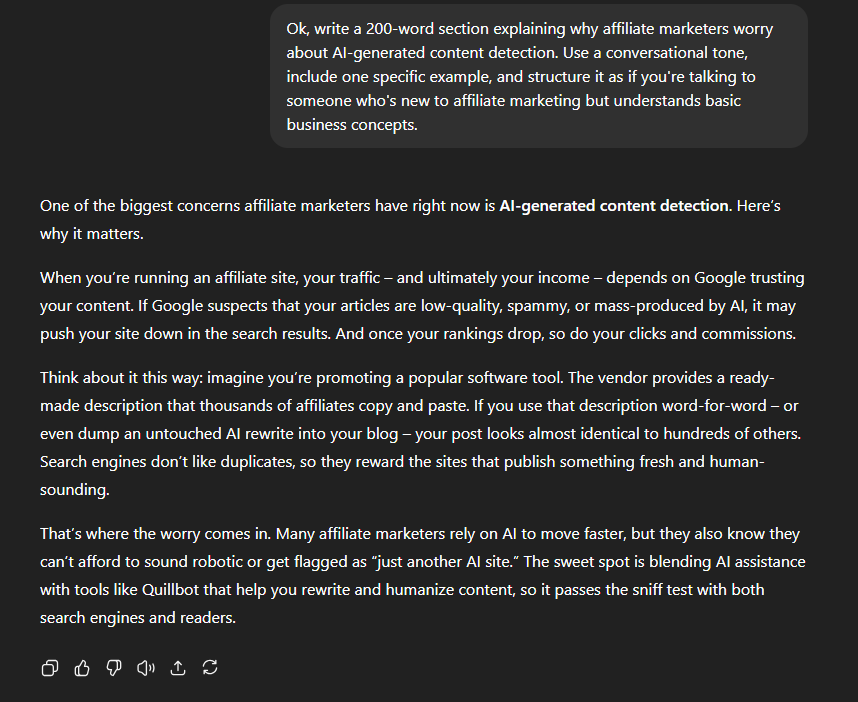
Instead of asking AI to “write an article about QuillBot,” I give it laser-focused prompts like:
“Write a 200-word section explaining why affiliate marketers worry about AI-generated content detection. Use a conversational tone, include one specific example, and structure it as if you're talking to someone who's new to affiliate marketing but understands basic business concepts.
Notice the specificity? I'm not asking for generic content, I'm requesting targeted information with clear parameters.
The Key Elements of My AI Drafting Prompts:
- Word count limits (usually 150-250 words per section)
- Specific audience (affiliate marketers, content creators, small business owners)
- Tone requirements (conversational, authoritative, helpful)
- Structure requests (include examples, use bullet points, start with a question)
This approach gives me focused first-pass content that addresses exactly what my audience needs to know, without the rambling that generic AI prompts often produce.
Why it matters: You’re speeding up the writing process, but you’re not treating the AI’s words as final. Think of this AI-generated draft like clay—raw material that needs serious shaping before it becomes anything publishable.
Step 2: The QuillBot “Originality Polish”
Here's where Quillbot.com becomes absolutely essential to my workflow.
The Problem We're Addressing: Raw AI content has three major issues that'll kill your credibility:
- It sounds robotic and generic
- It's often detectable by AI detection tools
- It might be too similar to content in AI training data
Most people publish AI content as-is and wonder why their engagement rates suck or why they get flagged by plagiarism checkers.
The QuillBot Transformation Process: I take my AI-generated draft and put it through QuillBot's Paraphraser, but not randomly. I use a strategic approach:
Phase 1: Structure Overhaul with Creative Mode
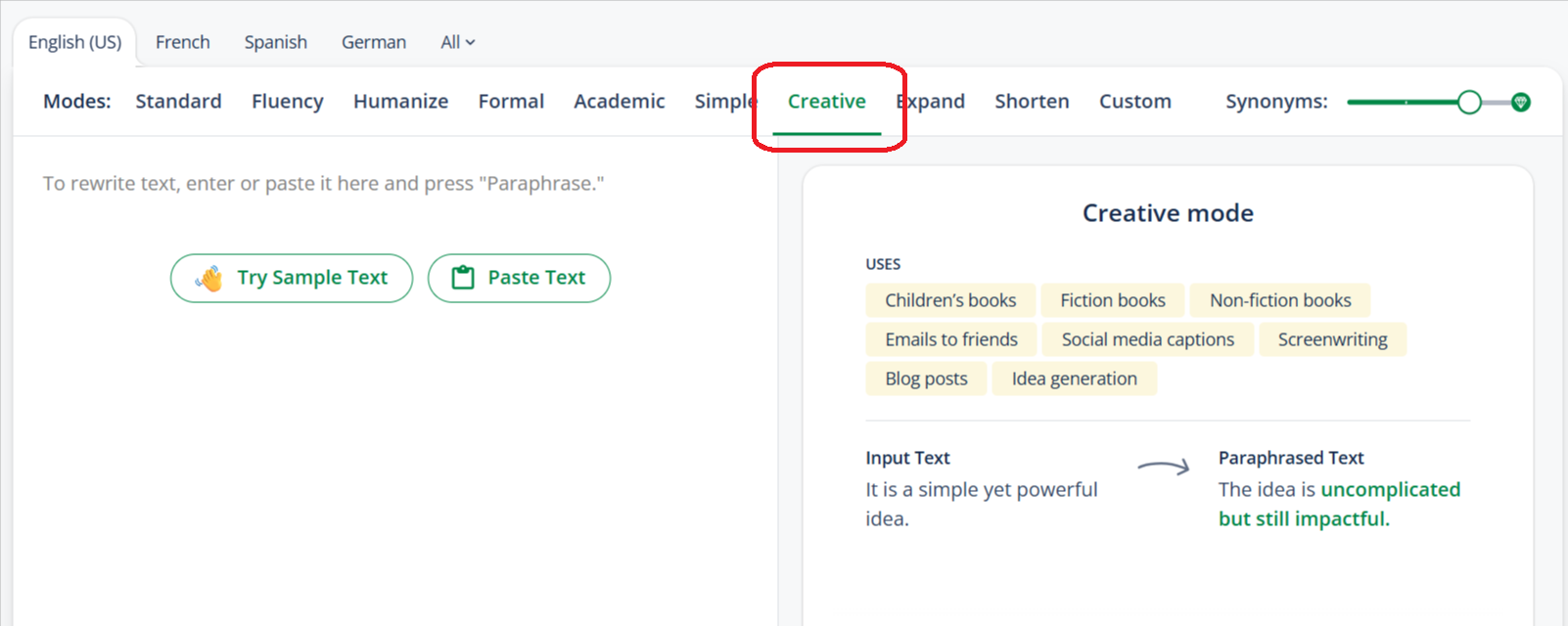
I run the entire section through QuillBot's Creative mode first. This mode doesn't just swap synonyms—it genuinely restructures sentences and introduces new ways of expressing the same ideas.
For example, an AI might write: “Affiliate marketers face challenges with AI-generated content because search engines are getting better at detecting it.
After QuillBot's Creative mode: “Search engines have become increasingly sophisticated at identifying AI-generated content, creating new hurdles for affiliate marketers.”
See the difference? Same information, completely different sentence structure.
Phase 2: Fine-Tuning with the Synonym Slider
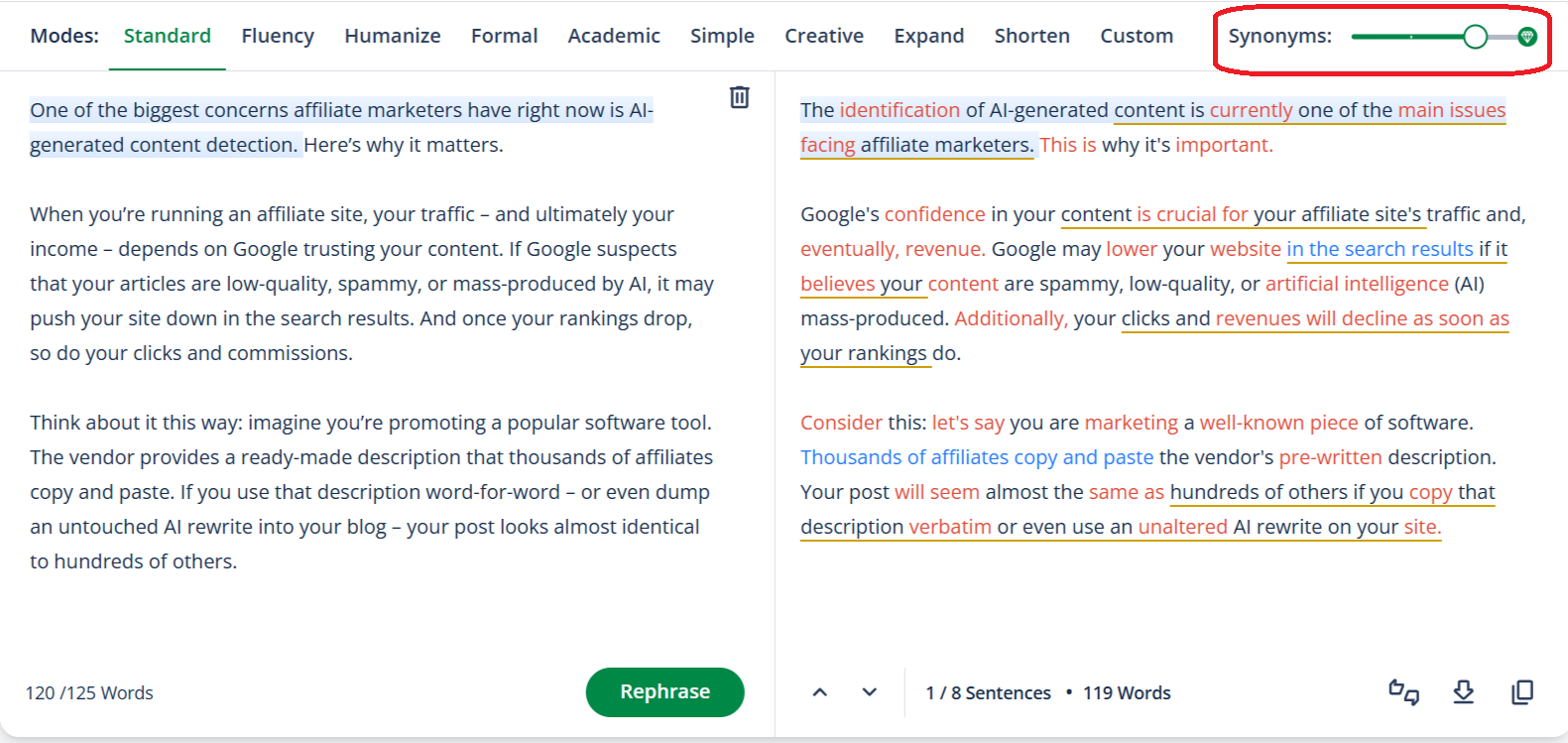
This is where I add my personal voice back into the content. QuillBot's Synonym Slider lets me manually review every word choice and decide what sounds like “me.”
I typically set the slider to about 60-70% to maintain readability while ensuring originality. Then I go through each suggested synonym and ask myself: “Is this how I would actually say this?”
If QuillBot suggests “utilize” but I'd normally say “use,” I make that change. If it suggests “facilitate” but I'd say “help,” I switch it back.
Phase 3: Fluency Check
Finally, I run the polished section through QuillBot's Fluency mode to catch any awkward phrasing that might have emerged during the creative restructuring.
This isn't about “spinning” content; it's about genuinely reimagining how to express ideas while maintaining the core value for readers.
Step 3: The Final Safeguard (My Peace of Mind Check)
The Problem: The fear of being flagged by Turnitin, Copyleaks, or Google for plagiarism or AI-written content.
Even after paraphrasing and polishing, that small voice in your head may ask: What if this still isn’t original enough? That anxiety is valid, especially if you’re publishing content on a professional site, using it for affiliate marketing, or submitting it in an academic or client-facing context.
I used to lose sleep over this until I discovered QuillBot's built-in safety net.
The Two-Part Audit:
Part 1: QuillBot's Plagiarism Checker
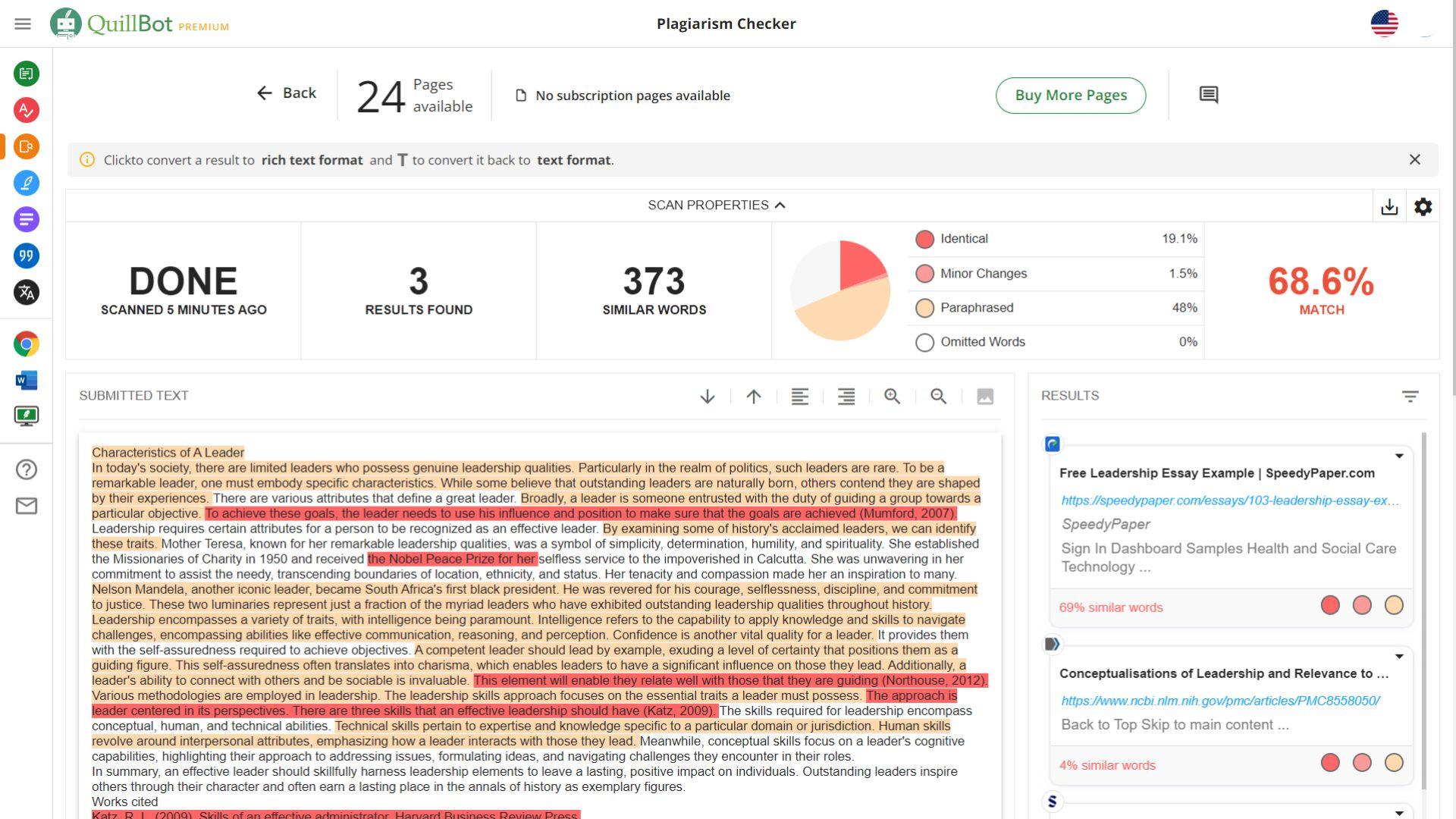
I paste my final content into QuillBot's plagiarism checker, which scans against millions of web pages and academic sources. If you subscribe to the QuillBot's premium version, you get 25,000 words per month of plagiarism checking across over 100 languages.
If anything gets flagged above 15% similarity, I rewrite those sections from scratch. Usually, it's just a common phrase or industry terminology that needs tweaking.
Part 2: AI Detector Verification
Next, I run the content through QuillBot's AI Detector. This tool identifies sections that still sound too AI-generated, even after paraphrasing.
If any sections score high for AI detection, I know exactly what needs more human intervention. Usually, I'll add a personal anecdote or rewrite in my own voice.
What to do if it flags something:
- If plagiarism is detected: Rewrite the flagged sentence or paragraph. Better yet, replace it with a personal anecdote, data point, or insight that only you can provide.
- If the AI detector scores high: Add more manual rewriting, break up long sentences, and integrate natural-sounding transitions.
Think of this as the peace of mind stage. It’s your final assurance that what you’re about to publish is safe, credible, and authentic.
Why This 3-Step Method Works
By now, you’ve seen how each step plays a specific role:
- AI Drafting solves the blank page problem and speeds up ideation.
- QuillBot Polishing transforms raw drafts into original, humanized content.
- Plagiarism & AI Checks provide confidence and credibility before you hit publish.
The result is a workflow that blends efficiency with integrity. You get the best of AI speed without the risks of copy-paste shortcuts. And most importantly, you build trust with your readers because every word feels real, unique, and aligned with your voice.
For affiliate marketers, bloggers, and small business owners, this balance is everything. Your content becomes not just another blog post but a trustworthy asset – one that search engines respect, and your audience relies on.
Why This Method Works for Affiliate Marketers
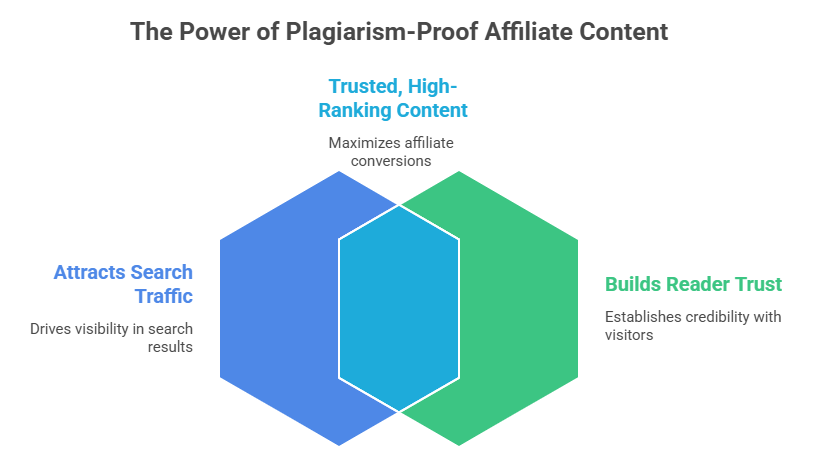
If you’re building an affiliate site, every piece of content has two jobs – attract search traffic and build enough trust for readers to click your links. That’s why this plagiarism-proof workflow is so effective: it protects both your rankings and your reputation.
1. Trust and Authority
Affiliate marketing is built on credibility. Readers don’t buy from you because you copied what’s already online – they buy because they believe you’ve done the work to filter the noise and provide real value. By running your AI drafts through QuillBot and adding your own insights, you publish content that feels authentic. Over time, this positions you as a trusted voice rather than just another “review site” recycling the same phrases.
2. Better SEO
Search engines prioritize originality and user value. Duplicate content or overly generic AI text won’t perform well long-term. With this workflow, you’re ensuring your posts are unique, human-edited, and plagiarism-free. That means higher chances of ranking, fewer risks of penalties, and content that AI-powered search engines like Google’s AI Overviews or ChatGPT-style search can confidently recommend. In other words, originality equals visibility.
3. Efficiency, Not Laziness
The best part? This method respects your time. Instead of wasting hours stuck on the first draft, you let AI generate a starting point, then quickly refine it with QuillBot. That frees you up for the activities that actually grow your affiliate income – keyword research, promoting your posts, building email sequences, or negotiating better affiliate deals. You’re not taking shortcuts; you’re removing friction so you can focus on strategy, not busywork.
Bottom line: This workflow helps you publish faster, rank better, and earn trust – the exact three levers that drive affiliate success.
Conclusion: The Path to Plagiarism-Free Growth
At the end of the day, the lesson is simple – AI is a powerful tool, but it should never replace you. Used responsibly, it becomes a partner that helps you think faster, draft quicker, and break through the blank page. But it takes a human in the loop to guide the process, add perspective, and protect originality.
The workflow I've shared isn't just theory. It's the exact process I use for every piece of content in my business. Over 200 articles, zero plagiarism flags, and consistently higher engagement rates than generic AI-generated posts.
For affiliate marketers, bloggers, and small business owners, the stakes are high. Your brand and income depend on trust. Publishing content that feels copied or generic erodes that trust fast. On the other hand, publishing content that is fresh, authoritative, and plagiarism-free strengthens your reputation and keeps search engines on your side.
The good news is you no longer need to panic about plagiarism. You don’t have to waste hours rewriting or second-guessing whether your work is original enough. By following this workflow with Quillbot.com as your safeguard, you can create faster, publish confidently, and focus on growing your business instead of worrying about hidden risks.
So, stop panicking about plagiarism and start creating with confidence. Your brand – and your reputation – will thank you for it.
📌 Try It Right Now
Don’t wait until your next big article – test the workflow today.
✅ Copy a short section of your draft (200–300 words)
✅ Paste it into Quillbot.com Paraphraser using Fluency mode
✅ Adjust a few words with the Synonym Slider until it matches your voice
You’ll see the difference instantly: cleaner, fresher, plagiarism-free content that feels like you.
👉 Start small, gain confidence, and scale it up to your full blog posts.
Frequently Asked Questions
-
Can a plagiarism checker detect my paraphrased content?
Yes, some plagiarism checkers can detect paraphrased content. Basic tools may miss it, but advanced checkers are improving every year. That is why you should not rely only on paraphrasing. Combine AI with human editing to add originality and context. To be safe, run your work through a robust tool like QuillBot’s Plagiarism Checker, which scans billions of sources and uses semantic analysis. This gives you peace of mind before you publish.
-
Is it illegal to use AI for affiliate marketing content?
No, it is not illegal to use AI for affiliate marketing content. (This is not legal advice.) Copyright law does not forbid AI-generated text. The real issue is whether the final content is transformative. That means it should be substantively different from existing works and should add new value. If you use AI responsibly, add your own perspective, and ensure originality, you are in safe territory.
-
Does QuillBot have a Plagiarism Checker? Is it accurate?
Yes, QuillBot has a built-in Plagiarism Checker. It compares your text against a very large database of web pages, academic sources, and journals. Its strength is in spotting both exact matches and near-matches across multiple languages. The tool is accurate enough for academic use, business writing, and affiliate marketing. For content creators, this means you can publish with confidence that your work is unique.
-
How can I ensure I cite sources correctly when using AI?
The rule is simple: If an idea is not common knowledge, you should cite it. For example, “water freezes at 0°C” needs no citation, but a specific statistic or unique study does. You can cite sources manually, or you can use tools that generate citations automatically. QuillBot offers a Citation Generator that supports multiple formats, which makes it easy to stay accurate and professional.