
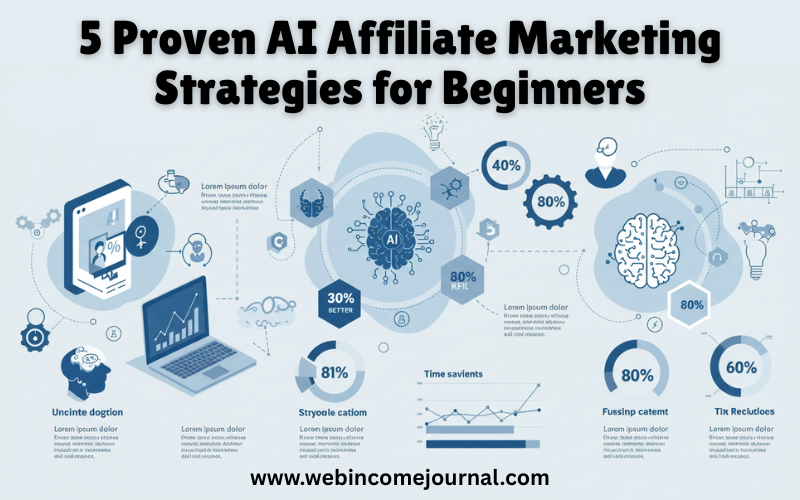
Last month, Sarah, a complete beginner, earned $3,847 in affiliate commissions while working just 2 hours a day. Meanwhile, veteran marketer Mike, who's been grinding 60-hour weeks for three years, made only $1,200.
What's Sarah's secret? She's part of a small group of smart affiliates who discovered how to use AI to automate 80% of their workflow while achieving 40% higher conversion rates than traditional methods.
If you're tired of manually creating content, guessing which products will convert, and watching competitors outrank you despite your best efforts, this changes everything.
I've been in affiliate marketing since 2018, and I've witnessed every “revolutionary” trend come and go. Most were overhyped nonsense. But AI affiliate marketing? This isn't another shiny object – it's a fundamental shift that's already separating winners from strugglers.
Here's what's happening right now: While most affiliates are still doing everything manually, AI-powered marketers are using predictive analytics to spot trending products weeks before anyone else, generating SEO-optimized content in minutes instead of hours, and personalizing their campaigns at scale.
The result? They're not working harder – they're working infinitely smarter.
In this guide, I'll walk you through five proven AI affiliate marketing strategies that beginners are using right now to build profitable campaigns faster than ever before. You'll learn how to use AI for content creation, automate your email sequences, optimize your landing pages, and make data-driven decisions that actually move the needle.
More importantly, I'll show you which AI tools for affiliate marketing are worth your time and money, and which ones are just expensive distractions.
By the end of this article, you'll have a clear roadmap for implementing AI-powered affiliate marketing strategies that can help you build a sustainable income stream – without spending months learning complex technical skills or burning through your budget on ineffective campaigns.
TL;DR: AI affiliate marketing strategies use artificial intelligence tools to automate content creation, optimize campaigns, and personalize customer experiences, allowing beginners to compete with experienced marketers while saving time and increasing profits. The key is combining AI automation with human creativity to build authentic, data-driven campaigns that convert.
Before You Begin: What is AI and How Does it Apply to Affiliate Marketing?
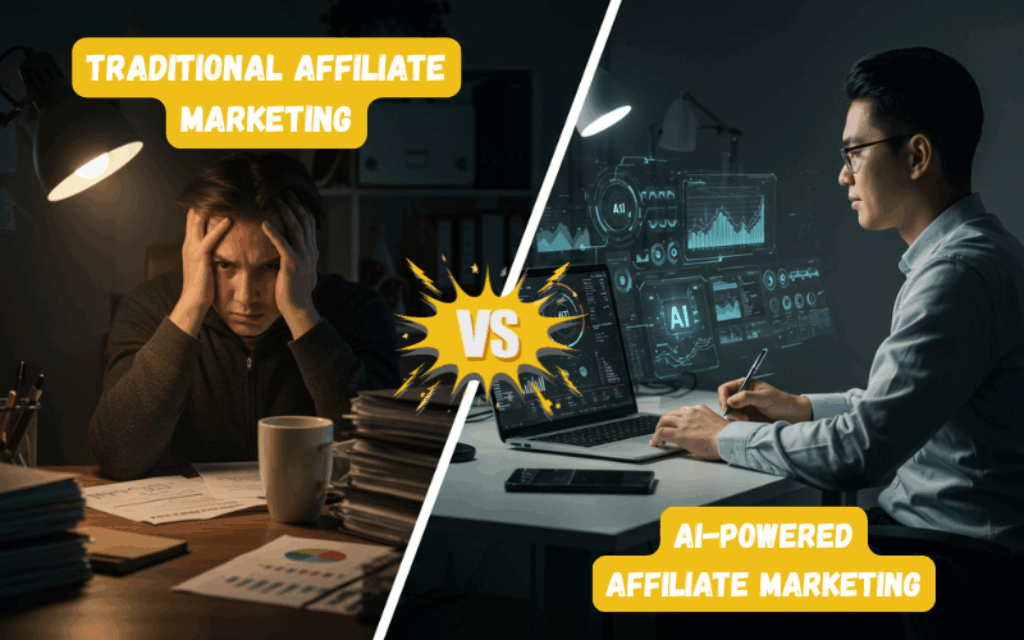
Let me break this down in simple terms. When I talk about AI in affiliate marketing, I'm not referring to sci-fi robots taking over your business.
AI, or artificial intelligence, is essentially software that can learn patterns, make predictions, and automate tasks that usually require human thinking. Think of it as having a really smart assistant that never sleeps and gets better at its job every day.
Here are the three AI concepts you need to understand:
- Machine Learning analyzes your campaign data to identify what's working and what isn't. For example, it can spot which email subject lines get higher open rates or which product recommendations lead to more sales.
- Natural Language Processing (NLP) helps AI understand and create human-like text. This is what powers AI writing tools like Jasper AI and Copy.ai that can generate product reviews, email sequences, and social media posts.
- Predictive Analytics uses historical data to forecast future trends. It can predict which products will be popular next month or which audience segments are most likely to convert.
Now, here's how AI transforms traditional affiliate marketing:
Instead of spending hours writing product reviews, you use AI content creation tools to generate drafts in minutes. Rather than guessing which products to promote, predictive analytics shows you trending opportunities before your competitors notice them.
AI can handle these affiliate marketing tasks automatically:
- Creating SEO-optimized blog posts and product reviews
- Segmenting your email list based on behavior patterns
- Optimizing ad campaigns in real-time
- Analyzing competitor strategies
- Personalizing product recommendations for each visitor
The benefits? You get automation that saves 10+ hours per week, personalization that increases conversion rates by up to 40%, data analysis that reduces guesswork, improved ROI through smarter targeting, and a competitive advantage in saturated niches where manual approaches fall short.
The truth is, AI doesn't replace your creativity – it amplifies it.
Setting Up for Success: Prerequisites
Before you dive into using AI in affiliate marketing, let's get your foundation right. I've seen too many beginners jump straight into AI tools without proper setup, only to waste time and money on campaigns that never had a chance to succeed.
- Start with the right niche and audience: AI works best when you have clear data to analyze. Choose a niche you understand and can create authentic content about. Your audience should be specific enough that AI can identify behavior patterns – think “busy working moms interested in meal prep” rather than “people who like food.
- Create AI-friendly workflows from day one: Set up systems that capture data AI can use later. This means using email marketing platforms like Mailchimp or ActiveCampaign that integrate with AI tools, organizing your content in formats that AI can analyze, and establishing consistent tracking across all your campaigns.
- Implement proper tracking with AI analytics: Tools like Google Analytics and HubSpot provide the data foundation your AI strategies need. Without proper tracking, even the smartest AI tools are working blind. Set up conversion tracking, UTM parameters, and customer journey mapping before launching any campaigns.
- Manage your expectations realistically: AI affiliate marketing automation isn't a “get rich quick” scheme. Plan to invest 2-3 hours daily for the first month learning your tools and setting up systems. Most beginners see initial results within 4-6 weeks, but significant income typically develops over 3-6 months.
The key is starting with solid fundamentals that AI can build upon, rather than hoping AI will fix a poorly planned strategy.
Want to Take Action Fast? Grab the FREE Implementation Checklist!🚀
Download our FREE Interactive Implementation Checklist — and start implementing right away.
Here’s what your get:
- ✅ Pre-filled action steps for each strategy
- ✅ Time-saving estimates & difficulty levels
- ✅ Built-in checkboxes so you can track progress as you go
- ✅ Direct links to recommended AI tools
Perfect for beginners ready to move from ideas to income—one step at a time.
Core AI Affiliate Marketing Strategies for Beginners in 2025
Strategy 1: AI-Enhanced Content Creation
Content creation used to be my biggest bottleneck. I'd spend entire weekends writing a single product review, only to publish it and wonder if anyone would actually read it.
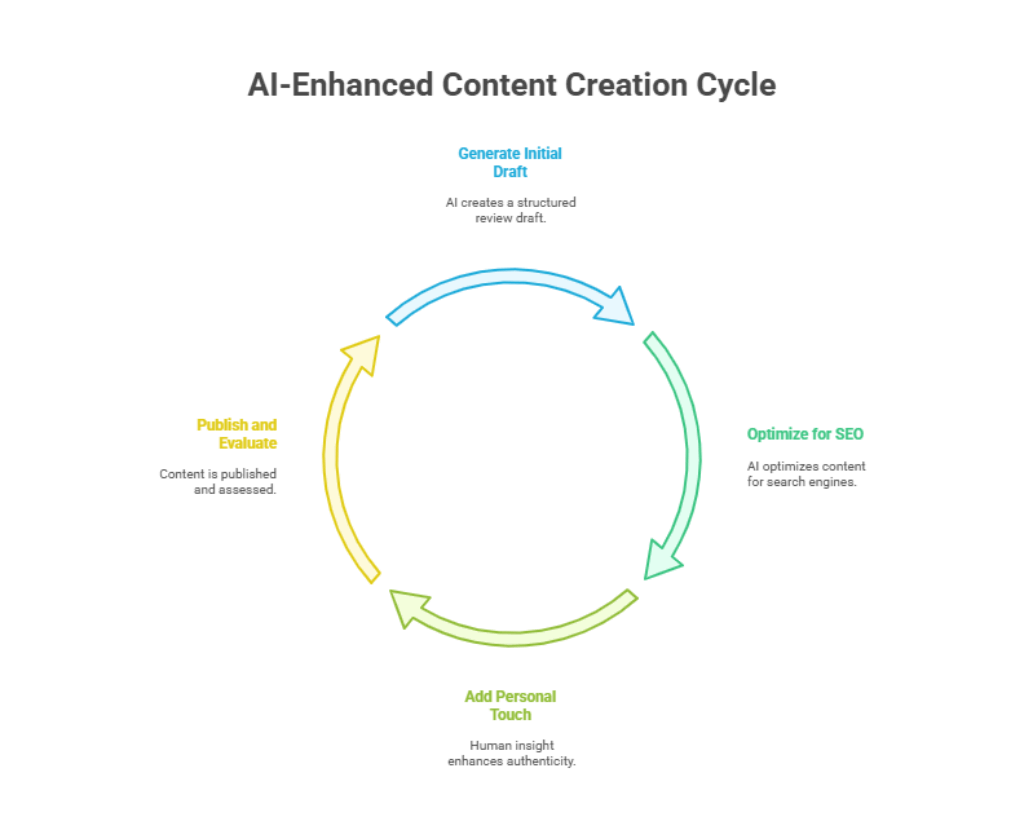
Now, I use AI content writing tools to create high-quality reviews in a fraction of the time – but here's the key: I never publish AI content as-is.
- Using AI writers for product reviews starts with the right prompts. I use tools like SEOWriting.ai and Copy.ai to generate initial drafts by feeding them product specifications, customer reviews, and competitor analysis. The AI handles the heavy lifting of structuring the review and covering key features.
- AI SEO optimization happens simultaneously. Tools like Surfer SEO and Frase analyze top-ranking content and suggest keywords, headings, and content length. This ensures your AI-generated content has the best chance of ranking well from day one.
- Maintaining authenticity is crucial. I always add personal experiences, specific use cases, and honest pros and cons that only come from human insight. AI might write “This product is great for busy professionals,” but I'll specify “I tested this during my morning routine for two weeks and here's exactly what happened.”
Before/after example: My original camera review was 800 words and took 4 hours to write. Using AI assistance, I now create 1,500-word comprehensive reviews in 90 minutes. The AI-enhanced version includes better keyword targeting, more detailed feature comparisons, and clearer buying guidance – but retains my personal testing experience and honest recommendations.
The result? 60% more organic traffic and 25% higher conversion rates on AI-enhanced content.
Strategy 2: Smart Product Selection with AI
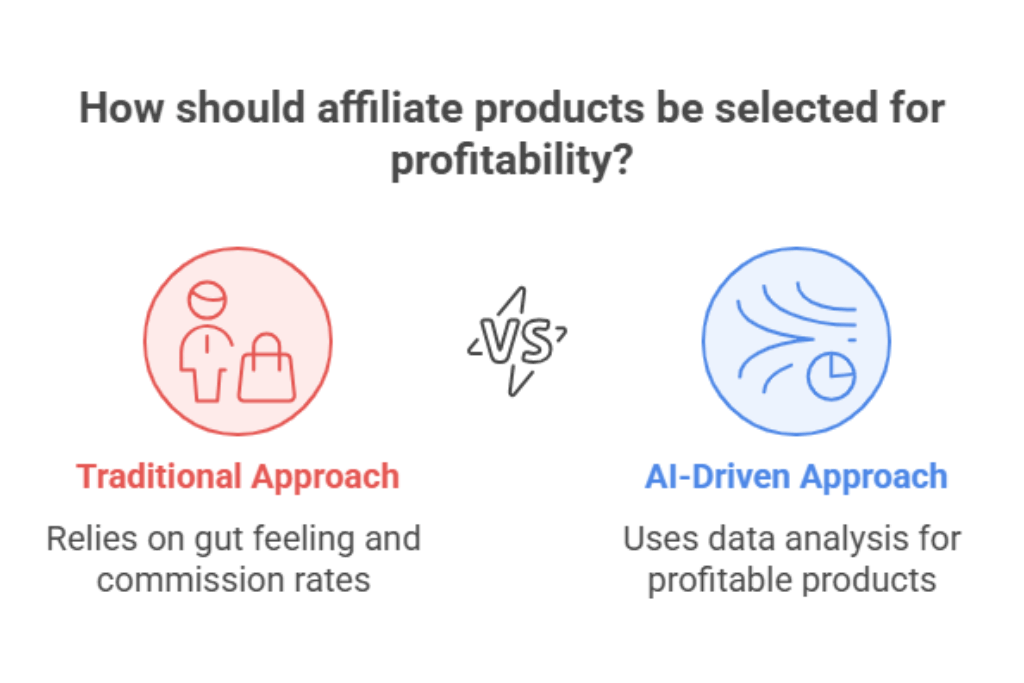
Here's something most affiliates get wrong: they choose products based on gut feeling or high commission rates. I used to do the same thing until I discovered how AI can identify profitable affiliate products before the competition even notices them.
- AI identifies profitable products by analyzing massive datasets of search trends, social media mentions, pricing patterns, and competitor performance. Tools like Semrush and BuzzSumo use machine learning to spot products gaining momentum before they hit mainstream awareness.
- Predictive analytics for trend spotting is where things get interesting. I use platforms like Google Trends combined with AI tools that analyze seasonal patterns, emerging keywords, and consumer behavior shifts. This helps me identify products that will be popular weeks before peak demand hits.
- Competitor analysis tools like AdCreative.ai and similar platforms reveal which affiliate products your competitors are promoting most heavily and their estimated success rates. This gives you insights into what's actually converting, not just what has high commission rates.
Case study: Last year, I used AI analysis to identify an emerging trend in portable air purifiers three months before allergy season. The AI spotted increasing search volume, social media discussions about air quality, and competitor ad spend in this category. I created content early, secured partnerships with key brands, and when the trend peaked, I was already ranking #1 for key terms. Result: $12,000 in commissions from a niche I never would have considered manually.
The key is using data, not instinct, to guide your product selection decisions.
Strategy 3: Audience Targeting and Personalization
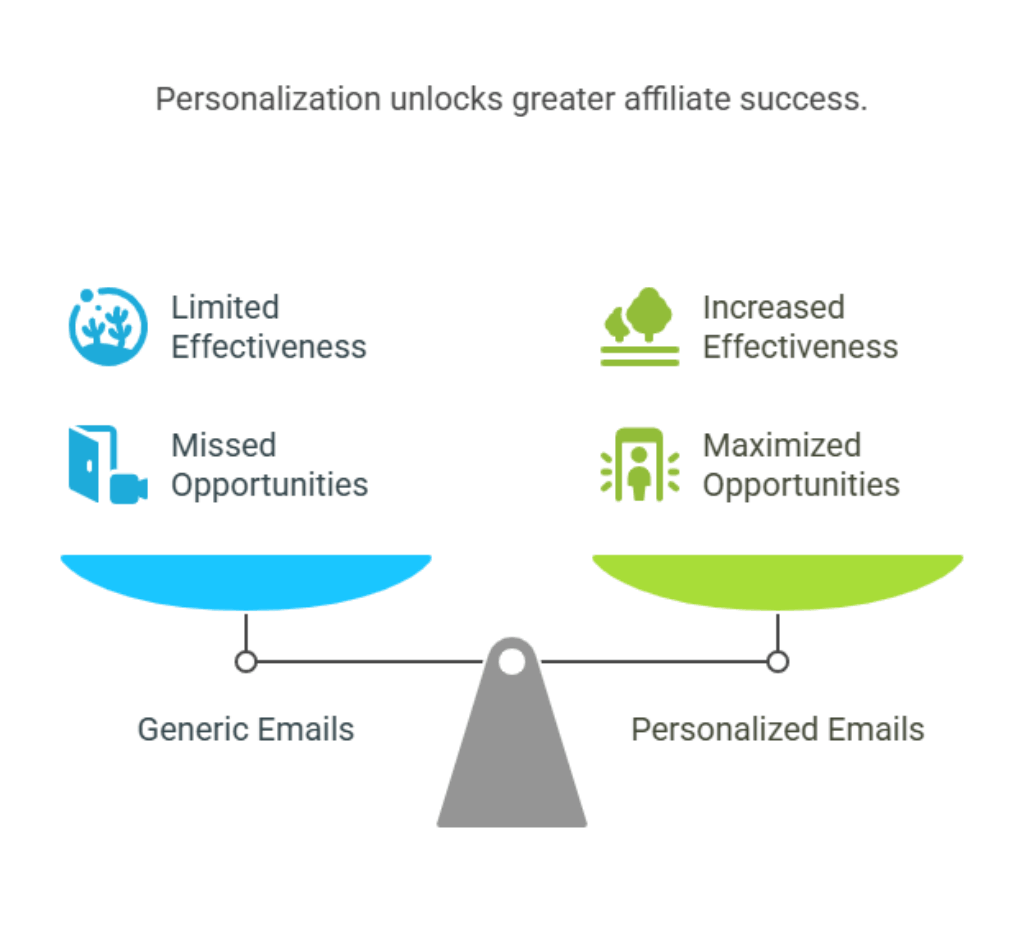
Most affiliates send the same generic emails to everyone on their list. That's like trying to sell winter coats to people in Florida – it might work occasionally, but you're missing massive opportunities.
- AI-powered audience segmentation changes everything. Tools like Mailchimp AI assistant and ActiveCampaign analyze subscriber behavior to create segments you never would have thought of. Instead of basic demographics, AI identifies patterns like “people who open emails on weekends but never click affiliate links” or “subscribers who engage with tech content but ignore lifestyle products.”
- Personalized email sequences become incredibly effective when AI handles the customization. Klaviyo's AI can automatically adjust subject lines, product recommendations, and send times based on individual subscriber behavior. I've seen open rates jump from 22% to 38% just by letting AI optimize send times alone.
- Understanding customer behavior patterns through AI analytics reveals goldmine insights. AI tracks not just what people click, but when they hesitate, how long they spend reading, and what sequence of content leads to conversions. This data helps you create more effective affiliate campaigns.
Implementation example:
- Set up behavioral tracking in your email platform
- Let AI run for 2-3 weeks to gather baseline data
- Create AI-suggested segments (typically 4-6 main groups emerge)
- Design personalized email flows for each segment
- Use AI to optimize subject lines and send times
- Monitor performance and let AI refine targeting
Result: My segmented campaigns now convert 3x better than my old “spray and pray” approach.
Strategy 4: Conversion Rate Optimization with AI
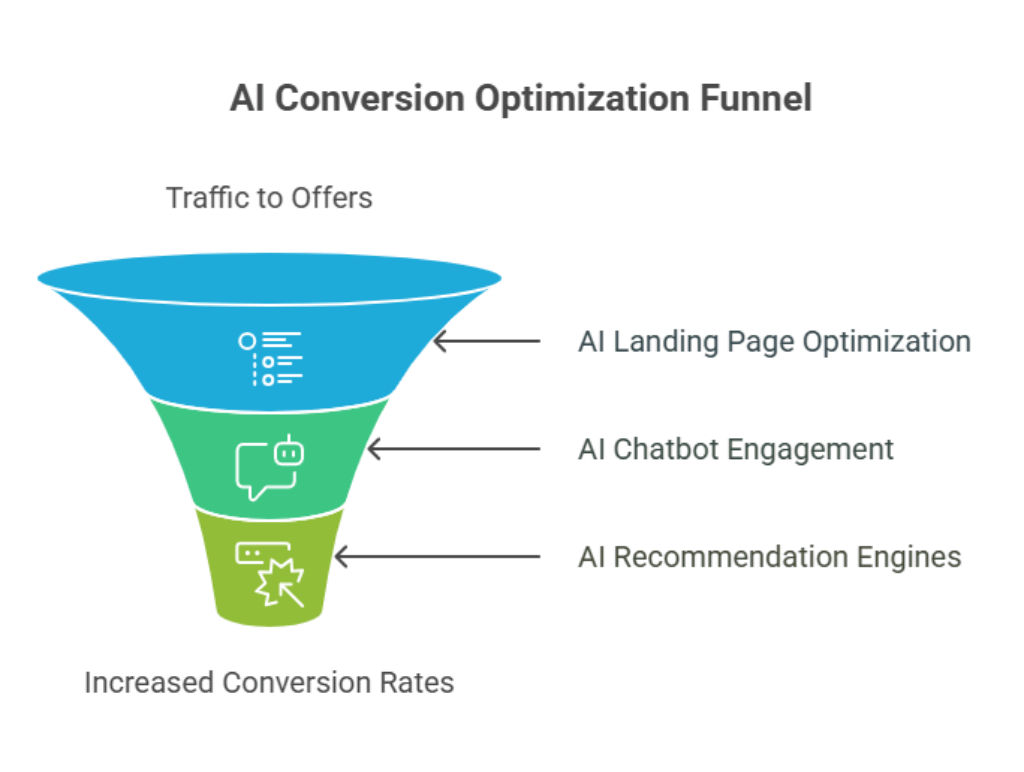
You can drive all the traffic in the world to your affiliate offers, but if your conversion rate is terrible, you're just burning money. This is where AI conversion optimization becomes your secret weapon.
- AI landing page optimization happens faster than traditional A/B testing. Tools like 10Web analyze thousands of high-converting pages to suggest layouts, headlines, and call-to-action placements that work. Instead of waiting weeks for statistical significance, AI can predict winning variations in days.
- AI chatbots guide potential customers through their decision-making process in real-time. I use ManyChat and Chatfuel to create conversational flows that answer common questions, address objections, and recommend specific products based on user responses. These chatbots can increase user engagement by 3x when responding within two seconds.
- AI recommendation engines personalize the experience for each visitor. Just like Amazon suggests products you might like, tools like CustomGPT.ai can analyze user behavior and serve relevant affiliate offers. This personalization drives significantly higher conversion rates than generic product displays.
Before/after case study: My fitness affiliate site originally converted at 2.1%. After implementing AI optimization – including smart chatbots, personalized product recommendations, and AI-tested landing page elements – conversions jumped to 3.8%. The AI chatbot alone handles 60% of customer questions automatically, freeing me to focus on content creation while improving user experience.
Most importantly, these AI tools learn and improve continuously, so your conversion rates keep getting better over time.
Strategy 5: Data-Driven Decision Making
Here's the brutal truth: most affiliate marketers make decisions based on what “feels right” rather than what the data actually shows. I used to be guilty of this too, until I realized AI could turn my analytics into actionable insights.
- AI-powered analytics platforms like Google Analytics, WebAnalytics AI and HubSpot now use machine learning to surface patterns you'd never spot manually. These tools automatically identify your highest-value traffic sources, optimal posting times, and which content types drive the most affiliate conversions. Instead of drowning in spreadsheets, you get clear recommendations.
- Interpreting analytics becomes simpler when AI does the heavy lifting. HubSpot's AI can tell you “visitors from organic search convert 40% better on Tuesday mornings” or “users who read your comparison posts are 3x more likely to purchase.” This specificity helps you refine your content strategy and posting schedule.
- Predictive modeling is where AI really shines for future campaign planning. Tools like Skai.io analyze your historical performance to forecast which products will perform best next quarter, when to increase ad spend, and which audience segments to prioritize. This foresight allows you to act proactively rather than reactively.
- Adjusting tactics based on performance metrics happens automatically with AI. When my analytics show declining engagement on certain content types, AI suggests alternative approaches. If conversion rates drop on specific products, predictive analytics helps identify replacement opportunities before revenue suffers.
The result? I make fewer gut-based mistakes and more profit-driven decisions backed by solid data analysis.
Choosing the Right AI Tools for Affiliate Marketing
With hundreds of AI tools claiming to revolutionize affiliate marketing, choosing the right ones can feel overwhelming. I've tested dozens of these platforms, and here's what actually works for beginners.
Content Creation Tools:
- ChatGPT (Free/$20/month) – Best for brainstorming and initial drafts
- Copy.ai ($36/month) – Excellent for ad copy and email sequences
- Jasper AI ($39/month) – Superior long-form content with SEO integration
- SEOWriting.ai ($29/month) – Combines AI writing with keyword optimization
SEO Optimization:
- Rank Math SEO (Free/$59/year) – WordPress plugin with AI content suggestions
- SEOPress ($49/month) – A great Rank Math alternative for content optimization and competitor analysis
- Clearscope ($170/month) – Premium keyword research and content scoring
Email Marketing with AI:
- Mailchimp ($10/month) – AI-powered send time optimization and subject line suggestions
- ActiveCampaign ($29/month) – Advanced automation and predictive analytics
- Klaviyo ($20/month) – Best for e-commerce affiliate marketing
Analytics & Insights:
- Google Analytics (Free) – Essential baseline with AI-powered insights
- HubSpot ($45/month) – Comprehensive analytics with predictive modeling
Chatbots & Engagement:
- ManyChat ($15/month) – User-friendly with strong affiliate marketing features
- Chatfuel ($15/month) – Great for Facebook Messenger automation
My selection criteria: Start with tools that integrate well together, offer free trials, and have strong customer support. For beginners, I recommend starting with ChatGPT, Mailchimp, Google Analytics, and one SEO tool like Rank Math.
Testing approach: Use free trials for 2-3 weeks, focus on one category at a time, and measure specific metrics like time saved or conversion improvements before committing to paid plans.
Common Challenges and How to Overcome Them
Well, let me be honest – AI affiliate marketing isn't all sunshine and automated profits. I've seen beginners make costly mistakes that could've been avoided.
The Big Four Challenges (And My Solutions)
- Data Privacy Concerns: Your audience's data is sacred. Use tools like HubSpot and ActiveCampaign that are GDPR-compliant by default. Always disclose your AI usage in your privacy policy – transparency builds trust, not suspicion.
- Over-Automation Trap: I get it – automation feels magical. But the moment you stop adding your personal touch, your content becomes generic fluff. My rule: AI creates the first draft, you add the personality. Use tools like SEOWriting.ai for structure, then inject your experiences and opinions.
- Content Quality Control: AI tools like ChatGPT can produce mediocre content if you're not careful. Here's what works: Create detailed prompts, fact-check everything, and always run content through Grammarly or QuillBot for polish. Never publish AI content without human review.
- Cost Management: Starting with AI tools can get expensive fast. Begin with free options – ChatGPT, Google Analytics, Mailchimp's free tier. Only upgrade when a tool directly contributes to your revenue. Track your ROI monthly: if a $50/month tool isn't generating at least $150 in commissions, cut it.
The Bottom Line: AI should amplify your skills, not replace your judgment. The most successful affiliates I know use AI to handle the heavy lifting while maintaining their authentic voice and strategic thinking.
Stay human in an AI world – that's your competitive advantage.
Want to Take Action Fast? Grab the FREE Implementation Checklist!🚀
Download our FREE Interactive Implementation Checklist — and start implementing right away.
Here’s what your get:
- ✅ Pre-filled action steps for each strategy
- ✅ Time-saving estimates & difficulty levels
- ✅ Built-in checkboxes so you can track progress as you go
- ✅ Direct links to recommended AI tools
Perfect for beginners ready to move from ideas to income—one step at a time.
Conclusion
The truth is, AI affiliate marketing strategies aren't just the future – they're your competitive advantage right now in 2025.
We've covered how AI transforms every aspect of your affiliate business: from creating personalized content that converts 40% better to using predictive analytics that spot trending products weeks before your competitors. The stats don't lie – affiliates using AI tools see up to 30% higher ROI and save hours each week on repetitive tasks.
But here's what I want you to remember: Start small and scale gradually.
You don't need to implement every AI tool at once. Pick one strategy that excites you most – maybe it's using SEOWriting.ai and Copy.ai for content creation or trying HubSpot's AI-powered email sequences. Master that first, then add another tool to your arsenal.
The affiliate marketers winning in 2025 aren't necessarily the ones with the biggest budgets. They're the ones who embrace AI-powered affiliate marketing while maintaining authenticity and focusing on genuine value for their audience.
Your AI affiliate marketing journey starts with your next action. What will it be?
Recommended Resources:
- Communities: Join AI affiliate marketing groups on Reddit and Facebook
- Courses: Check out GetResponse's AI marketing certification program
- Podcasts: Listen to “The AI Marketing Show” and “Affiliate Marketing Podcast”
- YouTube Channels: Follow channels covering CustomGPT.ai tutorials and AI marketing strategies
- Blogs: Bookmark Tapfiliate, HubSpot, and Neil Patel's affiliate marketing sections
- Tool: Discover your blogging strengths and growth opportunities with our Blogging Skills Assessment Quiz
- Playbook: Download our FREE Affiliate Product Review Playbook
![5 Proven AI Affiliate Marketing Strategies for Beginners [in 2025]](https://webincomejournal.com/wp-content/uploads/thumbs_dir/ai-affiliate-marketing-programs-r73wtgpsga3duaq8a8jlpdfc63rlrq4z2ahy3m5lx8.jpeg)
![5 Proven AI Affiliate Marketing Strategies for Beginners [in 2025]](https://webincomejournal.com/wp-content/uploads/thumbs_dir/How-I-Rank-AI-Generated-Content-r7l9vvk8bm77e8pw011g9ytync8nk95liw43k1lrng.png)